

Café Insurance Requirements in Spain: What the Law and Your Licence Ask For
If you are opening a café in Spain, the one policy you cannot do without is civil liability insurance (seguro de responsabilidad civil). It is compulsory under the regional law on public shows and recreational activities, and the town hall will not grant your opening licence without proof that the policy is in force. Everything else, from fire and theft cover to business interruption, is optional in law but sits in most leases and lender conditions. The rules differ by region and sometimes by town, which is exactly where newcomers who do not read Spanish lose weeks. We compare quotes from over 11 Spanish insurers for expats and explain each requirement in English, at no direct charge to you as the insured.
TL;DR
- Civil liability insurance is compulsory for cafés and bars in Spain, set by regional law. Town halls ask for the policy and proof of payment before granting a licence.
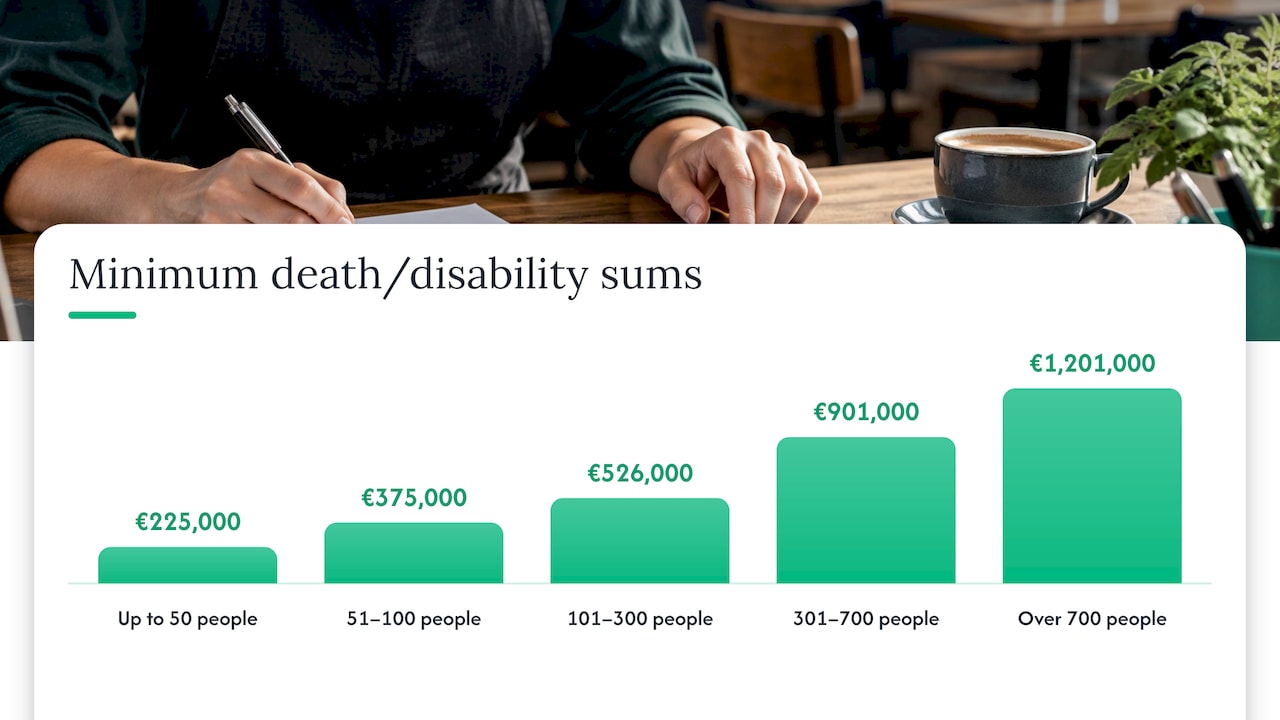
- In Andalucía, minimum sums depend on capacity: €225,000 for venues up to 50 people, rising in bands to €1,201,000 above 700.
- Going without the policy is a very serious infringement in Andalucía and a serious one in Madrid, with fines and possible closure.
- If you employ staff, the provincial hospitality collective agreement may oblige you to insure workers against accidents at your cost.
- Fire, water, theft, equipment breakdown and loss of profits are recommended extras that protect the café itself.
Table of Contents
- Why the rules change depending on where you open
- Civil liability: the compulsory policy
- What the town hall asks you to show
- If you employ staff: the collective agreement
- Recommended cover beyond the legal minimum
- What drives the price
- A step-by-step route to compliant cover
- Our perspective
- Get your café cover arranged in English
- FAQ
- Sources
Why the rules change depending on where you open
Spain has no single national “café insurance law”. The obligation comes from the autonomous communities, which regulate public shows, recreational activities and public establishments, and from town hall ordinances that set the paperwork for an opening licence. A café counts as a public establishment because customers consume food and drink on the premises.
That is why articles that give one rule for all of Spain mislead. Business insurance as a whole is not a legal requirement in general only in the sense that no single law demands a full package; what is compulsory is the specific civil liability cover tied to your activity and your region. The Spanish government’s registry of compulsory insurances, the Registro de Seguros Obligatorios run by the Consorcio de Compensación de Seguros, is public and searchable by territory, legal basis and activity code. Most compulsory insurances listed there are civil liability policies, which matches what cafés face.
In practice you need to know three things before you ask for quotes: your region, your town hall’s licensing rules and your café’s capacity (the number of people the premises are licensed to hold).
Civil liability: the compulsory policy
Civil liability insurance pays for damage your café causes to customers or other third parties, for example a guest who slips on a wet floor or a hot drink that burns someone. It is the cover regional law ties to your licence.
Andalucía
In Andalucía, Ley 13/1999 on public shows and recreational activities (consolidated text updated 16 February 2024) obliges organisers to take out a civil liability contract in article 14.c. Article 19.12 treats the absence or lapse of that contract as a very serious administrative infringement.
Decreto 109/2005, which develops that law, names restaurants, self-service restaurants, cafeterías, bars and bar-kiosks expressly. It sets minimum sums for death and absolute permanent disability according to capacity:
| Capacity | Minimum sum |
|---|---|
| Up to 50 people | €225,000 |
| 51 to 100 people | €375,000 |
| 101 to 300 people | €526,000 |
| 301 to 700 people | €901,000 |
| Over 700 people | €1,201,000 |
Pubs and music bars face higher sums: €301,000 up to 50 people, €451,000 for 51 to 100 and €601,000 for 101 to 300. If you plan evening music or late opening, check which category your licence puts you in before you buy.
Two details from the same decree save owners from nasty surprises. The minimum sums are maximum indemnity limits per policy year and per claim, with a ceiling of €151,000 per victim. Sums for other personal damage and for material damage are freely agreed between you and the insurer, so a policy that meets the legal minimum can still leave your own exposure thin.
Madrid
In the Comunidad de Madrid, Ley 17/1997 requires premises covered by the law to hold insurance for fire risks on the premises and for civil liability towards attendees and third parties. That liability covers damage arising from the premises, its installations and services, the activity and its staff (article 6.3). Proof is a prerequisite for the operating licence under article 8.1.
The sanctions are concrete. Failing to hold the required contracts is a serious infringement (article 38.1), punishable under article 41.2 with a fine of €4,501 to €60,000, plus possible closure for up to six months or suspension of the activity. A draft amendment published in December 2025 proposes interim minimum capital by capacity, starting at €42,070 for up to 50 people and rising by bands. It was a proposal, so confirm the figures in force with the regional authority when you apply.
Other regions
Every community has its own law and sums. Do not assume the Andalusian or Madrid figures apply in the Balearic Islands, the Canary Islands or Valencia. Ask your town hall’s licensing department (departamento de licencias) for the exact requirement and the form of proof they accept.
What the town hall asks you to show
The licence is where the insurance obligation becomes real. Take Almería: its municipal ordinance annex states that, for the listed activities, no authorisation is granted without documentary proof of a current compulsory civil liability policy, and the town hall must hold the policy and the proof of payment.
That means three practical points:
- The policy must be in force and paid. A quote or a signed but unpaid policy is not proof.
- The activity must match. The policy description (café, bar, with or without terrace, with or without live music) should match what your licence application says. A mismatch is a common reason for delays.
- Capacity drives the sum insured. The figure on the policy has to meet the minimum for the capacity stated in your licence.
As expats, many owners meet this step with a Spanish-language form, a technical architect’s report and a deadline from a landlord who wants rent to start. Getting the policy wording right first time matters more than shaving a few euros off the premium.
If you employ staff: the collective agreement
Hiring changes the picture. Spanish hospitality is governed by provincial collective agreements (convenios colectivos), and several oblige employers to take out a collective accident policy at their own cost. Provinces such as Cádiz, Navarra, Gipuzkoa and Cáceres are examples where this applies.
Take Cáceres. Its 2026 to 2028 hospitality agreement requires covered companies to insure death from a work accident or absolute permanent disability for €24,610.89 in 2026 and €25,348.30 in 2027. Cover starts automatically when a worker joins the payroll. Other provinces set different sums, so read the agreement for your province and your café’s category before you hire your first employee.
This cover is separate from the social security contributions you pay as an employer. If you hire family members, part-time staff or seasonal workers, ask whether the agreement treats them the same way. Our personal accident insurance page explains how this type of cover works in Spain.
Recommended cover beyond the legal minimum
The legal requirement protects customers. The rest protects you. Most cafés benefit from the following, and landlords and banks often ask for some of it.
Multi-risk commercial cover
A multirriesgo comercial policy covers the premises and contents against fire, water damage, theft and broken glass. Two Spanish terms matter here: continente is the building structure and fixtures you are responsible for, and contenido is your stock, furniture and equipment. If you rent, the lease usually tells you which one you must insure. Check the sum insured against the real replacement value of your espresso machine, fit-out and stock. Under-insuring triggers the regla proporcional (the proportional rule), by which the insurer pays only the share of the loss that your sum insured represents of the true value. It bites hardest after a large claim, exactly when you need the money.
Our article on commercial property insurance for shops and offices goes through how sums insured and contents are set.
Equipment breakdown and spoiled stock
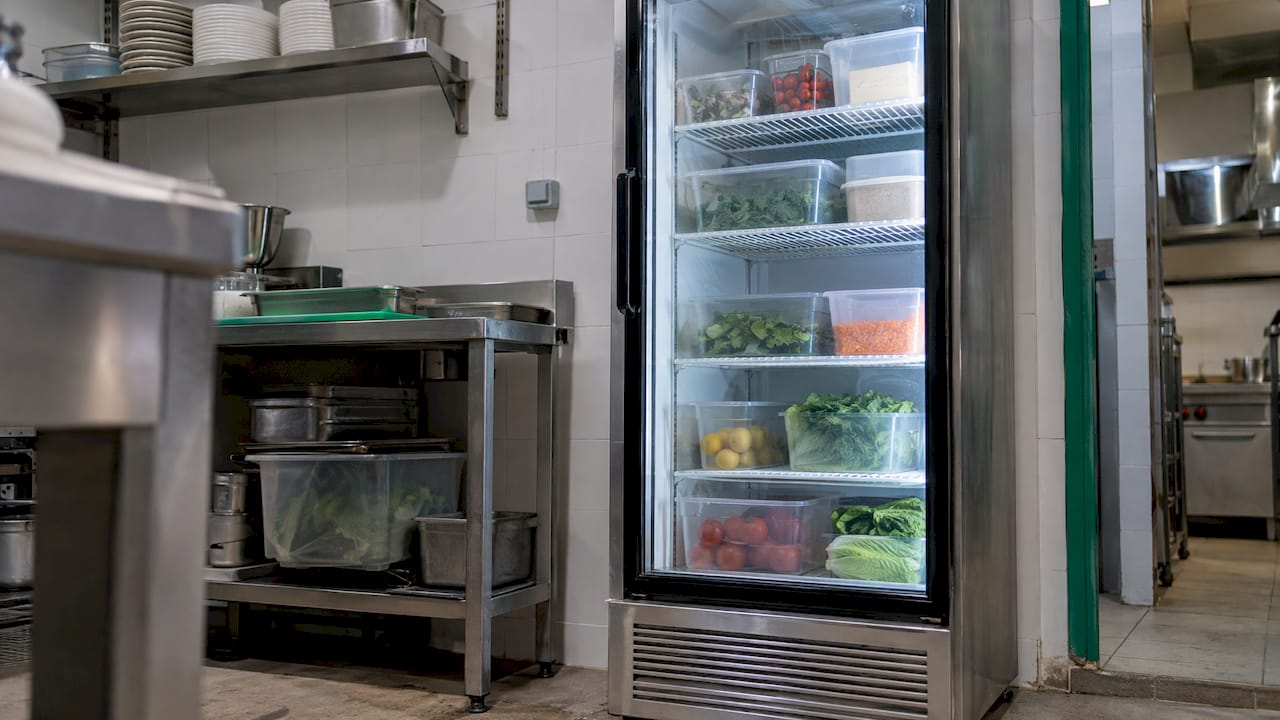
A café lives on refrigeration, a grinder, an oven and a dishwasher. Machinery breakdown cover pays to repair or replace equipment after a sudden fault, and it can include the spoilage of refrigerated stock when a fridge fails. Ask for the stock spoilage limit in writing, because it is often a sub-limit (a lower cap inside the policy for one type of loss).
Business interruption
After a fire or flood you may close for weeks while fixed costs such as rent, loans and salaries continue. Business interruption, also called loss of profits, replaces the income you would have earned during the closure, for the indemnity period you choose. It only pays when the closure follows an insured event, so it is bought together with the property cover.
Product and food-related claims
When you serve food and drink, a guest may claim an illness or an allergic reaction. Ask whether your civil liability policy includes product liability and what the limit is. If the policy mentions only the premises, food-related claims may sit outside it.
Personal protection for you as owner
If you are the one behind the counter, your own income stops if you cannot work. See our pages on income protection insurance and, for non-resident owners, your private medical cover. Foreign residents applying for visas will find the health options on our private health insurance page.
What drives the price
Premiums depend on several factors that insurers ask about in the quote form:
- Capacity and floor area, which also set the legal minimum sum in some regions.
- Type of activity: café only, bar with late hours, kitchen with frying, live music.
- Terrace, as outdoor seating adds exposure for slips and falls.
- Sums insured for contents, stock and equipment.
- Number of employees and annual turnover.
- Claims history, if you have run a business before.
- Region and town, because legal minimums and risk differ.
Because insurers weigh these factors differently, the same café can receive quite different quotes. That is the point of comparing. We do not publish a price for café cover, since the figure depends on the details above.
A step-by-step route to compliant cover
- Confirm your region and town hall rules. Ask the licensing department what proof they accept and whether they state a minimum sum.
- Fix your capacity. The figure in your licence application sets the legal minimum in many regions.
- List your activity honestly. Include the terrace, any music and any food preparation.
- Check the collective agreement for your province if you will employ staff.
- Request quotes with identical sums and limits so the comparison is fair. A cheaper premium with a lower per-victim cap or a large excess is not the same product.
- Read the exclusions and sub-limits on stock spoilage, glass, theft without forced entry and product liability.
- Pay the first premium and keep the receipt. The town hall needs the policy and proof of payment.
- Diarise the renewal. A lapsed civil liability contract is an infringement in itself.
At step 5 you can do the comparison with us. We work with over 11 leading Spanish insurers, so one conversation in English replaces several separate quote requests. Our bar and restaurant insurance page sets out the hospitality cover, and the public liability insurance page covers the compulsory part.
Our perspective
Most expats who open a café in Spain come to us in the middle of the licence process, with a Spanish form in one hand and a landlord waiting. The policy itself is rarely the problem. The problem is that nobody has explained what the town hall wants to see, which sum applies to the capacity, and which parts of the policy are sub-limits rather than full cover.
We built our service around that gap. Our English-speaking team compares quotes across over 11 Spanish insurers, explains each option without jargon, and arranges the policy you choose. The service is free to you as the insured, and there are no hidden fees, because we are paid a commission by the insurer when a policy is signed.
Our advice is to treat the compulsory civil liability policy as the floor, not the plan. Pair it with cover for the premises, the equipment and the income you would lose if you had to close. That is the combination that lets you keep trading after a bad day rather than only keeping your licence.
Jake
Get your café cover arranged in English
If you are a business owner who needs civil liability cover for a café or bar in Spain, we handle the comparison and the paperwork in your language. Tell us your region, capacity and activity, and we compare quotes from over 11 leading Spanish insurers so the policy you sign matches what your licence needs. You can start from our business and liability insurance pages or our business insurance page.
For a wider view of what we arrange, from health to property and pet insurance, see our main page for expats.
FAQ
What insurance do I need for a café in Spain?
Civil liability insurance is the compulsory one, and town halls ask for proof of it before granting the opening licence. If you employ staff, your provincial hospitality agreement may also require a collective accident policy at your cost. Multi-risk, equipment breakdown and business interruption cover are strongly recommended.
Is business insurance legally required in Spain?
Not as a single package. The legal requirement is tied to your activity and region, and for cafés it is civil liability cover under the regional law on public shows and recreational activities. Lease and finance contracts often add property cover as a condition.
What happens if my café has no civil liability policy?
In Andalucía, the absence or lapse of the contract is a very serious infringement under Ley 13/1999. In Madrid, Ley 17/1997 sets a fine of €4,501 to €60,000 for failing to hold the required insurance, plus possible closure of up to six months or suspension of the activity.
How much does café insurance cost in Spain?
The premium depends on capacity, activity, terrace, sums insured, staff numbers and your region, so no single figure fits every café. A comparison with identical sums and limits gives you a real price for your premises. We arrange that comparison in English across over 11 insurers.
Sources
- Ley 13/1999 de Espectáculos Públicos y Actividades Recreativas de Andalucía, BOE consolidated text
- Decreto 109/2005, Junta de Andalucía (BOJA)
- Ley 17/1997 de Espectáculos Públicos y Actividades Recreativas, Comunidad de Madrid (BOE)
- Proposed amendment to Ley 17/1997, Comunidad de Madrid, December 2025
- Punto de Acceso General, compulsory civil liability insurance
- Ayuntamiento de Almería, annex to the municipal opening ordinance
- Cáceres provincial hospitality agreement 2026 to 2028