€500–€1,500 Per Person: Who Can Claim Health Insurance Tax Relief in Spain
Yes, private health insurance is tax deductible in Spain, but only within strict boundaries. If you’re self-employed under direct estimation, you can deduct premiums for yourself, your spouse and children under 25 who live with you, capped at €500 per person per year, or €1,500 for a person with a disability. Employees can’t usually deduct premiums they pay themselves, but if an employer pays, that same limit applies as a tax exemption rather than a deduction.
TL;DR:
- The €500 deduction limit applies per insured person, with a maximum of €1,500 total for families of three, and rises to €1,500 per person if they have a recognized disability.
- Only self-employed individuals under direct estimation can claim the deduction as a business expense; employees paying premiums themselves generally cannot, unless their employer covers the cost, which then qualifies for exemption rather than deduction.
- Premiums paid outside Spain or through joint accounts can cause rejection unless invoices clearly show the policyholder and insured family members, so proper documentation is essential.
- Additional regional deductions may exist in certain autonomous communities like Cantabria, Valencia, and the Canary Islands, potentially increasing the total deductible amount.
- Employer-paid health insurance premiums are exempt up to the same caps but become taxable if they exceed the limit, with careful payroll tracking necessary to avoid mistakes.
Table of Contents
- Who can claim the health insurance tax deduction in Spain
- The €500 and €1,500 limits: how the maths actually works
- How employer-paid health insurance is treated for tax
- Evidence and paperwork: what AEAT wants to see
- Regional deductions that could change your numbers
- Mistakes that get health insurance deductions rejected
- Worked examples: calculating your deductible amount
- Getting your paperwork checked before you file
- What I see clients get wrong most often
- Get your health cover reviewed before tax season
- Sources
- FAQ
Who can claim the health insurance tax deduction in Spain
The deduction hinges on one thing: how you’re taxed, not how much you earn. If you’re an autónomo filing under the estimación directa (direct estimation) regime, the Tax Agency treats your private health insurance premiums as a deductible business expense, provided the policy covers you and, where applicable, your immediate family.
Salaried employees sit in a different position. If you’re on payroll and you buy your own private cover, you generally can’t deduct those premiums from your personal income tax. The relief only appears when your employer pays for the policy, and that works as an exemption rather than a deduction. It’s a subtle distinction that trips up plenty of expats moving from PAYE-style systems.
Who counts as family for this purpose is narrowly defined:
- The taxpayer
- A spouse
- Children under 25 who live with the taxpayer
- Any of the above with a recognised disability, which unlocks a higher cap
The €500 and €1,500 limits: how the maths actually works
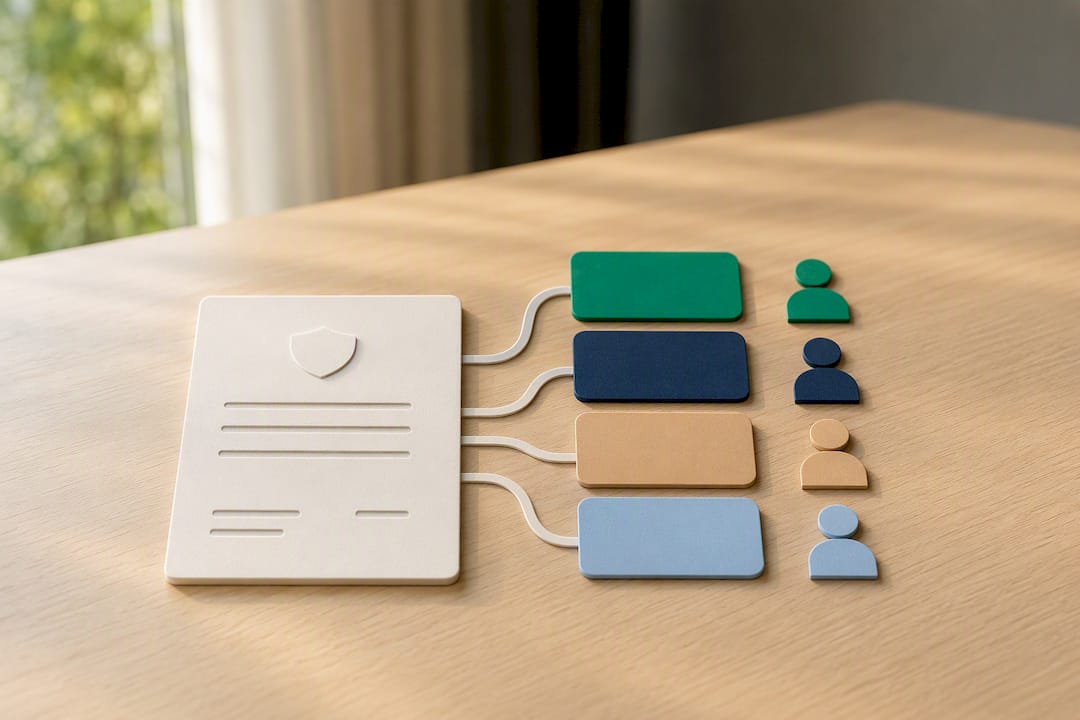
The limit is applied per insured person, not per policy or per household. Each qualifying family member carries their own separate cap, and you add them together to find your total deductible amount.
Here’s how that plays out in practice:
- One person insured (just the taxpayer): deductible ceiling of €500 per year.
- Two people insured (taxpayer plus spouse or child): €500 each, so €1,000 combined.
- Three people insured (taxpayer, spouse, one child): €500 each, totalling €1,500.
- Any insured person with a disability: their individual cap rises to €1,500, added on top of the standard €500 figures for everyone else on the policy.
The core rule: Every qualifying person on the policy gets their own €500 allowance, rising to €1,500 if that person has a recognised disability. Anything you pay above that per-person figure simply isn’t deductible. It doesn’t roll over, and it doesn’t get taxed as a penalty. It’s just excluded from your net business income calculation, meaning you pay full tax on that slice as if the expense never happened.
How employer-paid health insurance is treated for tax
When your employer foots the bill for private health cover, the Tax Agency treats that premium as exempt from employment income, up to the same €500 or €1,500 per-person figures used for autónomos. This exemption applies whether the policy covers just you or extends to your spouse and children under 25.
The moment the premium exceeds that threshold, the excess stops being invisible to the tax office. It gets added back as remuneration in kind, taxed exactly like a salary top-up.
A few practical points worth flagging:
- Payroll teams need to track per-person costs carefully, not just the total policy cost, since a family plan can quietly push one member over the cap while others stay under it.
- Mixed arrangements exist too. Some employers cover a base policy and let employees pay privately to upgrade it. Only the employer-paid portion qualifies for the exemption.
- Always check your payslip. If your employer is applying the exemption incorrectly, you could end up either overpaying tax unnecessarily or facing a correction later.
Evidence and paperwork: what AEAT wants to see
Claiming the deduction is only half the job. Proving it holds up under scrutiny is the part most people underprepare for. AEAT’s position is consistent across its IRPF guidance manuals: the expense has to be real, paid by the taxpayer, and properly documented.
Keep these on file, ideally in one folder, before you file:
- The insurer’s invoice, showing the policyholder’s name and the insured persons covered.
- Bank statements or payment receipts proving you (or your employer, for the exemption route) actually paid the premium.
- Policy documentation confirming who is insured, since AEAT checks this against the family members you’re claiming for.
For autónomos, the deduction is entered as part of your deductible expenses when calculating net income under estimación directa, feeding into your annual modelo 100 IRPF return. The AEAT manuals set out the exact fields, and it’s worth checking the current year’s version before submitting, since formatting occasionally shifts.
Pro Tip: Ask your insurer to itemise every insured person by name on the invoice itself, not just list a family policy total. It removes the single most common reason AEAT queries these claims.
Regional deductions that could change your numbers
National IRPF rules set the floor, but they’re not the whole story. Several autonomous communities layer on their own health-related allowances, and these can shift your total tax outcome noticeably depending on where you’re registered.
- Cantabria, Valencia, and the Canary Islands are among the regions known to offer additional health-related deductions or different percentage caps beyond the national scheme.
- These regional allowances sit alongside the national deduction rather than replacing it, so you may be entitled to both.
- The exact rules vary enough between comunidades autónomas that guessing is not worth the risk.
If you’re filing in one of these regions, check your local Agencia Tributaria comunidad page before assuming the national €500/€1,500 figures are the full picture. A ten-minute check can be the difference between claiming everything you’re owed and leaving money on the table.
Mistakes that get health insurance deductions rejected
Most rejected claims share the same handful of root causes, and nearly all of them are avoidable with a bit of care before filing.
- Claiming premiums that someone else actually paid, such as a partner’s bank account, when the return is filed under your name.
- Invoices that don’t clearly show who the policyholder is, leaving AEAT unable to match the expense to the person claiming it.
- Policies taken out with insurers outside Spain, where proof of payment and coverage doesn’t map neatly onto Spanish documentation standards.
- Misattributing which family member is covered, particularly with blended families or children who’ve just turned 25.
AEAT can request the full policy, proof of identity for each insured person, and bank evidence of payment during a routine check, not just in a formal audit.
Pro Tip: If your situation involves more than one payer, a disability allowance, or a mid-year policy change, get a professional to check the numbers before you file rather than after AEAT queries them.
Worked examples: calculating your deductible amount
Numbers make this far easier to grasp than rules alone.
- Single autónomo, own cover only: Premium of €600 per year. Deductible amount is capped at €500. The remaining €100 simply isn’t deductible and gets taxed as normal income.
- Autónomo covering spouse and one child: Three people insured, each carrying their own €500 cap. Total deductible across the family: €1,500, regardless of how the actual premium is split between them.
- Employer pays a family policy costing €2,000 for two people: Each person’s exemption caps at €500, so €1,000 total is exempt. The remaining €1,000 is added back as taxable employment income for the employee.
Getting your paperwork checked before you file
Working out your own numbers is one thing. Knowing your private health insurance policy is structured correctly, and that your invoices actually say what AEAT needs them to say, is another.
An insurance brokerage works with expats who want a second pair of eyes on their policy documentation before tax season becomes stressful. That includes checking whether your current cover, or a new policy compared across the market, lists insured persons correctly and matches what you’re claiming. The service is advisory rather than a substitute for formal tax advice. For anything beyond a straightforward single claim, a gestor or tax adviser should confirm the figures before you submit your modelo 100.
What I see clients get wrong most often
The single biggest error isn’t misunderstanding the €500 limit. It’s mismatched payment sources: a spouse pays from a joint account registered under someone else’s name, or an employer covers part of a family policy while the employee separately tops it up, and nobody can prove who paid what.
My advice is always the same. Keep every policy page and every payment receipt in one folder, year by year, and check that the insurer’s invoice names the actual policyholder. It resolves most disputes before they start.
— Jake
Get your health cover reviewed before tax season
If you’re not entirely sure your current policy is structured to maximise this deduction, or you’re weighing up private cover for the first time, it helps to have someone check the details before you file rather than after AEAT asks questions. A bilingual insurance brokerage offers a practical alternative to sifting through Spanish-only insurer terms and payroll rules alone, comparing options across multiple Spanish insurers and explaining exactly what each policy document needs to show for tax purposes, all in English.
Whether you’re an autónomo setting up cover for the first time or an employee checking whether your company policy is structured correctly, the team can walk through your options and flag anything that might cause issues later. This is a broker service, not a tax advisory one, so for complex cases, pairing it with a gestor’s sign off is still worth doing. Start by requesting a private health insurance comparison to see how your current premiums measure up, or browse the full coverage options available before your next filing deadline.
Sources
The figures and rules above come directly from official guidance, backed by professional interpretation where AEAT’s own wording gets technical.
- Tax Agency: expenses for health insurance (estimación directa)
- Are private health costs tax deductible in Spain? — The Local
This article is general information, not a substitute for advice from a qualified financial advisor. Consult a qualified financial professional about your own circumstances before acting on anything here.
FAQ
What is the best health insurance for expats in Spain?
There’s no single best policy. It depends on whether you’re prioritising low premiums, wider hospital networks, or dental and specialist cover. Comparing quotes across multiple insurers is the fastest way to see which policy fits your budget and location, while also checking it’s structured correctly for any future tax deduction.
What expenses can I deduct from my tax return in Spain?
Self-employed taxpayers under direct estimation can deduct genuine business expenses, including private health insurance premiums up to €500 per person, or €1,500 for a person with a disability. Employees generally can’t deduct privately paid premiums, though employer-paid cover can be exempt within the same limits.
Can EU citizens get free healthcare in Spain?
EU citizens who are registered residents and contributing to Spanish social security typically get access to public healthcare through the national system, often using an S1 form for those receiving a pension elsewhere in the EU. This is separate from the tax deduction rules covered here, which apply specifically to private health insurance premiums.
How much tax can I claim back in Spain on health insurance?
The amount depends on your marginal tax rate and how many qualifying family members are on your policy, since each person carries a separate €500 cap, rising to €1,500 for a person with a disability. A family of three insured under one policy could see up to €1,500 in combined deductible premiums, though the actual tax saving depends on your income band.
Recommended
0 Comments
Be the first to leave a comment.