

Drive Legally in Spain in Days: Registration & Insurance for Expats
Every car kept in Spain must carry motor third-party liability insurance, known locally as seguro de responsabilidad civil. That is the only mandatory cover, and the fastest way to arrange it in English is to gather your NIE, driving licence and vehicle details, then request a quote from a bilingual broker. Keep the Consorcio de Compensación de Seguros (CCS) number handy too, since it is the official point of contact if you ever need to trace an insurer after an accident.
TL;DR:
- Most expats can obtain a Spanish car insurance policy within days if they have their NIE, driving license, vehicle documents, and proof of no-claims ready.
- Providing accurate and complete paperwork prevents delays, especially proof of address, vehicle registration, the ITV certificate, and claims history from previous insurers.
- A bilingual broker can compare policies in plain English, clarify exclusions, and streamline the process, usually with no extra fee and a turnaround of a few days.
- In case of a collision with an unrecognized foreign-insured vehicle, the CCS facilitates claim tracing and compensation under EU regulations effectively.
- The actual insurance cost depends on driver age, experience, vehicle value, cover level, and location, with premiums often rising from overlooked documentation errors.
Table of Contents
- What car insurance is legally required in Spain?
- What documents do you need before requesting a quote?
- How does a bilingual broker actually help you buy cover?
- What happens if you have an accident with a foreign-insured vehicle?
- What trips up expats, and what actually drives the cost?
- A quick reality check on getting insured in Spain
- Get your car insured in English without the paperwork chase
- Sources
- FAQ
What car insurance is legally required in Spain?
Any vehicle habitually parked in Spain, whether owned by a resident or an expat still finishing the paperwork, must carry motor third-party liability insurance. This is the baseline the Dirección General de Seguros y Fondos de Pensiones (DGSFP) enforces, and driving without it is a criminal offence, not just an administrative one.
Mandatory cover pays for injury and damage you cause to other people, their vehicles and their property. It does not pay for your own car. The statutory compensation amounts victims can claim are set out in the baremo, the official indemnity table, which the DGSFP’s 2026 motor insurance pages and recent resolutions under Ley 5/2025 have updated. That matters because it changes how much an insurer is obliged to pay out for personal injury claims, which in turn affects premiums.
Most expats add cover beyond the legal minimum, since third-party liability alone leaves your own car exposed:
- Comprehensive (todo riesgo): covers damage to your own vehicle regardless of fault, including collisions you cause.
- Fire and theft: pays out if the car is stolen or damaged by fire, without full comprehensive pricing.
- Legal defence: covers legal costs if you are prosecuted or need to claim against another driver.
- Roadside assistance: arranges recovery and repair after a breakdown, which matters if you are still learning the road network.
The gap between the mandatory policy and a properly specified one is usually a few hundred euros a year, not a small sum, but modest against the cost of writing off a car you have to replace yourself.
What documents do you need before requesting a quote?
Spanish insurers will not issue an accurate quote without seeing your paperwork first, so gather everything before you start comparing prices. Missing one document is the single biggest reason expat quotes get delayed or revised upward once the underwriter sees the full picture.
- Your NIE (Número de Identificación de Extranjero), passport and proof of Spanish address, such as a rental contract or utility bill.
- Your driving licence. An EU licence transfers directly; a non-EU licence may need to be exchanged or accompanied by an International Driving Permit, depending on your nationality and how long you have lived in Spain.
- Vehicle registration documents (permiso de circulación) and proof the car has passed its ITV roadworthiness test, if it is due one.
- Proof of your claims history (bonus-malus) from your previous insurer, if you have one. Spanish insurers will price you as a new driver without it, which usually means a higher premium.
- Payment details for setting up the policy, plus confirmation of your start date.
If you have just imported or bought a car and need cover before the Spanish policy activates, ask about temporary “insurance in frontier” or short-term cover to bridge the gap legally. Newly arrived owners with a UK-registered car still on British plates have their own transitional options too, covered separately for UK-registered vehicles in Spain.
Pro Tip: Request your no-claims letter from your old insurer before you leave your home country. Getting it couriered or emailed later from abroad can take weeks and stalls your Spanish quote in the meantime.
How does a bilingual broker actually help you buy cover?
A broker’s job is straightforward: compare policies across multiple Spanish insurers, explain the terms in plain English, and handle the paperwork so nothing gets lost in translation. That last part matters more than it sounds. Spanish policy wording is dense even for native speakers, and a mistranslated exclusion clause can cost you a claim later.
Here is what a competent English-speaking broker in Spain should be doing for you:
- Comparing quotes from several insurers rather than pushing a single provider.
- Translating policy exclusions, excess levels and claim procedures into clear English before you sign anything.
- Confirming which insurer representative handles claims if you are ever in an accident with a foreign-plated vehicle.
- Chasing your documents proactively, since missing paperwork is the main cause of delay.
There is a regulatory reason to trust this process rather than treat it as a sales script. The DGSFP requires distributors and their advisers to hold formal training qualifications, graded as Nivel 1, 2 or 3 depending on their role. Asking which level your adviser holds is a fair question, and a reputable broker will answer it without hesitation.
Turnaround is usually a matter of days once your paperwork is complete, though foreign bonus-malus letters and residency documents still in transit are the two things most likely to slow it down. Before you commit, ask your broker to confirm: the insurer’s name, the policy number, the start date, what is excluded, how claims are handled, and who represents that insurer in Spain if you are hit by a foreign-insured car.
Pro Tip: Ask for the policy certificate and full wording in English, not just a summary. You want the actual exclusions in writing before you drive off, not a verbal reassurance.
What happens if you have an accident with a foreign-insured vehicle?
Around a fifth of EU cross-border accident claims involve identifying an unfamiliar foreign insurer, which is precisely the situation Spain’s compensation system was built to solve. If another driver’s car is insured in another EU or EEA country and you do not recognise the insurer, the CCS acts as an official information centre that can trace the policy for you. Its contact centre number is 900 222 665, and it is worth saving in your phone before you ever need it.

Under EU rules, you can bring your claim through the compensation body in your own country of residence, and the level of cover applied follows the law of the country where the accident happened. In practice, that usually means dealing with the other insurer’s Spanish representative, a mechanism grounded in Spain’s consolidated motor insurance law. If the vehicle turns out to be uninsured or the insurer has gone under, the CCS itself steps in as a fund of last resort.
At the scene and afterwards, a short checklist keeps things moving:
- Fill out the European Accident Statement with the other driver, and photograph the vehicles, plates and damage.
- Get a police report for anything involving injury or significant damage.
- Note the other vehicle’s registration and, if visible, its insurer.
- If the insurer is unclear, contact the CCS’s FIVA service, which holds a register linking registration plates to insurers.
What trips up expats, and what actually drives the cost?
Most delays come down to a handful of recurring mistakes, all avoidable with a bit of preparation.
- Residency proof that does not match the address on your NIE certificate.
- A missing or expired ITV, which some insurers will not quote against at all.
- Vehicle registration details that do not match the car in front of the underwriter.
- No proof of no-claims history, which pushes you into a higher starting premium.
Quotes typically come back within a day or two once your documents are complete, and the policy can often be active the same week. Premiums themselves swing on a fairly predictable set of factors: your age and driving experience, your claims history, the car’s engine size and value, the cover level you choose, and where in Spain you are based, since urban areas with higher theft rates cost more to insure than rural provinces.
A quick reality check on getting insured in Spain
Expats overcomplicate this far more than they need to. Comparing more than 11 insurers including Mapfre and Allianz, readers who arrive with their NIE, licence and vehicle paperwork sorted often get a policy within days, while others may experience delays chasing documents. The fastest route is simple: request an English quote first, sort the paper trail second. And if an accident ever leaves you staring at an unfamiliar foreign insurer’s name, remember the CCS and FIVA exist precisely for that moment. You are not navigating this alone, even if it feels that way at 11pm reading Spanish legal text.
— Jake
Get your car insured in English without the paperwork chase
A bilingual team can help overcome the language barrier between you and various insurers’ small print. Instead of translating policy documents yourself or relying on a general broker, you can get assistance comparing quotes from multiple leading insurers and explanations of terms in plain English before signing.
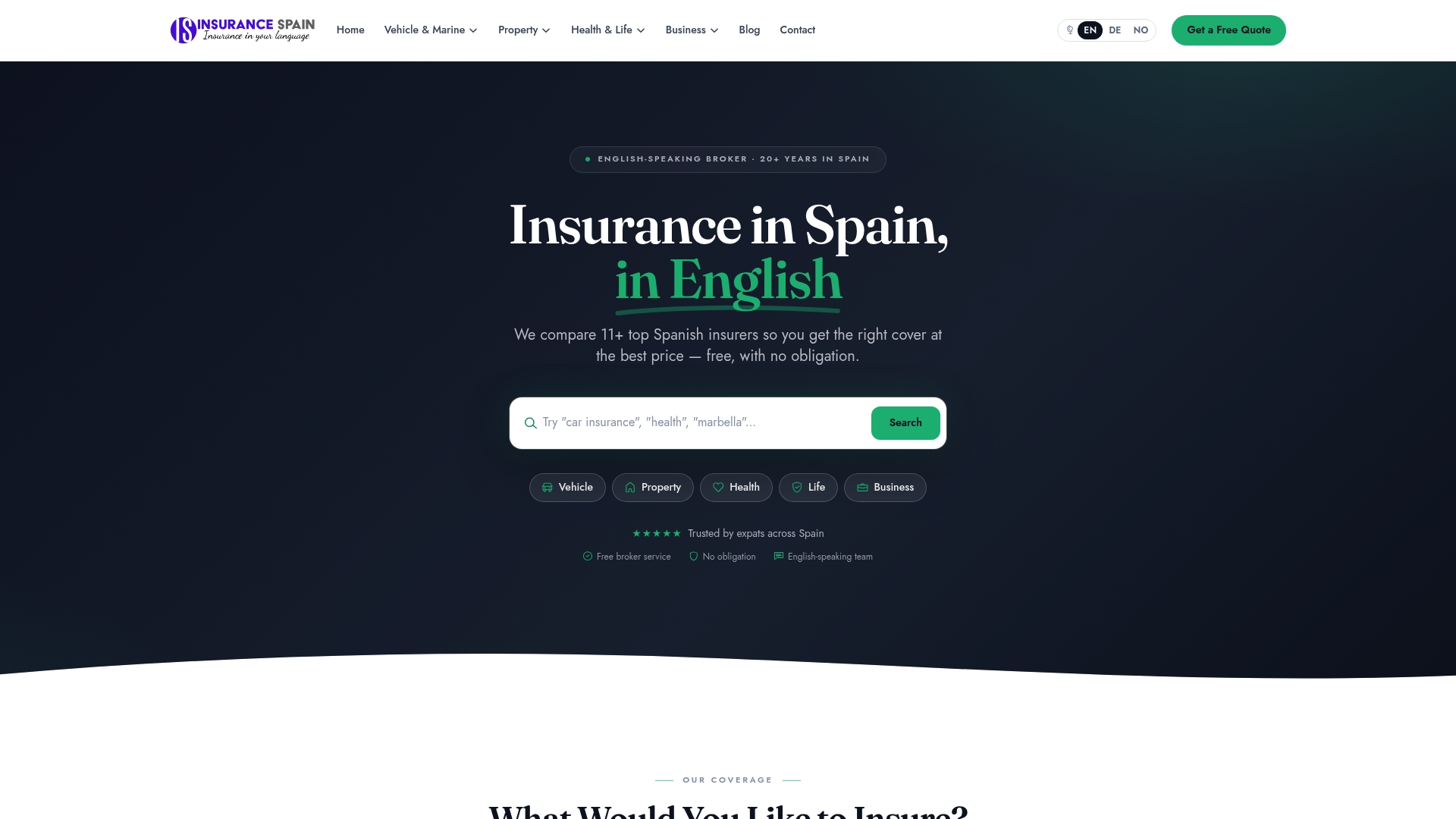
Some brokerage services operate on a commission basis with insurers, so there are no direct broker fees added to your premium, and turnaround from enquiry to an active policy can be a matter of days once your documents are in place. Whether you need standard car insurance for expats in Spain, cover while your vehicle is still on UK plates, or a policy as a non-resident holiday home owner, the starting point is the same: request a quote on the Insurance Spain homepage and get your NIE, licence and vehicle details ready to send across.
Sources
- CCS como organismo de información
- Your Europe — car insurance cover abroad
- Ley 5/2025 (modifications to motor insurance law)
FAQ
Is car insurance mandatory for expats in Spain?
Yes. Any car habitually parked in Spain must carry motor third-party liability insurance, regardless of the owner’s nationality or residency status. Driving without it is a criminal offence, not simply an administrative fine.
What documents do I need to register a car insurance policy as an expat?
You typically need your NIE, passport, proof of Spanish address, driving licence, vehicle registration documents, valid ITV certificate, and ideally a no-claims letter from your previous insurer. Missing the no-claims proof is the most common reason quotes come back higher than expected.
How much does car insurance cost for expats in Spain?
Cost depends on your driving history, the car’s value and engine size, your chosen cover level, and where in Spain you live. Insurance Spain compares quotes across more than 11 insurers on request, with pricing available directly through Insurance Spain.
What do I do if I have an accident with a foreign-insured car?
Complete a European Accident Statement, photograph the scene, and note the other vehicle’s registration and insurer if known. If the insurer is unclear, contact the CCS on 900 222 665, which can trace it through the FIVA register.
How long does it take to get car insurance sorted in Spain?
Once your documents are complete, quotes usually arrive within a day or two and policies can be active the same week. Delays almost always come from missing residency paperwork, an expired ITV, or an unavailable no-claims history letter.
Recommended
0 Comments
Be the first to leave a comment.