Minder dan 90 dagen in Spanje: reis- of zorgverzekering?
De meeste kortstondige bezoekers van Spanje hebben een reisverzekering nodig; residenten en langdurige expats hebben een particuliere of internationale zorgverzekering nodig. Veel mensen, vooral studenten, digital nomads en iedereen die zijn tijd verdeelt over meerdere landen, hebben beide nodig. Sommige Schengenvisumcategorieën maken een reisziektekostenverzekering zelfs wettelijk verplicht, en niet zomaar een optie.
TL;DR:
- Een reisverzekering dekt reisgebonden noodgevallen zoals annuleringen, verloren bagage en evacuatie, met een vaste looptijd en een aparte evacuatielimiet.
- Een particuliere zorgverzekering in Spanje biedt doorlopende zorg, waaronder ambulante en klinische behandelingen en de begeleiding van chronische aandoeningen, vaak met een wachttijd.
- Als u op slechts één type polis vertrouwt, kunt u dure dekkingsgaten overhouden, vooral omdat evacuatie en reisonderbreking doorgaans zijn uitgesloten van een zorgverzekering.
- Voor sommige visumaanvragen moet u bewijs van een reisziektekostenverzekering met specifieke dekkingsniveaus overleggen voordat de aanvraag wordt goedgekeurd.
- De beste aanpak is: bepaal hoe lang uw verblijf duurt, controleer de evacuatielimieten en verifieer vóór aankoop de polisvoorwaarden in het Nederlands.
Inhoudsopgave
- Reis- versus zorgverzekering: de belangrijkste verschillen op een rij
- Wat dekt een reisverzekering precies?
- Wat dekt een particuliere zorgverzekering in Spanje?
- Waar overlappen de twee, en waar worden de gaten gevaarlijk?
- Wat bepaalt de premie, en welke visumregels zijn van belang?
- Hoe kiest u tussen een reis- en een zorgverzekering?
- Wat expats verkeerd doen bij reis- en zorgverzekeringen in Spanje
- Regel de juiste dekking zonder giswerk
- Bronnen
Reis- versus zorgverzekering: de belangrijkste verschillen op een rij
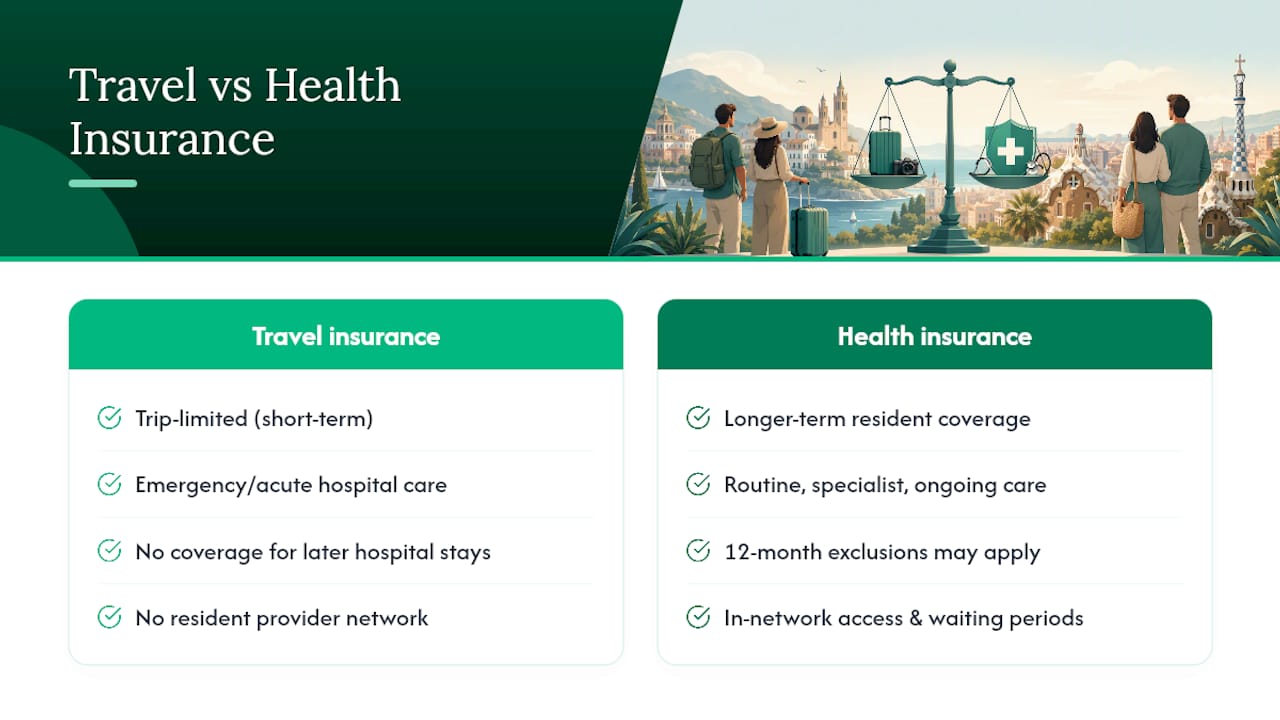
De twee producten lossen verschillende problemen op, en juist die verwarring is waar expats de mist ingaan. Een reisverzekering is gemaakt voor de reis zelf. Ze loopt voor een vaste periode, meestal van een paar dagen tot een paar maanden, en is bedoeld om plotselinge noodgevallen buiten de deur op te vangen. Een zorgverzekering, of dat nu een Spaanse particuliere polis of een internationaal plan is, is gemaakt voor het dagelijks leven. Ze loopt jaarlijks, wordt telkens verlengd en dekt de medische zorg die u nodig heeft, of u nu op reis bent of niet.
De praktische verschillen worden snel duidelijk zodra u vergelijkt waar elke verzekering daadwerkelijk voor betaalt:
- Looptijd: een reisverzekering geldt voor de duur van de reis; een zorgverzekering loopt op jaar- of meerjarenbasis.
- Kernfunctie: reispolissen dekken spoedeisende medische behandeling en reisonderbreking; zorgpolissen dekken reguliere en chronische zorg.
- Evacuatie en repatriëring: vrijwel altijd onderdeel van een reisverzekering, zelden inbegrepen in een standaard zorgverzekering.
- Annulering, vertraging en verloren bagage: uitsluitend gedekt door een reisverzekering.
- Belang voor het visum: voor sommige Spaanse en Schengenvisumcategorieën moet u bewijs van een reisziektekostenverzekering overleggen voordat u wordt toegelaten.
Dat maakt het ene product niet "beter" dan het andere. Ze beantwoorden gewoon verschillende vragen: kom ik thuis als er tijdens deze reis iets misgaat, tegenover: is mijn doorlopende zorg gedekt zolang ik hier woon.
Wat dekt een reisverzekering precies?
Een reisverzekering gaat uit van het idee dat er tijdens een afgebakende reis iets onverwachts gebeurt, en moet ervoor zorgen dat u wordt behandeld, thuiskomt of wordt vergoed. Een standaardpolis voor Spanje omvat doorgaans:
- Spoedeisende medische behandeling in het buitenland, meestal met een maximumbedrag dat sterk verschilt per verzekeraar en polisniveau.
- Spoedevacuatie en repatriëring, die in werking treden wanneer de lokale voorzieningen u niet veilig kunnen behandelen en u vervoer nodig heeft naar een beter uitgerust ziekenhuis of naar huis.
- Dekking voor annulering, onderbreking en vertraging van de reis, meestal op basis van schriftelijk bewijs (een medische verklaring, een vertragingsbrief van de luchtvaartmaatschappij).
- Verloren of vertraagde bagage, plus hulp bij een verloren paspoort of documenten via een 24/7 hulplijn.
- Standaarduitsluitingen voor reeds bestaande aandoeningen, een maximumleeftijd en risicovolle activiteiten, tenzij die vooraf zijn opgegeven en meegenomen in de premie.
Pro Tip: Controleer de evacuatielimiet altijd los van de algemene medische limiet. Een polis die adverteert met "€ 2 miljoen medische dekking" kan het luchtambulancevervoer nog steeds beperken tot een fractie daarvan, en dat maakt een enorm verschil als u wordt opgenomen op een afgelegen plek zoals de Canarische Eilanden.
Wat dekt een particuliere zorgverzekering in Spanje?
Een particuliere of internationale zorgverzekering in Spanje is bedoeld voor continuïteit, niet voor noodgevallen. Ze gaat ervan uit dat u volgende maand een huisarts nodig heeft, volgend jaar een specialist, en doorlopende begeleiding bij chronische aandoeningen. Typische dekking omvat:
- Ambulante afspraken bij de huisarts en specialist, diagnostiek en de begeleiding van chronische aandoeningen (diabetes, hoge bloeddruk en vergelijkbare langdurige aandoeningen).
- Klinische ziekenhuiszorg en electieve ingrepen, meestal met een verwijzing of voorafgaande goedkeuring via het netwerk van de verzekeraar.
- Voorgeschreven medicatie, al verschillen de vergoedingsregels en medicijnlijsten sterk per verzekeraar.
- Toegang tot een vastgesteld netwerk van ziekenhuizen en specialisten, met een wachttijd (vaak 6 tot 12 maanden) voor niet-spoedeisende ingrepen zoals bevallingen of bepaalde operaties.
Een lokaal afgesloten Spaanse polis is doorgaans goedkoper, maar bindt u aan Spaanse ziekenhuizen en Spaanstalige formulieren, tenzij u kiest voor een verzekeraar die ook Nederlandstalige ondersteuning biedt. Internationale zorgverzekeringen zijn duurder, maar dekken doorgaans behandeling in meerdere landen, wat goed uitkomt voor expats die voor werk of familie tussen Spanje en elders heen en weer reizen. Particuliere zorgverzekering draagt ook bij aan bredere financiële bescherming, aangezien er een aangetoond verband bestaat tussen het hebben van een zorgverzekering en betere toegang tot zorg met minder financiële druk.
Waar overlappen de twee, en waar worden de gaten gevaarlijk?
De overlap is kleiner dan de meeste mensen denken, en precies in dat gat ontstaan de dure verrassingen. Evacuatie, repatriëring en repatriëring van stoffelijke overschotten vallen vrijwel volledig onder de reisverzekering. Verliezen door reisonderbreking, geannuleerde vluchten, verloren aanbetalingen en ingekorte vakanties worden alleen gedekt door reispolissen, nooit door een zorgverzekering. De continuïteit van reguliere en chronische zorg valt volledig onder de particuliere of internationale zorgverzekering.
Stel u vier scenario's voor:
- Een tweeweekse vakantie aan de Costa del Sol: alleen een reisverzekering, aangezien u geen doorlopende zorgbehoefte in Spanje heeft.
- Een Erasmusstudent op uitwisseling voor één semester: meestal een reisverzekering, tenzij het verblijf langer duurt dan de maximale reisduur van de polis, waarna een zorgverzekering relevant wordt.
- Een tijdelijke werkplaatsing van zes maanden of langer: een particuliere zorgverzekering voor reguliere zorg, plus een reisverzekering voor eventuele reizen naar huis of elders in die periode.
- Een digital nomad die jaarlijks tussen drie landen reist: heeft vaak beide nodig, omdat geen van beide producten alleen doorlopende zorg én voortdurend reizen dekt.
Wie in het verkeerde scenario op slechts één polis vertrouwt, betaalt uiteindelijk zelf de evacuatiekosten of de volledige rekening van een specialist.
Wat bepaalt de premie, en welke visumregels zijn van belang?
De premie hangt af van een aantal voorspelbare factoren: leeftijd, eventuele reeds bestaande aandoeningen, het bestemmingsgebied, de reisduur en hoe ruim de annuleringsdekking is. Een polis voor één reis van gemiddeld twee weken naar Spanje kost minder dan een jaarlijkse doorlopende polis, maar wie vaak reist, bespaart doorgaans geld door over te stappen op een doorlopende polis zodra hij meerdere keren per jaar op reis gaat.
- Sluit uw reisverzekering af vóór vertrek, idealiter op de dag dat u boekt, aangezien de annuleringsdekking alleen gebeurtenissen beschermt die zich voordoen nadat de polis is ingegaan.
- Particuliere zorgpremies in Spanje kennen doorgaans een wachttijd van 6 tot 12 maanden voor niet-spoedeisende ingrepen.
- Voor sommige Schengenvisumcategorieën moet u vóór afgifte van het visum bewijs overleggen van een reisziektekostenverzekering die repatriëring en spoedeisende zorg dekt, al verschillen de exacte minimumbedragen per consulaat en visumtype.
Controleer de actuele drempelbedragen altijd op de officiële website van het Spaanse consulaat of de Schengenvisumpagina voor uw specifieke visumcategorie in plaats van te vertrouwen op een algemene gids, aangezien de vereisten veranderen en per nationaliteit verschillen.
Hoe kiest u tussen een reis- en een zorgverzekering?
Doorloop deze stappen in volgorde in plaats van alleen op prijs te vergelijken:
- Bepaal de duur van uw verblijf. Minder dan 90 dagen en geen doorlopende zorgbehoefte wijst meestal op een reisverzekering; een langer verblijf wijst op een zorgverzekering, vaak beide.
- Noteer eventuele reeds bestaande aandoeningen en laat schriftelijk bevestigen of een van beide polistypes deze uitsluit of er een premietoeslag voor rekent.
- Controleer de evacuatie- en repatriëringslimieten in euro's, niet alleen de algemene medische limiet, want daar ontstaan de catastrofale rekeningen.
- Vraag schriftelijk om de definitie die de verzekeraar hanteert voor "spoedgeval", aangezien vage bewoordingen tot betwiste claims leiden.
- Vraag na wat het eigen risico is, hoe snel claims worden afgehandeld en of de documenten in het Nederlands beschikbaar zijn.
Pro Tip: Als een verkoper de polisvoorwaarden niet in het Nederlands kan tonen of vaag blijft over de evacuatielimiet, beschouw dat dan als een waarschuwingssignaal en vraag een offerte bij een andere aanbieder.
Wat expats verkeerd doen bij reis- en zorgverzekeringen in Spanje
De meest voorkomende fout die ik zie, is dat mensen een reisverzekering en een zorgverzekering als inwisselbaar beschouwen, alleen omdat beide "verzekering" in de naam hebben. Dat zijn ze niet. Een klant die naar Spanje verhuist en ervan uitgaat dat de reisverzekering van de vluchtboekingssite zes maanden later een ziekenhuisopname zal dekken, staat een heel vervelend gesprek met een schadebehandelaar te wachten.

De tweede fout is het kiezen van de goedkoopste zorgpolis zonder het netwerk of de wachttijden te controleren, om er vervolgens achter te komen dat de benodigde specialist niet is aangesloten of dat de ingreep binnen een uitsluitingstermijn van 12 maanden valt. Insurance Spain vergelijkt 11+ verzekeraars, zoals Mapfre en Allianz, juist om dit soort problemen vooraf op te sporen, met een tweetalig, Nederlandstalig team dat de kleine lettertjes voor u doorneemt. Snelheid telt ook. Visumtermijnen en verhuisdata wachten niet op papierwerk.
— Jake
Regel de juiste dekking zonder giswerk
Insurance Spain is het praktische alternatief voor het zelf uitpluizen van Spaanstalige verzekeraarswebsites. Met een tweetalig team vergelijkt Insurance Spain offertes van 11+ Spaanse verzekeraars naast elkaar, legt in gewoon Nederlands het verschil uit tussen een Spaanse particuliere polis en een internationaal plan, en signaleert visumvereisten voordat ze voor vertraging zorgen.
Voor expats die zich vestigen in Andalusië of op de Canarische Eilanden betekent dat één gesprek in plaats van tientallen browsertabbladen, en geen verborgen kosten weggestopt in uitsluitend Spaanstalige voorwaarden. Twijfelt u tussen een korte reis en een langer verblijf? Dan kan het team ook uitleggen of reisverzekering voor residenten in Spanje meer voor de hand ligt dan een volledige zorgpolis, of dat u beide naast elkaar nodig heeft.
Begin met een gratis vergelijking op de pagina over particuliere zorgverzekering en ontdek wat een goed afgestemde polis werkelijk kost, voordat uw volgende verlenging of visumdeadline aanbreekt.
Dit artikel bevat algemene informatie en is geen vervanging voor advies van een bevoegde arts. Raadpleeg een gekwalificeerde zorgverlener over uw eigen situatie voordat u op basis hiervan iets onderneemt.
Bronnen
- Waarom een zorgverzekering belangrijk is - NCBI Bookshelf
- Reisverzekering versus zorgverzekering - Wat is het verschil - Wise
- Reisverzekering versus zorgverzekering: de belangrijkste verschillen uitgelegd
- Beste reisverzekering (voorbeeldmethodologie) - Forbes Advisor
Aanbevolen
Belangrijkste punten
- ✓ Een reisverzekering geldt voor de duur van de reis en dekt noodgevallen en reisonderbreking; een zorgverzekering loopt jaarlijks en dekt reguliere, doorlopende en chronische zorg.
- ✓ Controleer de evacuatielimiet altijd los van de algemene medische limiet, want een polis die adverteert met een hoge medische dekking kan het luchtambulancevervoer nog steeds beperken tot een fractie daarvan.
- ✓ Een lokaal afgesloten Spaanse polis is meestal goedkoper, maar bindt u aan Spaanse ziekenhuizen en Spaanstalige formulieren; een internationale polis kost meer, maar werkt in meerdere landen.
- ✓ Sluit uw reisverzekering af vóór vertrek, idealiter op de dag dat u boekt, aangezien de annuleringsdekking alleen gebeurtenissen beschermt die zich voordoen nadat de polis is ingegaan.
Veelgestelde vragen
Quick answers on insurance in spain
Nog vragen?
Neem contact op0 Comments
Plaats als eerste een reactie.