

S1 in Spanje: in 5 stappen inschrijven bij de INSS als Nederlandse of Belgische gepensioneerde
Ontvangt u een Nederlands (AOW) of Belgisch pensioen of een andere kwalificerende exporteerbare uitkering, of bent u gedetacheerd werknemer of grensarbeider, dan geeft een S1 u toegang tot de Spaanse publieke gezondheidszorg, betaald door Nederland of België. U bent gedekt op dezelfde voet als een Spaanse inwoner, dus niet voor private behandeling. De eerste stap is de aanvraag bij de bevoegde instantie in eigen land (in Nederland het CAK, in België uw ziekenfonds), waarna u de verklaring laat inschrijven bij de INSS zodra u in Spanje bent gesetteld.
In het kort:
- Vraag uw S1 binnen 90 dagen na uw verhuizing naar Spanje aan, zodat er geen gaten in de dekking ontstaan door verwerkingstijd of gewijzigde omstandigheden.
- Inschrijving van de S1 bij de Spaanse INSS is onmisbaar voor toegang tot de publieke zorg; zonder die stap is de verklaring waardeloos.
- De S1 geeft toegang tot publieke zorg zoals huisartsenzorg, spoedeisende hulp en specialisten, maar dekt geen private behandeling of planbare ingrepen.
- Houd uw private zorgverzekering in stand tot uw Spaanse zorgpas is afgegeven en uw inschrijving bij een lokale huisarts rond is.
- Veelvoorkomende oorzaken van vertraging zijn niet-kloppende persoonsgegevens, een niet-actieve S1 of achterstanden in de verwerking, en die zijn bijna altijd op te lossen als u er op tijd bij bent.
Inhoudsopgave
- Wat is S1-zorg in Spanje en wie komt ervoor in aanmerking?
- Hoe vraagt u vanuit Nederland of België een S1 aan?
- Uw S1 inschrijven bij de Spaanse autoriteiten
- Wat dekt de S1 nu echt, en waar houdt het op?
- Uw eerste maand na inschrijving: een praktische checklist
- Veelvoorkomende S1-problemen en hoe u ze oplost
- Wat wij vaak zien misgaan, en wat echt helpt
- Private dekking nodig terwijl uw S1 wordt verwerkt?
- Bronnen
Wat is S1-zorg in Spanje en wie komt ervoor in aanmerking?
Een S1 is een verklaring van recht, geen verzekeringspolis. Het bevestigt aan de Spaanse autoriteiten dat Nederland of België uw staatszorg betaalt, op basis van de Europese coördinatieregels voor sociale zekerheid. Eenmaal ingeschreven geeft de verklaring u en eventuele gezinsleden recht op door Nederland of België betaalde zorg in Spanje, op dezelfde basis als een verzekerde Spaanse inwoner, aldus de Britse overheidsrichtlijn over het regelen van zorg in het buitenland, wat dezelfde logica volgt als bij Nederland en België.
Het recht valt doorgaans in een handvol categorieën:
- Ontvangers van een Nederlands (AOW) of Belgisch pensioen die permanent of voor langere tijd naar Spanje verhuizen
- Mensen met bepaalde exporteerbare uitkeringen, zoals sommige premiegebonden arbeidsongeschiktheidsuitkeringen
- Gedetacheerde werknemers die door een Nederlandse of Belgische werkgever tijdelijk in Spanje worden ingezet
- Grensarbeiders die in Spanje wonen en in Nederland of België werken, of omgekeerd
- Gezinsleden van al deze groepen, toegevoegd aan dezelfde verklaring
Het recht kan ook eindigen. Gaat u later een Spaans staatspensioen ontvangen, dan verschuift de verantwoordelijkheid voor uw zorg meestal naar Spanje en kan uw eerder afgegeven S1 vervallen. Verwar een S1 niet met een EHIC. Die geldt voor tijdelijk verblijf, zoals een vakantie; een S1 is voor mensen die daadwerkelijk in Spanje wonen.
Hoe vraagt u vanuit Nederland of België een S1 aan?
U vraagt de S1 aan bij de bevoegde instantie in uw eigen land: in Nederland het CAK, in België uw ziekenfonds via het RIZIV/INAMI. Voor Britse aanvragers loopt dit via de Britse overzeese zorgdienst, maar de onderliggende Europese procedure is voor elke aanvrager hetzelfde. Gepensioneerden kunnen kort voor hun verhuizing aanvragen, wat genoeg voorbereidingstijd geeft om de verklaring op zak te hebben zodra u in Spanje landt.
Houd deze volgorde aan:
- Verzamel uw bewijsstukken: bewijs van uw AOW-pensioen, Belgisch pensioen of kwalificerende uitkering, uw geplande of werkelijke Spaanse adres en een identiteitsbewijs.
- Dien de aanvraag online in bij het CAK of uw ziekenfonds, of telefonisch als u de digitale route niet prettig vindt.
- Voeg gezinsleden meteen toe met hun eigen identiteitsdocumenten, in plaats van hen later apart aan te melden.
- Houd uw contactgegevens bij het CAK of uw ziekenfonds actueel, zeker na uw verhuizing, want adreswijzigingen bepalen waar uw papierwerk terechtkomt.
- Wacht tot de S1 is afgegeven en verstuurd; de verwerking gaat niet vanzelf snel, dus houd marge aan voordat u zich in Spanje moet inschrijven.
Tip: Vraag de S1 zo dicht mogelijk bij het venster van 90 dagen aan als uw verhuisdatum toelaat. Vraagt u te vroeg aan, dan kunnen uw omstandigheden veranderen voordat de verklaring binnen is; te laat en u riskeert een gat in de dekking zodra u aankomt.
Lukt de online aanvraag niet, dan kunt u de aanvraag ook telefonisch of per post regelen. Dat scheelt als u zich vanuit het buitenland minder zeker voelt bij overheidsportalen.
Uw S1 inschrijven bij de Spaanse autoriteiten
De S1 in eigen land laten afgeven is pas het halve werk. Volgens de officiële richtlijnen voor buitenlandse inwoners in Spanje krijgt u pas recht op zorg op dezelfde basis als een Spaanse burger zodra u die verklaring laat inschrijven bij de INSS, het Spaanse socialezekerheidsinstituut. Slaat u die stap over, dan ligt de S1 in een la zonder enig effect.
Voor de inschrijving heeft u doorgaans nodig:
- Uw originele S1-certificaat
- Een geldig paspoort
- Uw NIE (identificatienummer voor buitenlanders)
- Bewijs van gemeentelijke inschrijving (empadronamiento) bij uw gemeentehuis
- Het INSS-ontvangstbewijs of referentienummer dat tijdens de procedure wordt afgegeven
U kunt zich inschrijven via het elektronische portaal van de INSS of persoonlijk bij een lokaal INSS-kantoor, net wat u beter uitkomt. Een geslaagde inschrijving levert een Spaans socialezekerheidsnummer op, waarmee u vervolgens bij uw regionale gezondheidscentrum uw tarjeta sanitaria aanvraagt: de fysieke zorgpas waarmee u daadwerkelijk wordt geholpen.
Regionale verschillen zijn er echt. Andalusië, Valencia en de Balearen voeren elk hun eigen gezondheidsdienst, dus doorlooptijden en het exacte papierwerk kunnen verschillen, ook al is de onderliggende regel landelijk. Moet u reizen voordat uw pas er is, vraag dan naar een voorlopig vervangend certificaat (Provisional Replacement Certificate) om die periode te overbruggen. Postvertraging komt vaak voor, dus bewaar kopieën van alles wat u indient.
Wat dekt de S1 nu echt, en waar houdt het op?
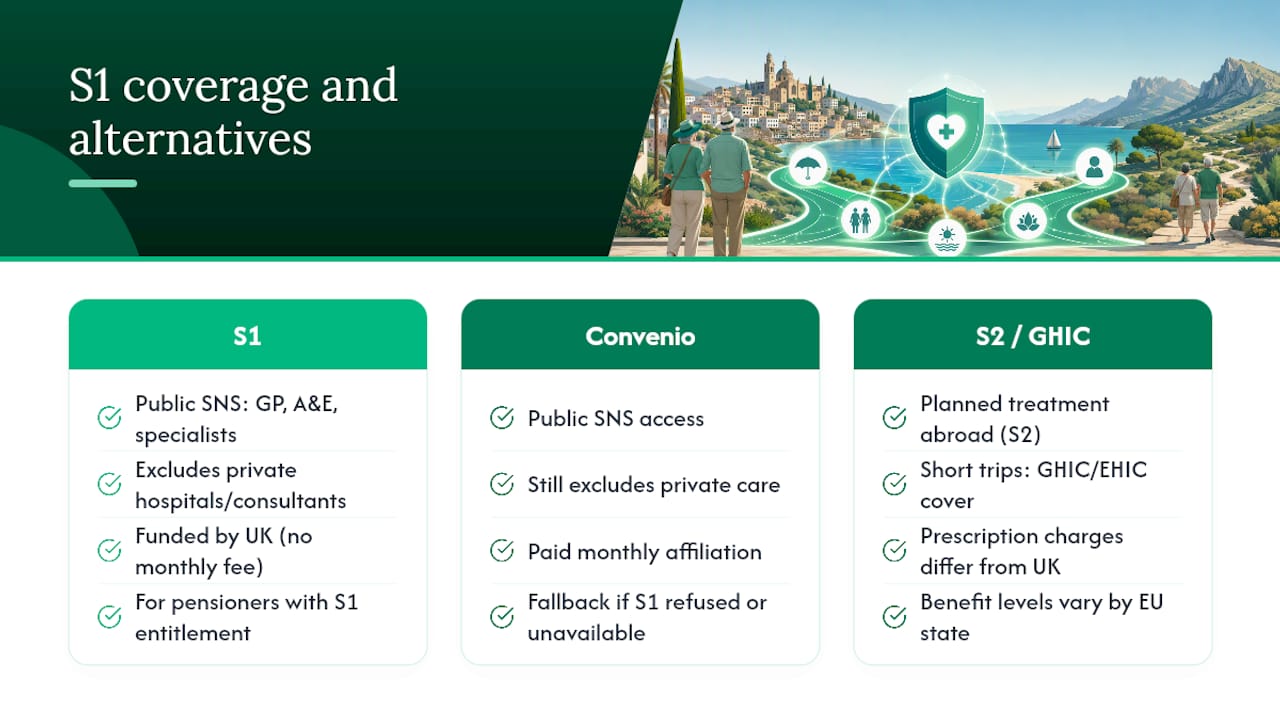
Met uw S1 krijgt u toegang tot het Spaanse publieke stelsel, de SNS: huisartsenzorg, spoedeisende hulp en doorverwijzing naar specialisten, alles op dezelfde voorwaarden als een Spaanse inwoner. Private ziekenhuizen en private specialisten vallen er niet onder, en planbare ingrepen kennen in het publieke stelsel langere wachttijden dan u privé misschien gewend bent.
Met het Spaanse convenio especial kunnen niet-werkende buitenlandse inwoners rechtstreeks meebetalen aan de SNS, maar de twee routes sluiten elkaar uit. Gepensioneerden die hun S1-recht kunnen aantonen hoeven helemaal geen convenio especial af te sluiten.
Weigeren de Spaanse autoriteiten uw S1-inschrijving, of komt u niet in aanmerking, dan is het convenio especial het alternatief: een betaalde maandelijkse aansluiting in plaats van een door Nederland of België gefinancierde. Het loont om dat verschil te kennen voordat u aanneemt dat u het een of het ander nodig heeft.
Ook de eigen bijdragen voor medicijnen en de manier van vergoeden werken anders dan u in Nederland of België gewend bent, en de EU-richtlijn wijst erop dat het niveau van de verstrekkingen per lidstaat verschilt, dus houd rekening met enige kosten uit eigen zak. Voor geplande behandeling elders bestaat apart het S2-formulier; voor korte reizen blijft uw EHIC gelden.
Uw eerste maand na inschrijving: een praktische checklist
Goedgekeurd papierwerk betekent niet dat u uw bestaande regelingen meteen moet opzeggen. Volgorde telt hier zwaarder dan snelheid.
- Houd uw private dekking in stand tot uw Spaanse socialezekerheidsnummer en zorgpas allebei bevestigd en in huis zijn.
- Gebruik uw nieuwe nummer om u bij een huisarts in uw toegewezen gezondheidscentrum in te schrijven, bij voorkeur persoonlijk zodat het personeel taalbehoeften kan noteren.
- Neem kopieën mee van uw Britse medische dossier en actuele recepten; Spaanse artsen moeten lokale equivalenten zoeken voor medicijnen die u doorgebruikt.
- Loopt er een behandeling bij een specialist, vraag uw huisarts dan vroeg om een verwijzing in plaats van te wachten tot het misgaat.
- Bewaar uw EHIC voor reizen buiten Spanje, en denk aan de S2-route als u ooit een behandeling in een ander EU-land moet laten regelen.
Tip: Zeg een private polis niet op op de dag dat uw S1 rondkomt. Controleer eerst of uw zorgpas actief is en uw inschrijving bij de huisarts is verwerkt, want gaten van een paar weken zijn tijdens de overgang niet ongewoon.
Veelvoorkomende S1-problemen en hoe u ze oplost
De meeste vertragingen zijn terug te voeren op een handvol terugkerende oorzaken, en de meeste zijn op te lossen als u ze vroeg opmerkt.
- Een verlopen S1, vaak doordat de houder niet doorhad dat er een Spaans pensioen was ingegaan, waardoor het Britse recht verviel
- Ontbrekende of onvolledige gegevens van gezinsleden, waardoor de inschrijving van het hele huishouden stilvalt
- Verschillen in NIE of naamschrijfwijze tussen uw Britse documenten en de Spaanse registers
- Regionale achterstanden in de verwerking, vooral in drukke gebieden tijdens de piekmaanden voor verhuizingen
Begin met het rechtstreeks controleren van uw status. Het CAK of uw ziekenfonds kan bevestigen of uw S1 correct is afgegeven; de INSS kan bevestigen of hij aan Spaanse zijde is ontvangen en verwerkt. Verzamel voordat u contact opneemt uw aanvraagbewijs, alle referentienummers en scans van elk document dat u heeft ingediend.
Levert een eenvoudige vraag niets op, dan heeft de INSS formele klachtenkanalen, en de Spaanse ombudsman (Defensor del Pueblo) is een legitieme route om een administratieve impasse te doorbreken. Legal Spain Services merkt op dat verschillen in identiteit en adres tot de meest voorkomende oorzaken van vertraging horen, dus uw NIE en empadronamiento op orde hebben vóór de inschrijving scheelt echt tijd.
Wat wij vaak zien misgaan, en wat echt helpt
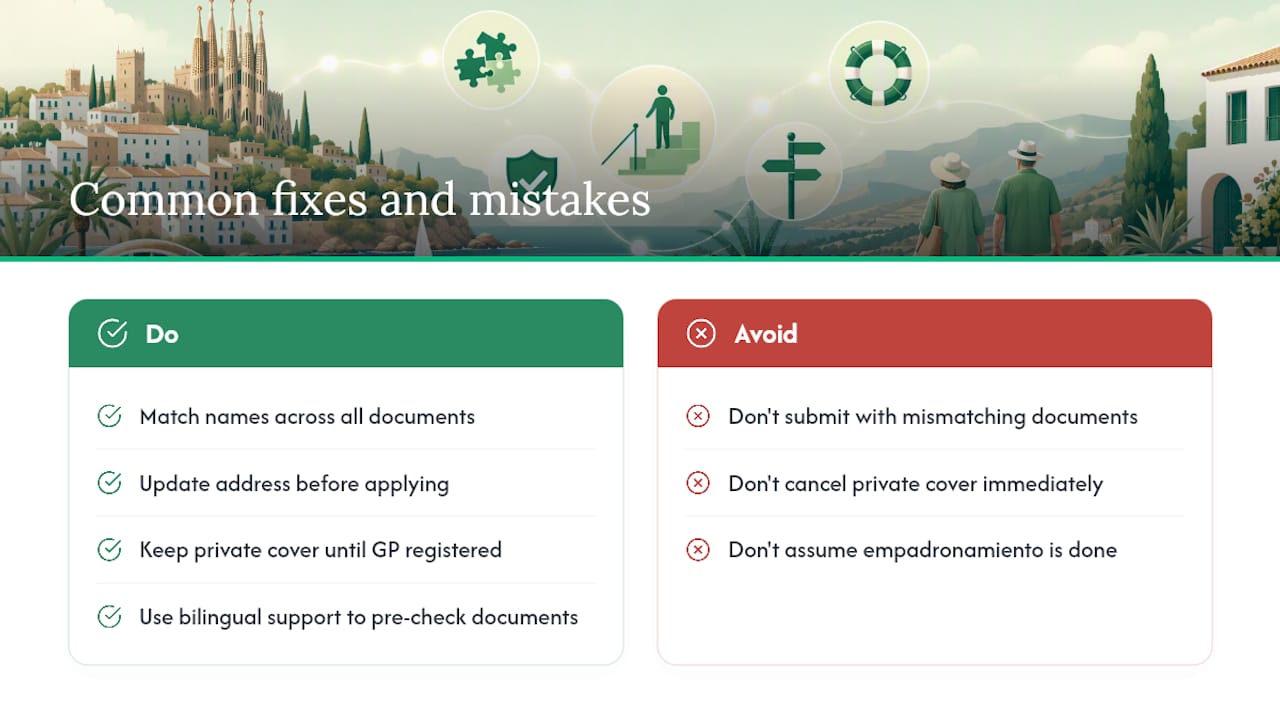
De meeste S1-vertragingen die wij tegenkomen gaan eigenlijk niet over de S1 zelf. Ze gaan over papierwerk dat niet overeenkomt: een naam die net anders is gespeld op een Brits paspoort, een NIE-certificaat en een Spaanse energierekening, of een geregistreerd adres dat niet meer klopt met waar iemand echt woont. Breng die gegevens op één lijn voordat u het INSS-portaal opent, en de helft van de gebruikelijke wrijving verdwijnt.
Het andere patroon is het noemen waard: mensen zeggen hun private dekking op zodra de S1 binnen is, en ontdekken dan dat hun huisartsinschrijving of zorgpas nog weken op zich laat wachten. Tweetalige ondersteuning helpt daarbij, niet omdat de formulieren moeilijk te lezen zijn, maar omdat een afwijkend document of een gemiste empadronamiento-stap vóór indiening opmerken veel sneller gaat dan het achteraf ontwarren.
— Jake
Private dekking nodig terwijl uw S1 wordt verwerkt?
Een private zorgverzekering in Spanje is tijdens deze overgang nog steeds zinvol, en vaak ook daarna. Wacht u tot uw S1 door de INSS is, wilt u sneller bij een specialist terecht, of houdt u liever continuïteit met artsen die u al vertrouwt, dan vult een private polis dat gat zonder uw recht op de SNS te vervangen.
Wij vergelijken polissen van een reeks toonaangevende Spaanse verzekeraars, in het Engels, zodat u geen Spaanse polisvoorwaarden hoeft te ontcijferen terwijl u ook nog INSS-papierwerk regelt. Een tweetalig team kan documenten controleren, afwijkingen signaleren voordat ze vertraging veroorzaken en uitleggen wat private dekking bovenop uw S1 toevoegt, zoals kortere wachttijden voor planbare ingrepen of continuïteit met specialisten terwijl uw publieke inschrijving nog loopt. Laat u het vergelijken liever aan iemand anders over, vraag dan een gratis offerte aan via onze pagina over private zorgverzekering in Spanje en kijk wat bij uw situatie past voordat u iets opzegt.
Dit artikel bevat algemene informatie en vervangt geen advies van een bevoegd arts. Raadpleeg een bevoegde zorgverlener over uw eigen situatie voordat u hier iets mee doet.
Bronnen
- Aanvragen van zorgdekking bij verhuizing naar het buitenland (Britse overheidsbron)
- Zorg regelen bij verhuizing naar het buitenland (Britse overheidsbron)
- Convenio especial voor zorgverstrekking - Ministerio de Sanidad
Aanbevolen
Belangrijkste punten
- ✓ Een S1 is een verklaring van recht waarmee Nederland of België uw Spaanse staatszorg betaalt, en hij doet niets zolang u hem niet bij de INSS laat inschrijven.
- ✓ Verwar een S1 niet met een EHIC: die gelden voor tijdelijk verblijf zoals vakanties, terwijl een S1 bedoeld is voor mensen die echt in Spanje wonen.
- ✓ Recht op een S1 en het convenio especial sluiten elkaar uit; gepensioneerden die hun S1-recht kunnen aantonen hebben helemaal geen convenio especial nodig.
- ✓ Verschillen in naam, NIE en adres tussen Nederlandse of Belgische documenten en Spaanse documenten zijn een van de meest voorkomende oorzaken van vertraging, dus breng die gegevens op één lijn voordat u het INSS-portaal opent.
Veelgestelde vragen
Quick answers on insurance in spain
Nog vragen?
Neem contact op0 Comments
Plaats als eerste een reactie.


