

S1 in Spanien: In 5 Schritten bei der INSS anmelden – für Rentner aus der EU
Wenn Sie eine gesetzliche Rente aus einem EU-/EWR-Land oder der Schweiz oder eine andere exportierbare Leistung beziehen oder als entsandter Arbeitnehmer bzw. Grenzgänger tätig sind, verschafft Ihnen ein S1 Zugang zum öffentlichen spanischen Gesundheitssystem – finanziert von Ihrem Heimatland. Es stellt Sie den spanischen Einwohnern gleich, deckt aber keine private Behandlung ab. Der erste Schritt ist der Antrag bei Ihrer Krankenkasse bzw. der zuständigen Verbindungsstelle für Krankenversicherung im Ausland (in Deutschland die DVKA); anschließend bereiten Sie die Anmeldung dieser Bescheinigung bei der INSS vor, sobald Sie sich in Spanien eingerichtet haben.
Kurz gefasst:
- Das S1 sollte innerhalb von 90 Tagen nach dem Umzug nach Spanien beantragt werden, damit durch Bearbeitungszeiten oder veränderte Lebensumstände keine Versorgungslücken entstehen.
- Die Anmeldung des S1 bei der spanischen INSS ist zwingend für den Zugang zur öffentlichen Gesundheitsversorgung; ohne sie ist die Bescheinigung wertlos.
- Das S1 eröffnet den Zugang zu öffentlichen Leistungen wie Grundversorgung, Notfällen und Fachärzten, deckt aber keine private Behandlung und keine Wahleingriffe ab.
- Behalten Sie Ihre private Krankenversicherung, bis Ihre spanische Gesundheitskarte ausgestellt und die Anmeldung bei einem örtlichen Arzt abgeschlossen ist.
- Typische Verzögerungsgründe sind abweichende persönliche Daten, ein inaktives S1 oder Bearbeitungsrückstände – alles Punkte, die sich bei frühzeitigem Eingreifen meist beheben lassen.
Inhaltsverzeichnis
- Was ist die S1-Gesundheitsversorgung in Spanien und wer hat Anspruch darauf?
- Wie beantragen Sie ein S1?
- Ihr S1 bei den spanischen Behörden anmelden
- Was deckt das S1 tatsächlich ab – und wo hört es auf?
- Ihr erster Monat nach der Anmeldung: eine praktische Checkliste
- Häufige S1-Probleme und wie Sie sie lösen
- Was in der Praxis schiefgeht – und was wirklich hilft
- Brauchen Sie privaten Schutz, während Ihr S1 bearbeitet wird?
- Quellen
Was ist die S1-Gesundheitsversorgung in Spanien und wer hat Anspruch darauf?
Das S1 ist eine Anspruchsbescheinigung, keine Versicherungspolice. Es bestätigt den spanischen Behörden, dass Ihr Heimatland Ihre staatliche Gesundheitsversorgung finanziert – auf Grundlage der EU-Koordinierungsregeln für die soziale Sicherheit (Verordnung (EG) Nr. 883/2004). Nach der Anmeldung haben Sie und Ihre Angehörigen Anspruch auf eine von Ihrem Heimatland finanzierte Versorgung in Spanien, und zwar zu denselben Bedingungen wie versicherte spanische Einwohner – so die Deutsche Verbindungsstelle Krankenversicherung – Ausland (DVKA).
Der Anspruch verteilt sich in der Regel auf eine Handvoll Gruppen:
- Bezieher einer gesetzlichen Rente aus einem EU-/EWR-Land oder der Schweiz, die dauerhaft oder für längere Zeit nach Spanien ziehen
- Empfänger bestimmter exportierbarer Leistungen, etwa einiger beitragsabhängiger Erwerbsminderungsleistungen
- Entsandte Arbeitnehmer, die ein Arbeitgeber aus ihrem Heimatland vorübergehend nach Spanien schickt
- Grenzgänger, die in Spanien leben und in ihrem Heimatland arbeiten – oder umgekehrt
- Angehörige all dieser Personen, die auf derselben Bescheinigung mit aufgeführt werden
Der Anspruch kann enden. Wenn Sie später eine spanische staatliche Rente beziehen, geht die Zuständigkeit für Ihre Gesundheitsversorgung normalerweise auf Spanien über, und Ihr im Heimatland ausgestelltes S1 kann erlöschen. Verwechseln Sie das S1 nicht mit der EHIC. Diese gilt für vorübergehende Aufenthalte wie Urlaubsreisen; das S1 ist für Menschen gedacht, die tatsächlich in Spanien leben.
Wie beantragen Sie ein S1?
Sie beantragen es bei Ihrer gesetzlichen Krankenkasse bzw. der Deutschen Verbindungsstelle Krankenversicherung – Ausland (DVKA), die S1-Bescheinigungen für ins Ausland ziehende Versicherte koordiniert. Rentner können den Antrag kurz vor dem Umzug stellen; das gibt genug Vorlauf, damit die Bescheinigung vorliegt, wenn Sie in Spanien ankommen.
Gehen Sie in dieser Reihenfolge vor:
- Unterlagen zusammenstellen: Nachweis Ihrer gesetzlichen Rente oder der maßgeblichen Leistung, Ihre geplante oder tatsächliche spanische Adresse und ein Identitätsnachweis.
- Online über das Portal Ihrer Krankenkasse bzw. der DVKA beantragen – oder telefonisch, wenn Ihnen der digitale Weg nicht liegt.
- Angehörige gleich mit anmelden, mit deren eigenen Ausweisdokumenten, statt sie später separat nachzumelden.
- Halten Sie Ihre Kontaktdaten bei Ihrer Krankenkasse aktuell, vor allem nach dem Umzug – die Adresse entscheidet darüber, wo Ihre Post landet.
- Warten Sie, bis das S1 ausgestellt und verschickt wird; die Bearbeitung geht nicht von heute auf morgen, planen Sie also Puffer ein, bevor Sie sich in Spanien anmelden müssen.
Praxistipp: Beantragen Sie das S1 so nah wie möglich am 90-Tage-Fenster rund um Ihr Umzugsdatum. Zu früh, und Ihre Lebensumstände ändern sich womöglich, bevor die Bescheinigung eintrifft; zu spät, und Sie riskieren nach der Ankunft eine Versorgungslücke.
Wenn Sie den Antrag nicht online abschließen können: Ihre Krankenkasse bzw. die DVKA nimmt Anträge auch telefonisch entgegen – wichtig, wenn Sie sich aus dem Ausland nicht sicher durch Behördenportale bewegen.
Ihr S1 bei den spanischen Behörden anmelden
Die Ausstellung des S1 im Heimatland ist nur die halbe Arbeit. Ihr Anspruch auf Versorgung zu denselben Bedingungen wie für spanische Staatsbürger entsteht erst, wenn Sie die Bescheinigung bei der INSS anmelden, dem spanischen Sozialversicherungsinstitut. Lassen Sie diesen Schritt aus, liegt das S1 wirkungslos in der Schublade.
Für die Anmeldung brauchen Sie in der Regel:
- Das Original Ihrer S1-Bescheinigung
- Einen gültigen Reisepass
- Ihre NIE (Identifikationsnummer für Ausländer)
- Den Nachweis der Anmeldung bei der Gemeinde (empadronamiento) in Ihrem Rathaus
- Jede INSS-Quittung oder Vorgangsnummer, die im Verfahren ausgestellt wurde
Sie können sich über das elektronische Portal der INSS anmelden oder persönlich in einer örtlichen INSS-Geschäftsstelle – je nachdem, was Ihnen besser passt. Eine erfolgreiche Anmeldung führt zu einer spanischen Sozialversicherungsnummer, mit der Sie dann in Ihrem regionalen Gesundheitszentrum die tarjeta sanitaria beantragen, also die physische Gesundheitskarte, mit der Sie tatsächlich behandelt werden.
Regionale Unterschiede sind real. Andalusien, Valencia und die Balearen betreiben ihren Gesundheitsdienst jeweils in eigener Verwaltung, sodass Bearbeitungszeiten und die genau geforderten Unterlagen abweichen können, obwohl die zugrunde liegende Regel national ist. Wenn Sie verreisen müssen, bevor Ihre Karte eintrifft, fragen Sie nach einem Provisional Replacement Certificate, das Sie in der Zwischenzeit absichert. Verzögerungen beim Postweg sind häufig – bewahren Sie deshalb Kopien von allem auf, was Sie einreichen.
Was deckt das S1 tatsächlich ab – und wo hört es auf?
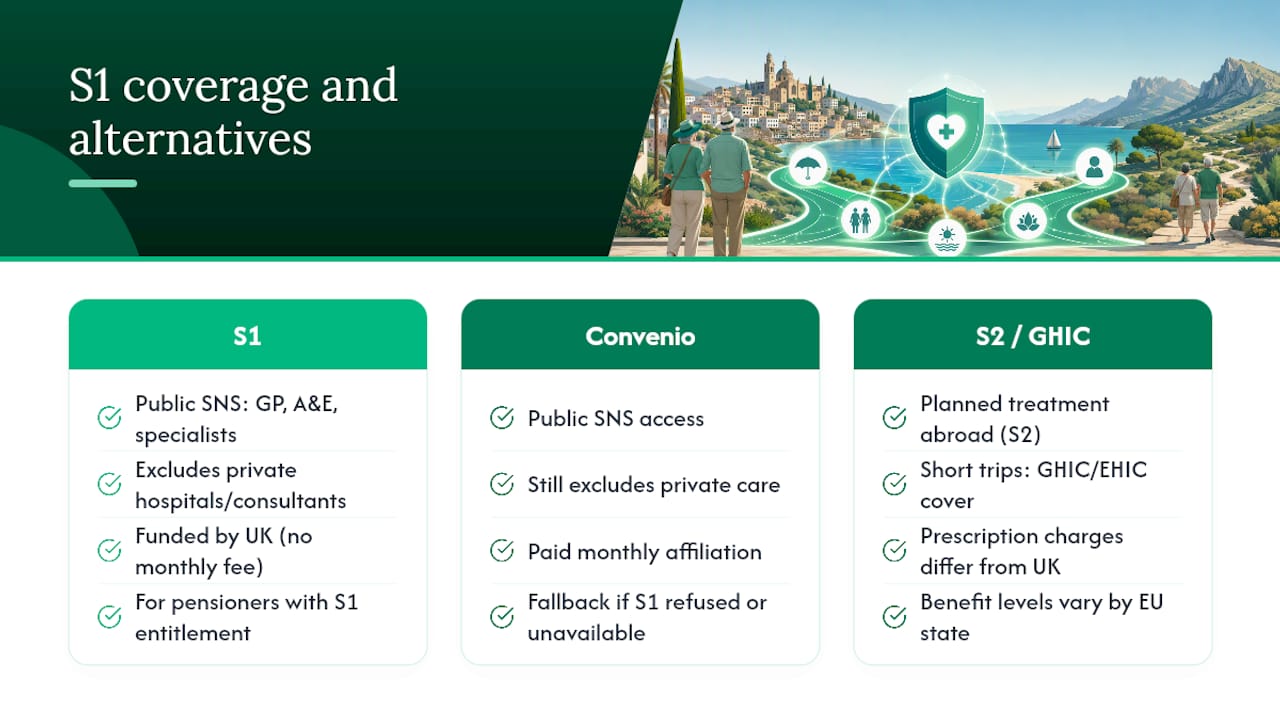
Ihr S1 verschafft Ihnen Zugang zum öffentlichen spanischen System, dem SNS: hausärztliche Grundversorgung, Notfallbehandlung und Facharztüberweisungen, alles zu denselben Bedingungen wie für spanische Einwohner. Private Kliniken und Privatärzte sind nicht abgedeckt, und Wahleingriffe können im öffentlichen System längere Wartezeiten haben, als Sie es privat gewohnt sind.
Spaniens convenio especial erlaubt es nicht erwerbstätigen ausländischen Einwohnern, direkt in den SNS einzuzahlen – beide Wege schließen sich jedoch gegenseitig aus. Rentner, die einen S1-Anspruch nachweisen können, brauchen überhaupt keinen convenio especial abzuschließen.
Wenn die spanischen Behörden die Anmeldung Ihres S1 ablehnen oder Sie keinen Anspruch haben, ist der convenio especial die Rückfalllösung: eine kostenpflichtige monatliche Mitgliedschaft statt einer vom Vereinigten Königreich finanzierten Versorgung. Es lohnt sich, den Unterschied zu kennen, bevor Sie annehmen, Sie bräuchten das eine oder das andere.
Auch Rezeptgebühren und Erstattungsregeln unterscheiden sich von denen in Ihrem Heimatland, und die EU-Hinweise weisen darauf hin, dass die Leistungsniveaus zwischen den Mitgliedstaaten variieren – kalkulieren Sie also einen gewissen Eigenanteil ein. Für geplante Behandlungen im Ausland gibt es separat das Formular S2; für Kurzreisen gilt weiterhin Ihre EHIC.
Ihr erster Monat nach der Anmeldung: eine praktische Checkliste
Eine genehmigte Anmeldung heißt nicht, dass Sie Ihre bestehenden Verträge sofort zerreißen sollten. Die Reihenfolge zählt hier mehr als das Tempo.
- Behalten Sie eine private Absicherung, bis sowohl Ihre spanische Sozialversicherungsnummer als auch Ihre Gesundheitskarte bestätigt und in Ihren Händen sind.
- Melden Sie sich mit Ihrer neuen Nummer bei einem Hausarzt in Ihrem zugewiesenen Gesundheitszentrum an, am besten persönlich, damit das Personal einen eventuellen Sprachbedarf vermerken kann.
- Bringen Sie Kopien Ihrer bisherigen medizinischen Unterlagen und aktuellen Rezepte mit; spanische Ärzte müssen für laufende Medikamente lokale Entsprechungen finden.
- Wenn Sie wegen einer chronischen Erkrankung in fachärztlicher Behandlung sind, bitten Sie Ihren Hausarzt frühzeitig um eine Überweisung, statt bis zum Ernstfall zu warten.
- Behalten Sie Ihre EHIC für Reisen außerhalb Spaniens, und denken Sie an den S2-Weg, falls Sie einmal eine Behandlung in einem anderen EU-Land organisieren müssen.
Praxistipp: Kündigen Sie eine private Police nicht an dem Tag, an dem Ihr S1 durchkommt. Stellen Sie zuerst sicher, dass Ihre Gesundheitskarte aktiv und Ihre Hausarztanmeldung bearbeitet ist – Lücken von einigen Wochen sind bei der Umstellung nicht ungewöhnlich.
Häufige S1-Probleme und wie Sie sie lösen
Die meisten Verzögerungen gehen auf eine Handvoll wiederkehrender Punkte zurück, und die meisten lassen sich beheben, wenn Sie sie früh bemerken.
- Ein abgelaufenes S1, oft weil der Inhaber nicht bemerkt hat, dass eine spanische Rente angelaufen ist und den Anspruch im Heimatland beendet hat
- Fehlende oder unvollständige Angaben zu Angehörigen, was die Anmeldung des gesamten Haushalts blockiert
- Abweichungen bei NIE oder Namen zwischen Ihren Dokumenten aus dem Heimatland und den spanischen Registern
- Regionale Bearbeitungsrückstände, besonders in gefragten Gegenden während der Hauptumzugsmonate
Prüfen Sie zuerst direkt Ihren Status. Ihre Krankenkasse bzw. die DVKA kann bestätigen, ob Ihr S1 korrekt ausgestellt wurde; die INSS kann bestätigen, ob es auf spanischer Seite eingegangen und bearbeitet wurde. Bevor Sie eine der beiden Stellen kontaktieren, legen Sie Ihre Antragsbestätigung, alle Vorgangsnummern und Scans jedes eingereichten Dokuments bereit.
Wenn eine einfache Anfrage nicht weiterführt, hat die INSS förmliche Beschwerdewege, und Spaniens Ombudsstelle (Defensor del Pueblo) ist ein legitimer Eskalationsweg bei behördlichem Stillstand. Legal Spain Services weist darauf hin, dass Abweichungen bei Identität und Adresse zu den häufigsten Verzögerungsursachen zählen – NIE und empadronamiento vor der Anmeldung in Ordnung zu bringen, spart also echte Zeit.
Was in der Praxis schiefgeht – und was wirklich hilft
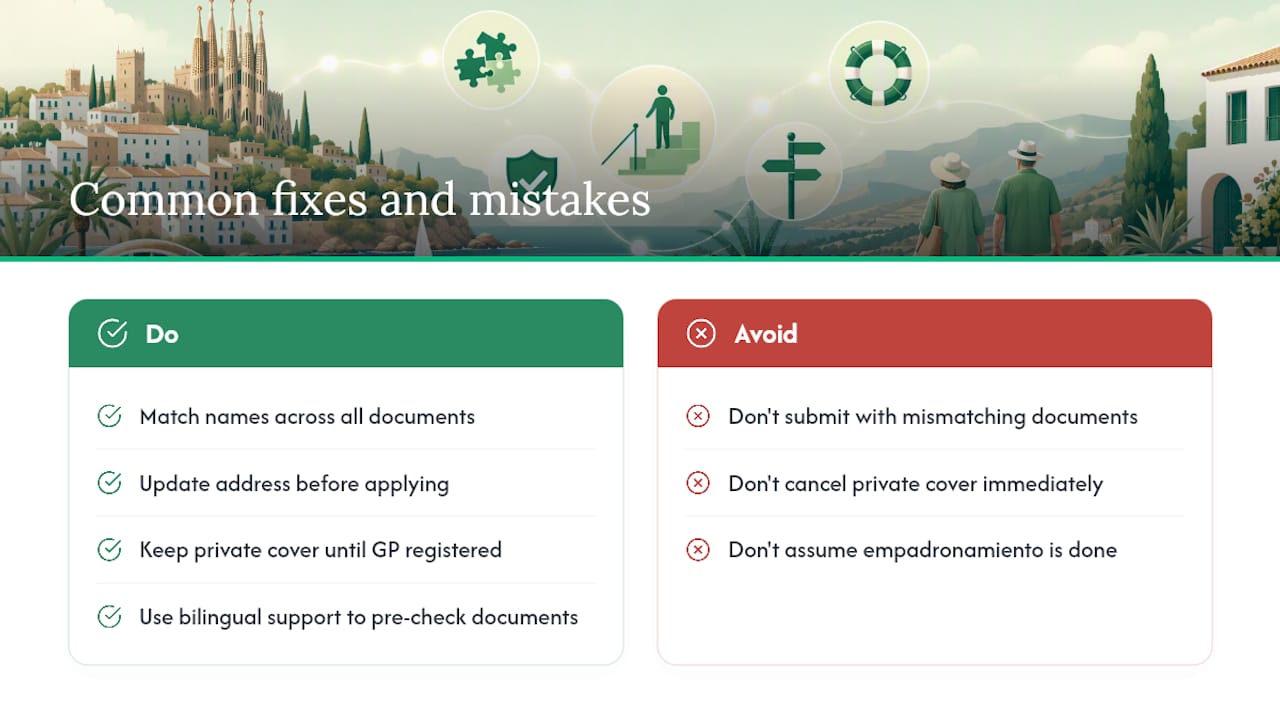
Die meisten S1-Verzögerungen, die uns begegnen, haben gar nicht mit dem S1 selbst zu tun. Es geht um nicht zusammenpassende Papiere: ein Name, der im Reisepass, auf der NIE-Bescheinigung und auf einer spanischen Nebenkostenrechnung leicht unterschiedlich geschrieben ist, oder eine hinterlegte Adresse, unter der jemand längst nicht mehr wohnt. Bringen Sie diese Übereinstimmung in Ordnung, bevor Sie das INSS-Portal überhaupt öffnen – damit verschwindet die Hälfte der üblichen Reibung.
Das zweite Muster, das man benennen sollte: Menschen kündigen ihre private Absicherung in dem Moment, in dem ihr S1 eintrifft, und stellen dann fest, dass Hausarztanmeldung oder Gesundheitskarte noch Wochen entfernt sind. Zweisprachige Unterstützung hilft hier – nicht weil die Formulare schwer zu lesen wären, sondern weil es sehr viel schneller geht, eine Dokumentenabweichung oder einen übersehenen empadronamiento-Schritt vor der Einreichung zu entdecken, als sie hinterher zu entwirren.
— Jake
Brauchen Sie privaten Schutz, während Ihr S1 bearbeitet wird?
Eine private Krankenversicherung in Spanien ist während dieser Übergangszeit sinnvoll – und oft auch danach. Wenn Sie darauf warten, dass Ihr S1 die INSS passiert, schnelleren Zugang zu Fachärzten wollen oder schlicht die Kontinuität mit Ärzten wahren möchten, denen Sie bereits vertrauen, schließt eine private Police diese Lücke, ohne Ihren Anspruch auf den SNS zu ersetzen.
Wir vergleichen Policen einer Reihe führender spanischer Versicherer – auf Deutsch, damit Sie nicht spanische Vertragsbedingungen entziffern müssen, während Sie gleichzeitig den INSS-Papierkram bewältigen. Ein zweisprachiges Support-Team kann Dokumente prüfen, Abweichungen melden, bevor sie zu Verzögerungen führen, und erklären, was privater Schutz zusätzlich zu Ihrem S1 bringt – etwa kürzere Wartezeiten bei Wahleingriffen oder die Weiterbehandlung bei Fachärzten, während die öffentliche Anmeldung noch läuft. Wenn Sie den Vergleich lieber jemand anderem überlassen: Fordern Sie ein kostenloses Angebot über unsere Seite private health insurance Spain an und sehen Sie, was zu Ihrer Situation passt, bevor Sie irgendetwas kündigen.
Dieser Artikel enthält allgemeine Informationen und ersetzt keine Beratung durch eine qualifizierte Ärztin oder einen qualifizierten Arzt. Besprechen Sie Ihre persönliche Situation mit einer medizinischen Fachkraft, bevor Sie hier Gelesenes umsetzen.
Quellen
- Deutsche Verbindungsstelle Krankenversicherung – Ausland (DVKA)
- Krankenversicherung im Ausland: Informationen der DVKA
- Special agreement on healthcare provision – Ministerio de Sanidad
Empfohlen
Das Wichtigste in Kürze
- ✓ Das S1 ist eine Anspruchsbescheinigung, mit der Ihr Heimatland Ihre spanische Gesundheitsversorgung finanziert – es bewirkt jedoch nichts, solange Sie es nicht bei der INSS anmelden.
- ✓ Verwechseln Sie das S1 nicht mit der EHIC: Diese gilt für vorübergehende Aufenthalte wie Urlaubsreisen, das S1 dagegen für Menschen, die tatsächlich in Spanien leben.
- ✓ S1-Anspruch und convenio especial schließen sich gegenseitig aus: Wer einen S1-Anspruch nachweisen kann, braucht überhaupt keinen convenio especial.
- ✓ Abweichungen bei Name, NIE und Adresse zwischen Dokumenten aus dem Heimatland und spanischen Dokumenten gehören zu den häufigsten Ursachen für Verzögerungen – klären Sie diese Übereinstimmung, bevor Sie das INSS-Portal überhaupt öffnen.
Häufige Fragen
Quick answers on insurance in spain
Noch Fragen?
Kontakt aufnehmen0 Comments
Schreiben Sie den ersten Kommentar.


