

Recesso di 14 Giorni sulle Assicurazioni in Spagna: Legge 22/2007
Sì, la Spagna riconosce un periodo di recesso previsto dalla legge sulla maggior parte delle polizze assicurative sottoscritte a distanza: un periodo di recesso previsto dalla legge, generalmente di due settimane per le assicurazioni generali e più lungo per le assicurazioni sulla vita. Si applica quando la polizza è stata sottoscritta online, per telefono o per posta, e decorre dalla data più recente tra la data della firma e la data di ricezione della documentazione completa della polizza. Ha già presentato un sinistro? Ha quasi certamente perso il diritto di recesso.
In breve:
- Il periodo di recesso di due settimane si applica alla maggior parte delle polizze assicurative generali sottoscritte a distanza e decorre dalla data più recente tra la firma e la ricezione della documentazione completa.
- Le compagnie assicurative devono informare i clienti del loro diritto di recesso; la mancata informativa può estendere il termine fino a 12 mesi, soprattutto quando non è stata fornita alcuna comunicazione in merito.
- Presentare un sinistro durante il periodo di recesso invalida generalmente il diritto di recesso, poiché la polizza si considera già utilizzata e accettata.
- I rimborsi vengono generalmente calcolati in proporzione ai giorni di copertura effettiva, e un sinistro presentato prima della disdetta spesso annulla del tutto il rimborso.
- Le polizze sottoscritte di persona e alcuni prodotti a breve termine o espressamente esclusi spesso non danno diritto al recesso previsto dalla legge.
Indice
- Base giuridica: come funzionano i periodi di recesso di 14 e 30 giorni
- Come recedere entro il periodo di recesso, passo dopo passo
- Cosa succede al premio e alla copertura dopo il recesso
- Quando il diritto di recesso non si applica
- Se la compagnia non L'ha informata del diritto di recesso
- Mancato rinnovo annuale e recesso: le differenze
- Sanitaria, auto e casa hanno lo stesso periodo di recesso?
- Le tutele del consumatore non finiscono dopo 14 giorni
- Cosa fare se la compagnia rifiuta di riconoscere il recesso
- La copertura resta attiva durante il periodo di recesso?
- Errori comuni degli italiani all'estero e una checklist per evitarli
- Affidi a Insurance Spain la gestione del recesso e del rimborso
- Fonti
Base giuridica: come funzionano i periodi di recesso di 14 e 30 giorni
Il diritto di recesso da un contratto assicurativo in Spagna si fonda su due normative che operano insieme. La Legge 22/2007 sulla commercializzazione a distanza di servizi finanziari stabilisce il quadro generale di tutela del consumatore per le vendite a distanza, mentre la Ley del Contrato de Seguro (la Legge sul contratto di assicurazione spagnola) disciplina nel dettaglio il funzionamento delle polizze assicurative in Spagna, inclusi durata, rinnovo e diritto di recesso.
In base a questo quadro normativo, ha a disposizione due settimane per recedere dalla maggior parte delle polizze assicurative generali sottoscritte a distanza, e un periodo più lungo per le assicurazioni sulla vita. Il termine non decorre dal giorno in cui ha cliccato su "acquista" o firmato il modulo. Decorre dalla data della firma o dalla data in cui ha ricevuto le condizioni contrattuali complete, a seconda di quale sia successiva. Se la compagnia Le ha inviato un'email di conferma una settimana dopo la firma, il termine per il recesso decorre da quell'email, non dalla firma.
Esiste una tutela integrata in questo sistema che molti assicurati scoprono solo quando ne hanno bisogno:
- Se la compagnia non L'ha informata del diritto di recesso, il termine previsto dalla legge può estendersi fino a 12 mesi.
- Questa estensione esiste proprio perché le compagnie sono obbligate a comunicare questo diritto, non a nasconderlo nelle clausole in piccolo.
- Una volta presentato un sinistro sulla polizza, il recesso generalmente non è più possibile, perché ha già utilizzato la copertura che sta cercando di annullare.
Quest'ultimo punto trae in inganno più persone di qualsiasi altra clausola del diritto assicurativo spagnolo.
Come recedere entro il periodo di recesso, passo dopo passo
Recedere da una polizza entro il periodo di recesso è semplice, a condizione di agire rapidamente e conservare le prove di tutto ciò che invia. Ecco la sequenza che consigliamo a ogni cliente che ci chiama chiedendo "posso ancora uscirne?".
- Verifichi che si sia trattato di una vendita a distanza. Controlli la documentazione per la data di acquisto e le modalità: online, per telefono, per posta. I contratti negoziati di persona restano esclusi da questo diritto, quindi questo passaggio è importante prima di fare qualsiasi altra cosa.
- Individui la data di decorrenza corretta. È il giorno della firma o quello in cui ha ricevuto le condizioni complete della polizza? Utilizzi quella più recente.
- Rediga una comunicazione scritta di recesso. Includa il numero di polizza, la data di acquisto, i Suoi dati identificativi e una dichiarazione chiara che sta esercitando il diritto di recesso (derecho de desistimiento).
- La invii tramite un canale tracciabile. La raccomandata o il canale elettronico indicato dalla compagnia sono la prassi standard, e dovrebbe sempre conservare la prova di consegna.
- Se lo desidera, autorizzi un terzo ad agire per Suo conto. È facoltativo, ma un broker bilingue può redigere e inviare la comunicazione in spagnolo per Suo conto, eliminando il rischio di una formulazione che comprometta la richiesta.
- Conservi ogni copia. Salvi la comunicazione, la prova di spedizione o la conferma elettronica, e annoti la data esatta dell'invio. Questo diventerà la Sua prova nel caso in cui la compagnia contesti in seguito la tempistica.
Consiglio pratico: Fotografi o faccia uno screenshot della comunicazione di recesso e della relativa prova di consegna lo stesso giorno in cui la invia. Talvolta le compagnie sostengono di aver ricevuto una comunicazione "fuori termine", e uno screenshot datato risolve la questione in pochi secondi.
Cosa succede al premio e alla copertura dopo il recesso
Se recede entro il periodo di recesso, la compagnia deve rimborsare il premio già versato, ma raramente l'importo totale. La compagnia può trattenere un importo proporzionale ai giorni in cui la polizza è stata effettivamente in vigore, calcolato dalla data di decorrenza fino alla data in cui viene elaborato il recesso.
I rimborsi vengono generalmente erogati entro un mese dal ricevimento della comunicazione da parte della compagnia, anche se si tratta di una prassi diffusa nel settore più che di un termine fisso e universale in ogni caso. Due fattori influiscono su quanto Le verrà accreditato:
- I giorni di copertura. Anche solo tre o quattro giorni di copertura attiva possono comportare una piccola trattenuta, quindi non si aspetti un rimborso integrale su un premio mensile.
- Un eventuale sinistro. Se ha presentato un sinistro prima di recedere, la compagnia generalmente rifiuterà del tutto il recesso, senza erogare alcun rimborso.
Chieda alla compagnia un dettaglio scritto di come è stata calcolata la trattenuta proporzionale. Le compagnie riducono comunemente il rimborso in base ai giorni di copertura, e un dettaglio scritto Le permette di verificare il calcolo invece di accettare una cifra sulla fiducia.
Quando il diritto di recesso non si applica
Il diritto di recesso dipende da come ha acquistato la polizza, non dal fatto di essere assicurato. Diverse situazioni comuni ne restano completamente escluse, e presumere il contrario è uno degli errori più costosi che un assicurato possa commettere.
- Contratti negoziati di persona. Se si è seduto con un agente, ha discusso le condizioni e ha firmato di persona, la tutela per le vendite a distanza generalmente non si applica, perché la ragion d'essere di questo diritto è proteggere i consumatori che hanno acquistato a distanza senza la possibilità di fare domande.
- Viaggi di breve durata e alcuni prodotti esclusi. Alcune polizze con durate molto brevi, o prodotti espressamente esclusi nelle proprie condizioni, possono restare fuori dal quadro standard del recesso. Verifichi sempre le condizioni specifiche della polizza invece di presumere che la regola generale copra tutto.
- Rinunce contrattuali, dove legalmente consentite. In casi limitati, e solo quando l'informativa precontrattuale lo spiega chiaramente, le condizioni di recesso possono differire dai consueti 14 o 30 giorni.
Lo schema che ricorre in tutte e tre le eccezioni è lo stesso: legga il documento informativo precontrattuale prima di firmare, non dopo aver deciso di recedere.
Se la compagnia non L'ha informata del diritto di recesso
Le compagnie assicurative sono obbligate per legge a informarLa del diritto di recesso prima che si impegni con una polizza. Quando saltano questo passaggio, le norme spagnole a tutela del consumatore non si limitano a lasciar correre. Il termine per il recesso può estendersi fino a 12 mesi dal momento in cui ha sottoscritto la polizza, concedendoLe molto più tempo delle consuete due settimane.
Se si trova in questa situazione, proceda con un'escalation metodica:
- Presenti prima un reclamo formale alla compagnia. Faccia riferimento in modo specifico alla mancata informativa e richieda una revisione interna.
- Richieda per iscritto l'esito della revisione interna. Questo diventerà parte della Sua documentazione probatoria se dovrà procedere con ulteriori passaggi.
- Presenti un reclamo alla Dirección General de Seguros y Fondos de Pensiones se la compagnia si rifiuta di agire. L'autorità di vigilanza può imporre un'azione correttiva, anche se il procedimento richiede in genere settimane o mesi, non giorni.
Conservi i documenti originali della polizza, le eventuali email di conferma e le copie di ogni reclamo inviato. Senza prove documentali della mancata informativa, l'autorità di vigilanza ha ben poco su cui agire.
Mancato rinnovo annuale e recesso: le differenze
Questi due meccanismi vengono confusi continuamente, e la confusione costa denaro a ogni stagione di rinnovo. Il recesso è una finestra breve immediatamente successiva all'acquisto, pensata per annullare una decisione presa senza una consulenza di persona. Il mancato rinnovo annuale è un procedimento completamente diverso, disciplinato dalle norme su durata e rinnovo della Ley del Contrato de Seguro.
Le polizze assicurative spagnole si rinnovano automaticamente ogni anno, a meno che non intervenga. Per bloccare il rinnovo automatico, in qualità di contraente deve generalmente dare disdetta alla compagnia con un preavviso prima della data di scadenza della polizza. Se perde questo termine, resta vincolato per un'altra annualità intera, indipendentemente dal fatto che avesse mai voluto avvalersi del diritto di recesso in primo luogo.
La differenza pratica conta per chiunque gestisca più polizze contemporaneamente: casa, auto, salute. Il periodo di recesso su quella polizza auto acquistata la scorsa primavera si è chiuso mesi fa, ma non è vincolato per sempre. Deve semplicemente utilizzare il preavviso di disdetta di un mese, calcolato sulla data di rinnovo e non su quella di acquisto. Segni le date di rinnovo su un calendario con un promemoria impostato sei settimane prima, per avere un margine se la disdetta deve essere inviata per raccomandata.
Sanitaria, auto e casa hanno lo stesso periodo di recesso?
La regola generale dei 14 giorni copre la maggior parte dei prodotti non vita, tra cui l'assicurazione auto in Spagna, l'assicurazione casa e l'assicurazione sanitaria, a condizione che siano state sottoscritte a distanza. L'assicurazione vita si distingue con il periodo esteso di 30 giorni, che riflette l'impegno finanziario di più lungo termine e la sottoscrizione più complessa che comporta.
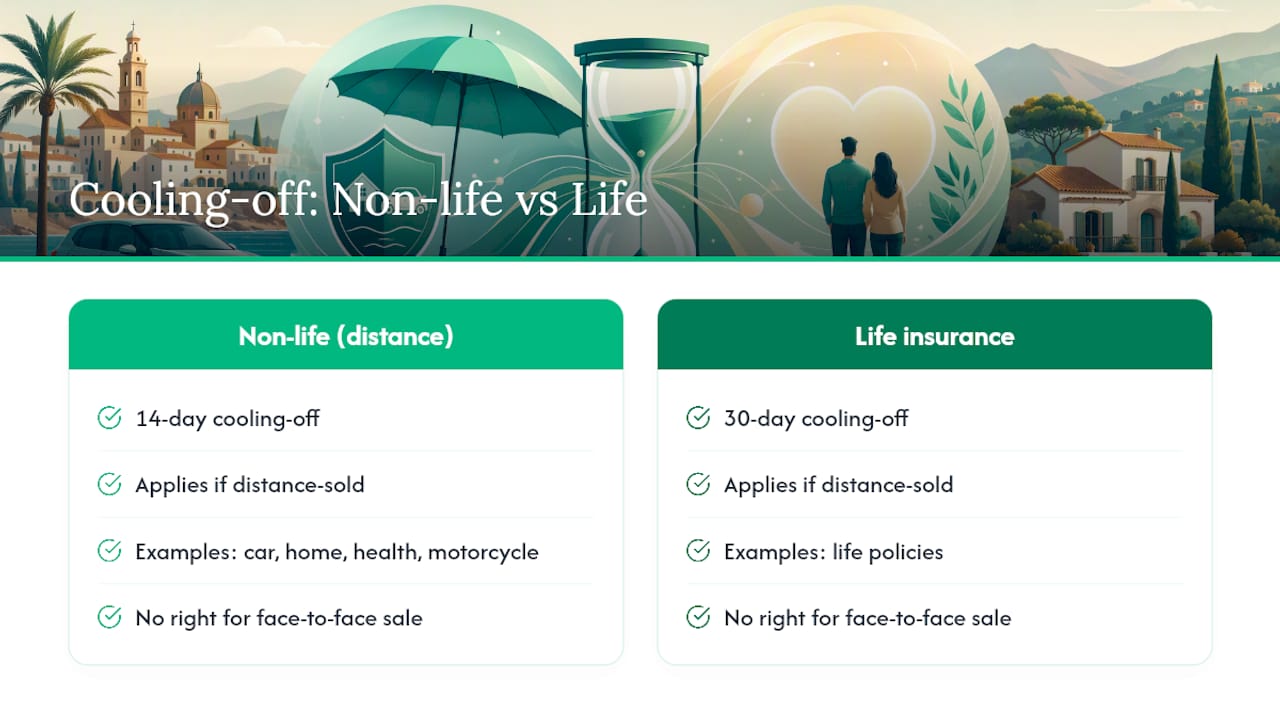
Ciò che cambia realmente non è tanto il numero di giorni quanto l'idoneità. Una polizza moto stipulata interamente online ha lo stesso diritto di recesso di 14 giorni di una polizza casa acquistata allo stesso modo. Ma se si reca nell'ufficio di un broker, discute la copertura di persona e firma lì, quella tutela per le vendite a distanza generalmente non si applica, indipendentemente dal tipo di prodotto.
L'assicurazione sanitaria presenta una particolarità che vale la pena segnalare separatamente: poiché la copertura sanitaria comporta spesso una valutazione medica e la dichiarazione di patologie preesistenti, le compagnie esaminano con attenzione i sinistri presentati nelle prime fasi. Se recede entro il periodo di recesso prima di utilizzare qualsiasi copertura, è su un terreno sicuro. Se utilizza la polizza prima, anche per qualcosa di minore, rischia che la compagnia lo consideri un motivo per rifiutare il recesso.
Le tutele del consumatore non finiscono dopo 14 giorni
Il periodo di recesso è il diritto principale, ma si inserisce in una struttura di tutela del consumatore più ampia che continua a operare a Suo favore anche dopo la chiusura del termine. La legge spagnola impone alle compagnie di fornire un'informativa precontrattuale chiara, incluso il diritto di recesso, in un modo che possa realmente comprendere prima di firmare qualsiasi cosa.
È proprio questo obbligo a far scattare l'estensione di 12 mesi discussa in precedenza quando le compagnie non lo rispettano. Sta inoltre alla base del Suo diritto a una spiegazione scritta e dettagliata di qualsiasi calcolo del rimborso, e del Suo diritto di rivolgersi alla Dirección General de Seguros y Fondos de Pensiones per le controversie non risolte. Nessuna di queste tutele richiede di aver agito entro le prime due settimane. Esistono proprio perché le compagnie assicurative dispongono di più informazioni e più potere nel rapporto rispetto al singolo assicurato.
Per chi vive all'estero, questo conta più di quanto potrebbe contare per un cittadino spagnolo che si muove nella propria lingua e nel proprio sistema legale. Se la documentazione della polizza Le è arrivata solo in spagnolo e ha firmato senza comprendere appieno la clausola di recesso, la barriera linguistica non annulla le Sue tutele. Anzi, rafforza l'argomentazione secondo cui l'informativa corretta non è mai stata fornita, esattamente lo scenario per cui è stata pensata l'estensione di 12 mesi.
Cosa fare se la compagnia rifiuta di riconoscere il recesso
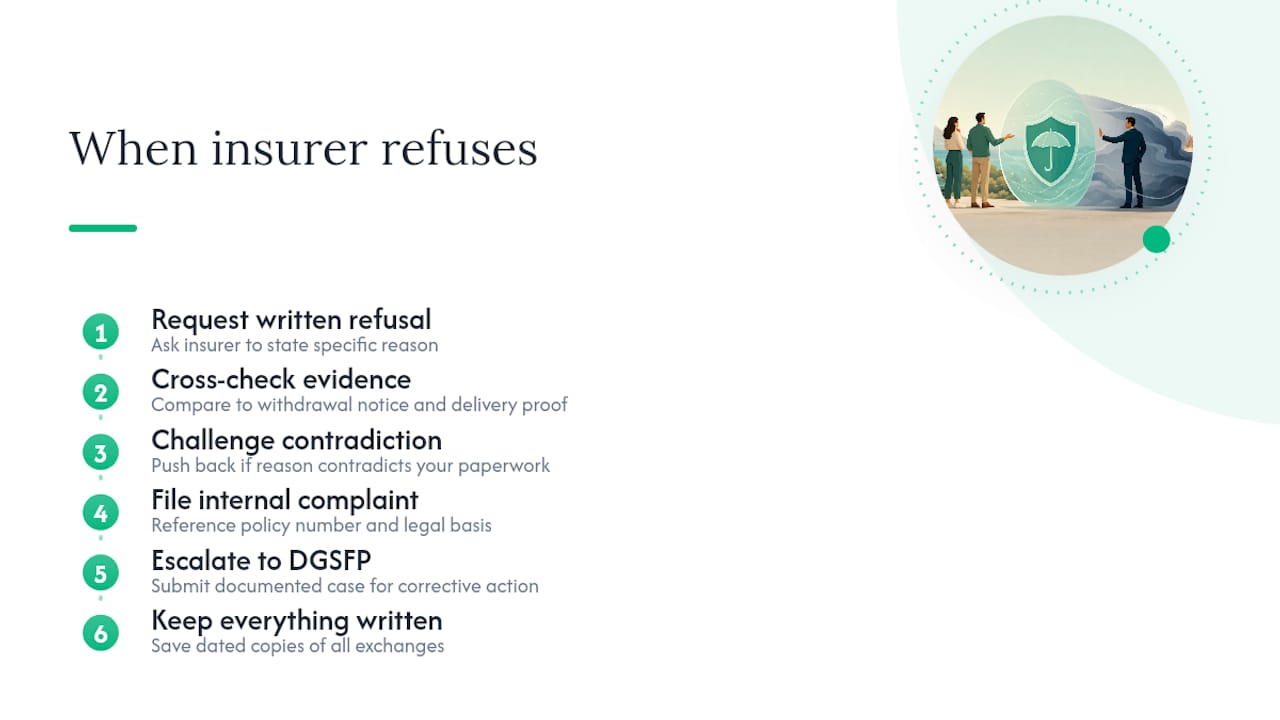
Talvolta le compagnie oppongono resistenza a un recesso valido, a volte per una genuina confusione sulle date, altre volte per la semplice riluttanza a perdere il premio. Non accetti un rifiuto verbale come parola definitiva.
Inizi chiedendo il rifiuto per iscritto, con la ragione specifica indicata dalla compagnia. Questo la obbliga a esprimere una posizione che Lei può effettivamente contestare. Confronti la loro motivazione con le Sue prove datate: la comunicazione di recesso, la prova di consegna e la data in cui ha ricevuto le condizioni complete della polizza. Se la motivazione indicata contraddice la Sua documentazione, ha motivo per contestare immediatamente.
Se la compagnia continua a rifiutarsi dopo una contestazione scritta, presenti un reclamo formale tramite il servizio clienti interno, facendo riferimento al numero di polizza e alla base giuridica pertinente per il Suo recesso. Le compagnie spagnole sono tenute ad avere una procedura di reclamo, e questo passaggio è di norma obbligatorio prima di rivolgersi a un ente esterno. Se anche questo fallisce, porti il Suo caso documentato alla Dirección General de Seguros y Fondos de Pensiones, che può imporre un'azione correttiva una volta dimostrato che la compagnia ha agito al di fuori dei propri obblighi di legge. Durante tutto il processo, resista alla tentazione di negoziare verbalmente. Metta per iscritto ogni scambio e conservi copie datate di tutto.
La copertura resta attiva durante il periodo di recesso?
Sì, la polizza resta attiva e la copertura rimane in vigore per tutta la durata del periodo di recesso, a meno che non comunichi diversamente alla compagnia. Questo sorprende chi presume che l'idea di "periodo di prova" implichi una copertura in qualche modo provvisoria o ridotta. Non è così. Se ha un incidente al sesto giorno della finestra di 14 giorni, la polizza risponde esattamente come al giorno 200.
Proprio per questo presentare un sinistro durante il periodo di recesso chiude la porta al recesso stesso. Ha utilizzato il prodotto che ora sta cercando di restituire, e le compagnie lo trattano come un'accettazione del contratto nella pratica, anche se non lo ha mai dichiarato esplicitamente. Se non è del tutto sicuro di voler mantenere una polizza, l'approccio più prudente è evitare di utilizzarla, nessun sinistro, nessuna richiesta di assistenza, nessuna modifica alla polizza, finché non ha deciso definitivamente di mantenerla o ha inviato la comunicazione di recesso.
Un aspetto pratico da considerare: recedere da una polizza a metà del periodo di recesso non annulla retroattivamente la copertura già utilizzata. Se un sinistro è stato liquidato prima che arrivasse la Sua comunicazione di recesso, quel sinistro resta valido. Il calcolo del rimborso proporzionale da parte della compagnia tiene conto dei giorni in cui è stato coperto, sinistro o meno, ed è esattamente per questo che la trattenuta raramente si azzera.
Errori comuni degli italiani all'estero e una checklist per evitarli
L'errore che vediamo più spesso è calcolare i 14 giorni dalla data di decorrenza della polizza invece che dalla data in cui è stata effettivamente ricevuta la documentazione contrattuale completa, che possono distare giorni o settimane l'una dall'altra. Il secondo errore più comune è inviare una comunicazione di recesso senza alcuna prova, per poi non avere nulla da mostrare quando la compagnia contesta la tempistica. Il terzo è presumere che ogni polizza dia diritto al recesso, mentre le vendite di persona spesso non lo prevedono.
Una checklist rapida: verifichi il canale di vendita, individui la data di ricezione della documentazione, rediga una comunicazione scritta con il numero di polizza, la invii per raccomandata, conservi ogni copia e annoti subito la data di invio.
— Jake
Affidi a Insurance Spain la gestione del recesso e del rimborso
Districarsi tra la burocrazia spagnola per una comunicazione di recesso, calcolando allo stesso tempo le trattenute proporzionali, non è come nessuno vorrebbe passare una serata, soprattutto se il Suo spagnolo è ancora un lavoro in corso. Un team bilingue può esaminare il Suo contratto, verificare se il diritto di recesso per vendita a distanza si applica effettivamente alla Sua situazione, redigere e inviare la comunicazione di recesso in spagnolo, e seguire il caso con la compagnia fino all'accredito del rimborso.
Alcune agenzie lavorano su base commissionale, ricevendo un compenso dalle compagnie quando organizzano una copertura, e avvalersi del loro servizio per gestire un recesso è generalmente facoltativo e non una condizione per la stipula di una polizza. Se sta valutando se recedere da una polizza, che si tratti di un'assicurazione auto o di una copertura vita, ci contatti e Le diremo entro un giorno se il Suo diritto di recesso si applica e quali sono i prossimi passi. Inizi confrontando le Sue opzioni con Insurancespain e ci lasci gestire la burocrazia da lì in poi.
Questo articolo ha finalità puramente informative e non sostituisce la consulenza di un avvocato qualificato. Consulti un professionista legale qualificato in merito alla Sua situazione specifica prima di agire sulla base di quanto riportato qui.
Fonti
- Ajustea — Derecho de desistimiento en seguros
- El Asegurado Enterado — derecho de desistimiento en seguros
- PuntoSeguro — cancelar seguro contratado por Internet
- Juspedia — Ley de contrato de seguro (estratto)
Consigliati
Punti chiave
- ✓ Il diritto di recesso si applica alle vendite a distanza, concluse online, per telefono o per posta, non ai contratti negoziati e firmati di persona.
- ✓ Se la compagnia non L'ha informata del diritto di recesso, il termine previsto dalla legge può estendersi fino a 12 mesi.
- ✓ Invii una comunicazione scritta di recesso indicando numero di polizza, data di acquisto e dati identificativi, tramite un canale tracciabile, e conservi la prova di consegna.
- ✓ Il recesso non equivale al mancato rinnovo annuale: per bloccare il rinnovo deve dare disdetta con anticipo rispetto alla data di scadenza, calcolata sulla data di rinnovo e non su quella di acquisto.
Domande frequenti
Quick answers on insurance in spain
Ha ancora domande?
Contattaci0 Comments
Sia il primo a lasciare un commento.
Lascia un commento
Potrebbero interessarle anche

4 set 2026
Cambiare Compagnia Assicurativa in Spagna in Sicurezza, in Due Mesi

5 set 2026
Eviti il Rifiuto del Visto: Verifichi la Dicitura di Copertura al 100% (Guida per Chi Vive in Spagna)

31 ago 2026