

Expat in Spagna: eviti la trappola del 50% di IVA fra veicoli commerciali e privati
Il fatto che la Spagna consideri un veicolo commerciale (N1) o privato (M1) determina l’imposta di immatricolazione, le detrazioni di IVA e IRPF e la polizza che per legge occorre avere. Quasi tutti i furgoni immatricolati per uso promiscuo ricadono in una presunzione di uso professionale al 50%, salvo prova contraria. Se la classificazione è sbagliata, si rischia un sinistro respinto o una verifica fiscale inattesa.
TL;DR:
- Quasi tutti i veicoli a uso promiscuo si presumono utilizzati per l’attività al 50% ai fini della detrazione IVA, a meno di dimostrare con registri dettagliati un impiego professionale maggiore.
- Immatricolare un veicolo come commerciale o come privato incide su imposte, assicurazione e possibilità di accesso: una classificazione corretta è cruciale per evitare contestazioni sui sinistri.
- Le polizze commerciali comprendono di norma la copertura delle merci trasportate, la responsabilità del datore di lavoro e massimali più alti, elementi molto diversi da una polizza auto privata.
- Dichiarare un uso del veicolo diverso da quello reale in fase di preventivo o in dichiarazione dei redditi può portare al rifiuto del sinistro o a un aumento della tassazione del fringe benefit se il veicolo è a disposizione dei dipendenti.
- Tenere registri aggiornati in tempo reale su utilizzo, chilometraggio e finalità del viaggio migliora sensibilmente le possibilità di sfruttare le regole di detrazione e di chiudere a proprio favore un contenzioso.
Indice
- Come la Spagna classifica i veicoli: M1, N1 e uso promiscuo
- Immatricolazione, targhe e imposta di prima immatricolazione in Spagna
- Polizza commerciale o privata: che cosa cambia davvero
- IVA e IRPF: la regola del 50% che frega quasi tutti i proprietari
- Veicoli a uso promiscuo e la trappola del fringe benefit
- Una checklist pratica: immatricolazione commerciale o privata?
- Mettere a posto le pratiche da expat in Spagna
- Che cosa premiano davvero queste regole e che cosa puniscono
- Ottenga la copertura giusta prima che la burocrazia la raggiunga
- Fonti
- FAQ
Come la Spagna classifica i veicoli: M1, N1 e uso promiscuo
Ogni libretto di circolazione spagnolo riporta un codice di categoria, e da quel codice dipende quasi tutto ciò che viene dopo: tasse, assicurazione, perfino la corsia utilizzabile ad alcuni controlli. Due categorie contano più delle altre per chi possiede un veicolo di uso quotidiano.
M1 comprende le autovetture: veicoli progettati soprattutto per trasportare persone, con non più di otto posti oltre a quello del conducente. Una berlina, una utilitaria o un SUV comprati per la famiglia rientrano qui.
N1 comprende i veicoli commerciali leggeri, tipicamente furgoni e pick-up sotto le 3,5 tonnellate di massa massima autorizzata (MMA), costruiti o adattati principalmente per trasportare merci.
Fra le due sta il vehículo mixto (veicolo a uso promiscuo), un furgone dotato di sedili e finestrini posteriori che può legalmente trasportare sia merci sia persone. La Spagna annota questa classificazione sul permiso de circulación, nel campo della categoria del veicolo, ed è quel codice, non l’aspetto del mezzo nel piazzale del concessionario, la prima cosa che compagnie assicurative e Agencia Tributaria vanno a controllare.
- M1: autovetture, fino a otto posti oltre al conducente
- N1: veicoli per merci fino a 3,5 tonnellate di MMA
- Vehículo mixto: furgoni a doppia destinazione con sedili posteriori, classificati in base all’uso prevalente
Immatricolazione, targhe e imposta di prima immatricolazione in Spagna
Immatricolare un veicolo in Spagna, che arrivi dall’estero o direttamente da un concessionario, segue una procedura precisa e, se serve assistenza per il trasporto di veicoli dall’estero, esistono operatori logistici specializzati. Chi porta un veicolo da un altro Paese UE deve seguire la procedura ufficiale per immatricolare in Spagna un veicolo UE, che richiede la scheda di ispezione ITV, la prova del pagamento delle imposte e la domanda di immatricolazione definitiva presso la Dirección General de Tráfico (DGT).
- Ottenere la scheda di ispezione ITV. Nessun veicolo può essere immatricolato senza aver prima superato questo controllo tecnico.
- Versare l’IEDMT dove è dovuta. Questa imposta di immatricolazione su determinati mezzi di trasporto va di norma dichiarata, spesso con il modello 576, prima che la DGT rilasci le targhe definitive. I trasferimenti legati a un cambio di residenza abituale possono beneficiare dell’esenzione, se sono rispettati i requisiti.
- Presentare la domanda di immatricolazione definitiva alla DGT. Le targhe provvisorie (nella versione rossa o verde) esistono per situazioni specifiche, come prove su strada, transito per esportazione o uso di breve durata in attesa dei documenti definitivi, ma hanno limiti d’impiego e non sono un sostituto di lungo periodo.
- Aggiornare il proprio domicilio fiscale. La tassa comunale di circolazione, l’Impuesto sobre Vehículos de Tracción Mecánica (IVTM), viene emessa dal comune in cui risulta il domicilio fiscale del veicolo. Un cambio di casa non aggiornato comporta il rischio che le multe arrivino all’indirizzo sbagliato o, peggio, restino non pagate.
Veicoli commerciali e auto private seguono a grandi linee lo stesso iter, ma sono i documenti che attestano l’uso previsto (contratti, iscrizione dell’attività, documentazione di flotta) a determinare spesso quali imposte ed esenzioni si applicano.
Polizza commerciale o privata: che cosa cambia davvero
In Spagna una polizza auto privata e una polizza per veicoli commerciali non sono intercambiabili, nemmeno quando coprono lo stesso furgone. Le compagnie le tariffano e le strutturano in modo diverso perché il profilo di rischio è diverso.
- Copertura delle merci trasportate. Le polizze commerciali la includono o la offrono come garanzia aggiuntiva; quelle private quasi mai.
- Responsabilità del datore di lavoro. Se il veicolo viene guidato da dipendenti per lavoro, quell’esposizione deve stare dentro la polizza, non fuori.
- Massimali più alti. L’uso commerciale, con più chilometri, più fermate e più persone attorno al veicolo, spinge le compagnie verso coperture minime più elevate.
- Copertura di attrezzi e materiali. Gli artigiani che trasportano merce o attrezzatura hanno spesso bisogno che sia scritta esplicitamente.
Le compagnie chiedono l’uso dichiarato e la classe di immatricolazione già in fase di preventivo per un motivo preciso: se si dichiara che il furgone serve per commissioni personali e in realtà fa consegne ogni giorno, quella discrepanza può emergere proprio quando la polizza serve di più, cioè al momento del sinistro. Un giardiniere che fa visite settimanali ai clienti con un furgone assicurato per uso privato può ritrovarsi con la compagnia che contesta il sinistro esattamente su quel punto.
Consiglio pratico: Metta per iscritto lo schema reale di utilizzo settimanale prima di chiamare una compagnia. “Soprattutto uso personale, qualche consegna occasionale” porta a un preventivo molto diverso, e a un livello di protezione molto diverso, rispetto a “visite ai clienti ogni giorno, attrezzi a bordo”.
IVA e IRPF: la regola del 50% che frega quasi tutti i proprietari
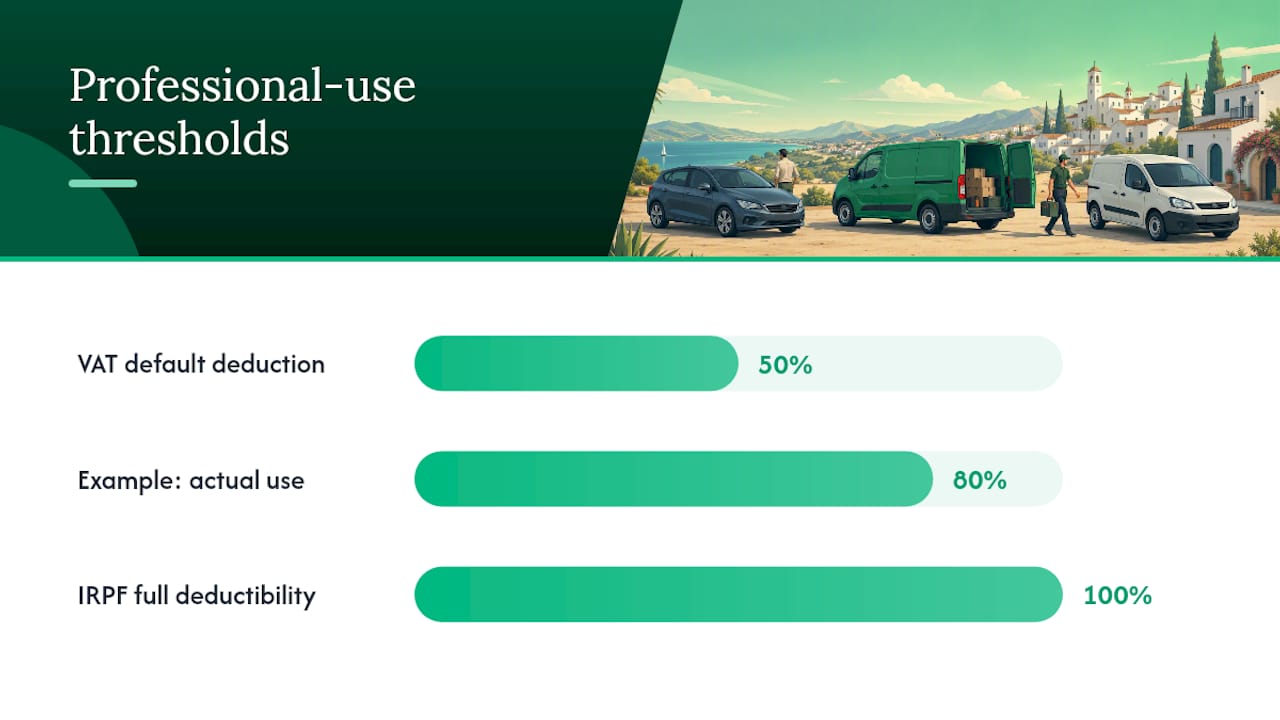
L’Agencia Tributaria applica una presunzione di default del 50% per la detrazione IVA sulla maggior parte dei veicoli a uso promiscuo. Significa che, in assenza di ulteriori prove, è possibile detrarre metà dell’IVA su acquisto, leasing e costi di gestione, anche se nella realtà il veicolo viene usato per lavoro quasi sempre.
Il 50/50 di partenza: metà dell’IVA è detraibile in automatico. Per detrarre di più occorre dimostrarlo attivamente.
Per superare il 50% servono prove documentate di un uso prevalentemente professionale: registri chilometrici, schede delle visite ai clienti, piani di consegna, datati e possibilmente firmati. La dottrina del TEAC e le pronunce amministrative danno sistematicamente torto ai contribuenti che non riescono a produrre questo tipo di documentazione formata in tempo reale, anche se alcune categorie, come i veicoli costruiti per il trasporto merci o quelli usati dagli agenti di commercio, possono godere di una presunzione di uso professionale al 100%.
L’IRPF è ancora più severa. La piena deducibilità delle spese del veicolo ai fini dell’imposta sui redditi richiede di norma un uso esclusivamente professionale, non “prevalente”. L’uso promiscuo, anche all’80% lavorativo e al 20% personale, tende a limitare quanto si può legittimamente dedurre.
Veicoli a uso promiscuo e la trappola del fringe benefit
Un vehículo mixto dà flessibilità: un solo mezzo, per l’attività e per il privato. Quella flessibilità ha un costo. Le regole spagnole sui fringe benefit non chiedono se il dipendente abbia effettivamente usato l’auto aziendale nel fine settimana, chiedono se l’auto fosse a sua disposizione. La sola disponibilità fa scattare l’imposizione, valorizzata in molti casi in misura forfettaria pari al 20% annuo del valore del veicolo.
I datori di lavoro che vogliono limitare questa esposizione devono documentare esplicitamente le limitazioni all’uso privato: chiavi riconsegnate fuori dall’orario di lavoro, parcheggio presso la sede aziendale, regolamento scritto sull’uso personale. I dipendenti che possono dimostrare limitazioni reali hanno un fondamento concreto per contestare una valorizzazione gonfiata. Lasciare l’accordo a voce non conviene a nessuno.
Una checklist pratica: immatricolazione commerciale o privata?
Prima di immatricolare, assicurare o riclassificare un veicolo, conviene valutare questi punti:
- Qual è l’uso principale del veicolo, misurato onestamente su un mese tipo, non sul mese migliore?
- Ha un carico utile o un allestimento (scaffalature, refrigerazione, scritte pubblicitarie) che indica chiaramente un uso commerciale?
- Qual è il chilometraggio annuo previsto e quanta parte riguarda visite ai clienti o consegne?
- Si è autónomo o lavoratori dipendenti, e il contratto impone di trasportare merci o attrezzi?
- Si stanno già tenendo i registri (diari di bordo, fatture, bolle di consegna) in modo che reggano se l’Agencia Tributaria li richiedesse?
Consiglio pratico: Faccia la stessa domanda alla propria compagnia e al proprio commercialista nella stessa settimana: “con questo schema di utilizzo, quale classe è la più adatta?”. Ottenere due risposte da due professionisti prima di impegnarsi evita il grattacapo di una riclassificazione più avanti. Se uno dei due segnala una discrepanza fra l’immatricolazione e l’uso reale, è quello il momento di parlare con la DGT o con l’Agencia Tributaria: prima, non dopo che un sinistro o una verifica lo impongano.
Mettere a posto le pratiche da expat in Spagna
Un broker assicurativo bilingue lavora ogni giorno con residenti ed expat proprio per sbrogliare questo problema di classificazione, in italiano e senza gergo. In concreto significa confrontare i preventivi delle compagnie spagnole per la copertura dei veicoli commerciali, aiutare a raccogliere la documentazione giusta (certificati ITV, prova dell’uso aziendale, documenti di immatricolazione) e assicurarsi che l’uso dichiarato in polizza corrisponda davvero a come il veicolo viene guidato.
Azzeccare la dichiarazione fin dall’inizio conta più di quanto si creda: al momento del sinistro le compagnie chiedono abitualmente prove a sostegno, e una polizza che non corrisponde alla realtà può tradursi in un risarcimento contestato. Prima di contattare un broker, conviene tenere pronti il libretto di circolazione, la scheda ITV, l’uso previsto e il chilometraggio annuo approssimativo: accorcia parecchio la conversazione.
Che cosa premiano davvero queste regole e che cosa puniscono
Il sistema spagnolo premia la documentazione e punisce l’ambiguità. È lo schema che attraversa immatricolazione, IVA, IRPF e assicurazione allo stesso modo: il veicolo in sé conta meno di ciò che si riesce a dimostrare su come viene usato.
Il consiglio classico, “basta immatricolarlo come commerciale se ogni tanto lo si usa per lavoro”, sbaglia completamente bersaglio. Un uso aziendale parziale senza registri porta al 50% di IVA di default e a un’esposizione da fringe benefit se c’è di mezzo un dipendente, non alla detrazione piena che i proprietari danno per scontata. La categoria del veicolo sulla carta è solo il punto di partenza; è la documentazione dietro di essa che un verificatore fiscale o un liquidatore sinistri va davvero a mettere alla prova.
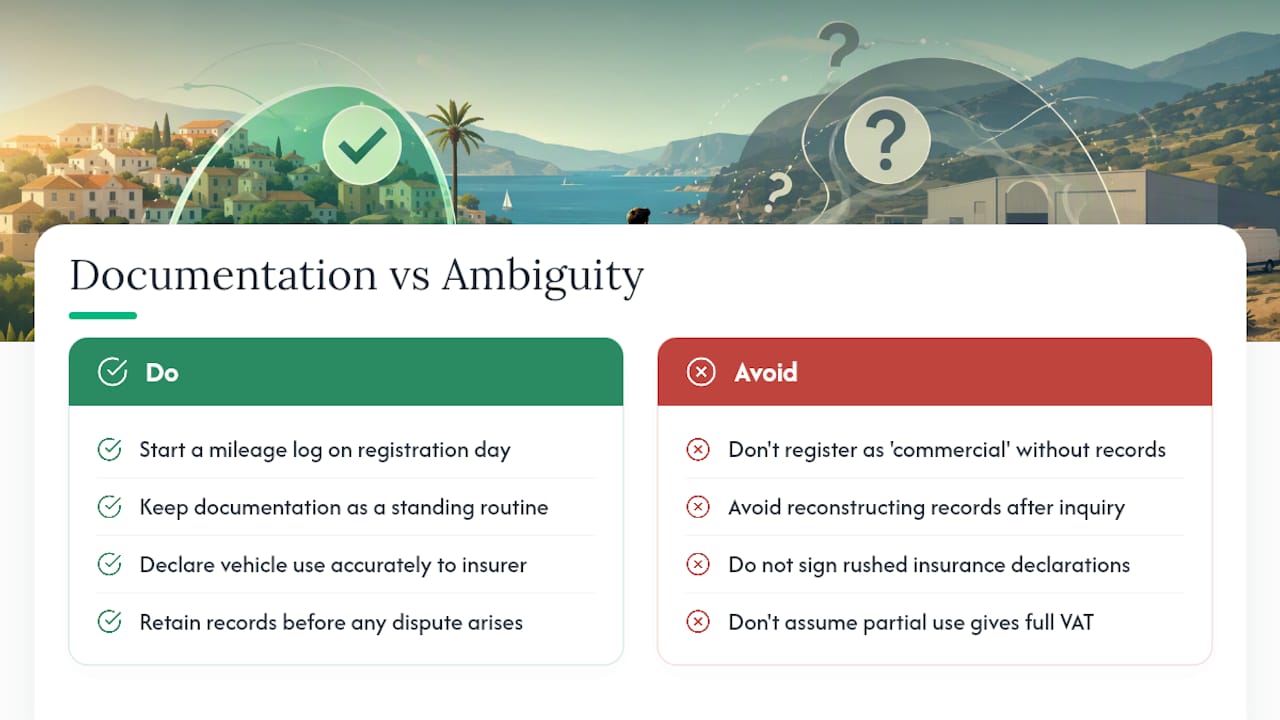
Per la maggior parte di chi legge, la prima cosa da cambiare è un’abitudine, non un documento. Conviene iniziare un registro dei chilometri il giorno in cui si immatricola il veicolo, non il giorno in cui l’Agencia Tributaria lo chiede. Chi tratta la documentazione come una routine costante se la cava sistematicamente meglio nei contenziosi rispetto a chi la ricostruisce a posteriori, e le pronunce del TEAC lo confermano di continuo. La scelta della classificazione conta, ma nella maggior parte dei contenziosi è l’anello debole, non quello forte.
Se c’è un punto in cui gli expat restano scottati più degli altri, sono le dichiarazioni assicurative fatte di fretta, spesso in una seconda lingua, senza afferrare del tutto a che cosa impegni l’“uso dichiarato”. È un problema risolvibile, e conviene risolverlo prima di firmare la polizza, non dopo che un sinistro è stato respinto.
— Jake
Ottenga la copertura giusta prima che la burocrazia la raggiunga
Che il veicolo sia M1, N1 o vehículo mixto, la polizza che gli sta dietro deve corrispondere alla realtà, non solo al libretto di circolazione. Un broker bilingue confronta le coperture di diverse compagnie spagnole di primo piano, così si ottiene una polizza che si adatta davvero all’uso dichiarato invece di un prodotto privato o commerciale standard che lascia buchi.
Contatti Insurancespain prima di registrare un cambio di destinazione d’uso, importare un veicolo o rinnovare una polizza esistente: qui i tempi contano davvero, perché una dichiarazione incoerente è molto più facile da correggere prima di un sinistro che durante. Tenga a portata di mano il libretto di circolazione, la scheda ITV e il chilometraggio annuo previsto, e il confronto fra le compagnie viaggia spedito. Cominci con un confronto preventivi gratuito per la copertura di veicoli commerciali o a uso promiscuo, oppure esplori tutta la gamma di coperture disponibili se, oltre al veicolo, deve assicurare una casa, un piano sanitario o un’auto con targa britannica.
Fonti
- Agencia Tributaria — What VAT can I deduct?
- Registering a vehicle coming from the EU in Spain
- Vehículos mixtos en empresas y deducción del IVA: doctrina TEAC
Questo articolo contiene informazioni di carattere generale e non sostituisce il parere di un legale qualificato. Prima di agire sulla base di quanto letto qui, si consiglia di consultare un professionista legale qualificato sulla propria situazione specifica.
FAQ
Qual è la differenza fra un veicolo commerciale e uno privato in Spagna?
Un veicolo commerciale (N1) è costruito principalmente per trasportare merci ed è immatricolato, tassato e assicurato secondo regole diverse da quelle di un’auto privata (M1), progettata soprattutto per trasportare persone.
Che cosa si considera veicolo commerciale in Spagna?
Furgoni, pick-up e autocarri leggeri fino a 3,5 tonnellate di MMA costruiti o adattati soprattutto per il trasporto di merci rientrano nella classe N1, mentre il vehículo mixto sta a metà fra uso commerciale e privato a seconda dell’allestimento e della destinazione dichiarata.
Quali auto sono esenti da imposta in Spagna?
Alcuni veicoli hanno diritto all’esenzione dall’IEDMT, più comunemente quando l’immatricolazione segue un effettivo trasferimento della residenza abituale in Spagna, a condizione che siano rispettati i requisiti documentali della DGT.
Quali saranno le nuove regole di circolazione in Spagna nel 2026?
Non è stata annunciata alcuna revisione nazionale confermata della classificazione fra veicoli commerciali e privati; l’approccio più prudente è verificare direttamente le indicazioni aggiornate di DGT e Agencia Tributaria prima di dare per cambiata una regola.
Serve una polizza diversa se si usa l’auto privata ogni tanto per lavoro?
Sì, nella maggior parte dei casi. Le compagnie tariffano diversamente l’uso commerciale e quello privato, e Insurancespain può confrontare le opzioni di assicurazione per veicoli commerciali per far coincidere la polizza con lo schema di utilizzo reale invece che con un’ipotesi di default.
Consigliati
0 Comments
Sia il primo a lasciare un commento.