

4 étapes pour résilier son assurance auto après avoir vendu sa voiture en Espagne
Une fois votre voiture vendue, informez votre assureur par écrit et joignez une preuve de la vente — le contrato de compraventa signé ou votre récépissé de transfert DGT. Faites-le rapidement, car la plupart des polices se renouvellent automatiquement sauf préavis de votre part, et vous restez redevable des primes jusqu'à ce que l'assureur confirme la résiliation. Prévenez également la DGT, afin de ne jamais être tenu responsable des amendes accumulées par le nouveau propriétaire.
En bref :
- Fournir une preuve de vente, comme un contrat signé et un récépissé de transfert DGT, est indispensable pour que l'assureur traite correctement votre résiliation.
- Vous devez informer l'assureur par écrit et demander une confirmation écrite de la résiliation, avec la date d'effet, pour éviter de payer pour un véhicule que vous ne possédez plus.
- Déclarer la vente à la DGT, en ligne ou en personne, est essentiel, car cela évite que de futures amendes ou taxes ne soient rattachées au véhicule après la vente.
- Si l'assureur a modifié les conditions de manière irrégulière ou si vous vendez la voiture en dehors du délai légal de préavis, vous pouvez tout de même résilier sous certaines conditions, comme une preuve de vente ou un manquement contractuel.
- Pour une résiliation sans accroc, il est recommandé d'envoyer une preuve officielle par burofax ou courrier recommandé ; se contenter d'un appel téléphonique ou d'annuler un prélèvement automatique peut entraîner des litiges.
Sommaire
- Comment résilier son assurance auto après la vente d'un véhicule
- Délais légaux et règles de préavis en Espagne
- Quelle preuve de vente votre assureur exige-t-il réellement ?
- Bien envoyer la notification de résiliation
- Que devient votre prime et quel remboursement attendre ?
- Si vous avez raté le délai ou si l'assureur refuse
- Pourquoi prévenir la DGT compte autant que résilier la police
- Les erreurs les plus fréquentes que nous observons
- Faites-vous aider pour résilier ou remplacer votre assurance auto
- Sources
Comment résilier son assurance auto après la vente d'un véhicule
Dès que la vente est conclue, quatre démarches pratiques restent à accomplir avant que la police ne soit réellement close. En manquer une, c'est risquer de payer une couverture pour une voiture que vous ne possédez plus.
- Rassemblez d'abord vos documents. Vous avez besoin du contrato de compraventa signé, de votre récépissé de transfert DGT ou de notificación de venta, de votre numéro de police et de votre pièce d'identité. L'assureur comme la DGT les exigent avant d'agir.
- Envoyez une notification formelle de résiliation. Écrivez à l'assureur pour demander la résiliation, joignez les documents de vente et indiquez la date à laquelle vous souhaitez que la couverture prenne fin. Demandez explicitement une confirmation écrite avec une date d'effet précise, pas seulement un accusé de réception.
- Prévenez la DGT séparément. Déposez la notificación de venta en ligne ou dans un bureau de la DGT et conservez le récépissé. Ce même document constitue aussi votre meilleure preuve de la date de vente face à l'assureur.
- Vérifiez ensuite votre moyen de paiement. Une fois la résiliation confirmée, surveillez votre compte bancaire pendant quelques semaines. Il arrive que le prélèvement automatique continue même après que l'assureur a enregistré la résiliation en interne ; une vérification rapide vous évite une pénible course au remboursement plus tard.
Astuce : Envoyez le récépissé DGT et la lettre de résiliation ensemble. Les assureurs agissent plus vite lorsque la date d'effet s'appuie sur un document officiel plutôt que sur votre seule parole, et les litiges sur le moment exact où le risque a disparu deviennent presque impossibles.
Délais légaux et règles de préavis en Espagne
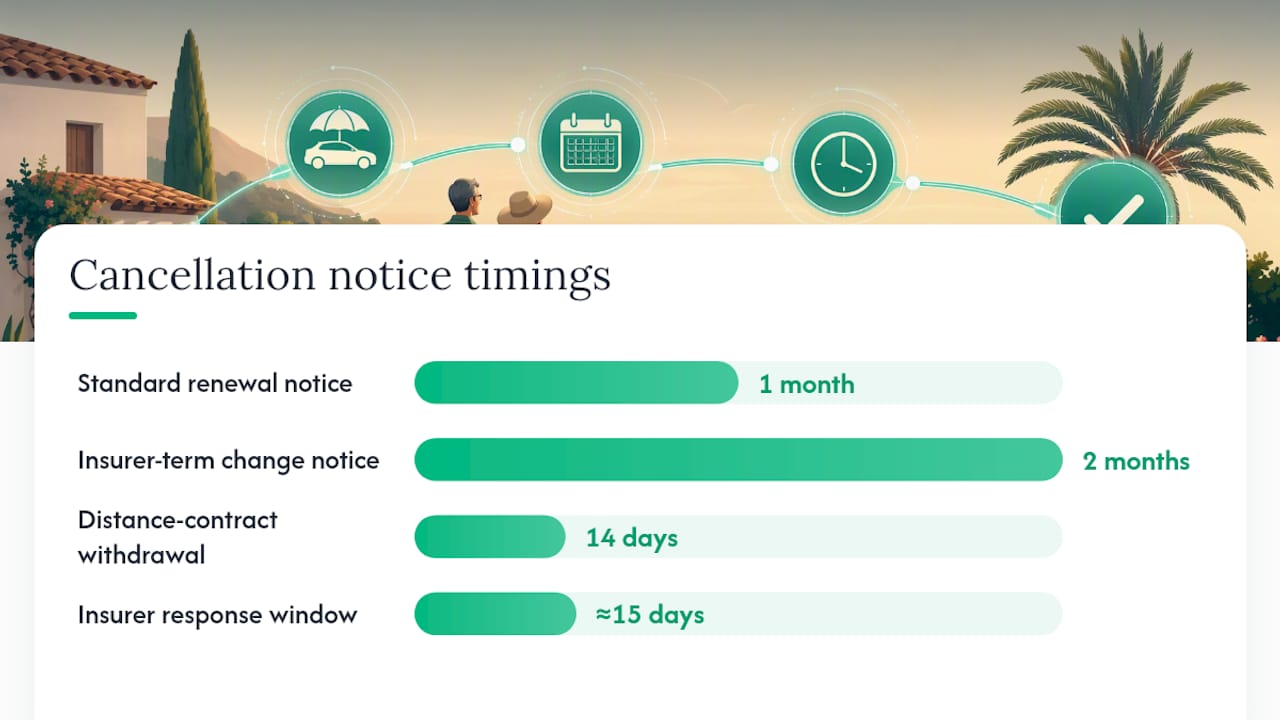
La loi espagnole sur les assurances, régie par la Ley 50/1980, fonctionne sur le principe de la prórroga tácita, le renouvellement automatique. Depuis janvier 2016, vous devez généralement donner un préavis écrit d'au moins un mois avant votre date de renouvellement, faute de quoi la police se reconduit simplement pour une année supplémentaire, prime comprise.
Vendre la voiture change la donne. Trois situations permettent de sortir du délai de préavis standard :
- Le bien assuré n'existe plus. La vente de la voiture supprime l'intérêt assurable, si bien que les assureurs acceptent généralement la résiliation à tout moment dès que vous fournissez une preuve de vente valable.
- L'assureur a modifié votre contrat sans préavis suffisant. S'il ne vous a pas donné un préavis de deux mois avant de modifier les conditions ou la prime, vous pouvez résilier même en cours d'année.
- Les contrats à distance ouvrent un droit de rétractation de 14 jours. Si vous avez souscrit la police à distance, ce délai de rétractation vous offre une voie de résiliation totalement distincte.
Une fois votre preuve valable transmise, l'assureur dispose généralement d'environ 15 jours pour confirmer ou refuser la résiliation et traiter tout remboursement dû.
Quelle preuve de vente votre assureur exige-t-il réellement ?
Les assureurs ne se contentent pas de votre parole pour attester que la voiture a changé de propriétaire. Ils veulent des documents solides, tout comme la DGT si des amendes ou des taxes sont un jour contestées.
- Le contrato de compraventa signé. Les noms des deux parties, leurs numéros d'identité, l'immatriculation et le numéro de châssis du véhicule, ainsi que la date de vente, doivent y figurer clairement.
- Le document de transfert DGT ou le récépissé de notificación de venta. C'est la preuve la plus solide que vous puissiez présenter à un assureur ou aux autorités, puisqu'elle porte un horodatage officiel.
- Des documents complémentaires à garder sous la main. Votre permiso de circulación, la ficha técnica, une preuve que la taxe de circulation a été payée jusqu'à la vente, et tout justificatif bancaire attestant le paiement.
Sans au moins les deux premiers documents, votre assureur peut considérer la police comme toujours active et la renouveler normalement.
Bien envoyer la notification de résiliation
Un appel téléphonique semble plus rapide, mais il ne vous laisse rien à opposer si l'assureur « oublie » de le traiter. Il en va de même pour l'annulation du simple prélèvement automatique, que les assureurs ne considèrent pas comme une résiliation valable et qui peut vous laisser redevable de la prime impayée et de frais.
- Le burofax. La référence absolue en Espagne : horodaté légalement, remise certifiée, difficile à contester pour un assureur.
- Le courrier recommandé avec accusé de réception. Plus lent qu'un burofax, mais il vous donne tout de même une preuve datée de l'arrivée du courrier.
- L'e-mail certifié ou recommandé. Une solution intermédiaire pratique si l'assureur accepte la correspondance numérique, à condition qu'elle génère une preuve de remise.
Quel que soit le canal choisi, la lettre elle-même doit indiquer votre numéro de police, l'immatriculation du véhicule, la date de vente, une demande claire de résiliation, et la liste des documents joints.
Que devient votre prime et quel remboursement attendre ?
Si votre assureur accepte la résiliation, il vous doit généralement la portion non utilisée de votre prime à partir de la date d'effet, déduction faite de tous frais de dossier prévus par la police. Ce remboursement intervient normalement une fois que l'assureur a traité votre dossier dans le délai de confirmation de 15 jours, pas avant.
Si un remboursement est refusé ou tarde :
- Conservez tous les documents datés : le récépissé du burofax, les papiers de la DGT et toute réponse écrite de l'assureur.
- Déposez d'abord une réclamation formelle auprès du service des réclamations de l'assureur.
- Saisissez la Dirección General de Seguros y Fondos de Pensiones (DGSFP) si l'assureur traîne au-delà d'un délai raisonnable.
Si vous avez raté le délai ou si l'assureur refuse
Manquer le délai de préavis d'un mois n'est pas la fin du monde, mais cela réduit vos options.
- Vérifiez si une exception légale s'applique. La vente de la voiture constitue en elle-même un motif de résiliation en dehors du délai normal, si bien qu'elle l'emporte généralement sur un délai manqué.
- Vérifiez si l'assureur a modifié vos conditions sans préavis suffisant. S'il a modifié votre prime ou votre couverture sans vous donner le préavis de deux mois requis, vous pouvez résilier quel que soit le calendrier.
- Passez à l'écrit en cas de désaccord. Déposez une réclamation formelle en citant vos documents de vente, et saisissez la DGSFP si l'assureur refuse une résiliation à laquelle vous avez légalement droit.
Sauf l'une de ces exceptions, vous devrez généralement attendre la prochaine date de renouvellement pour que la police s'éteigne proprement.
Pourquoi prévenir la DGT compte autant que résilier la police
Résilier votre assurance protège votre portefeuille. Prévenir la DGT protège votre dossier. La notificación de venta se dépose en ligne ou en personne, nécessite votre pièce d'identité et les documents du véhicule, et implique de petits frais, évalués à environ 8,67 € selon une couverture de presse récente.
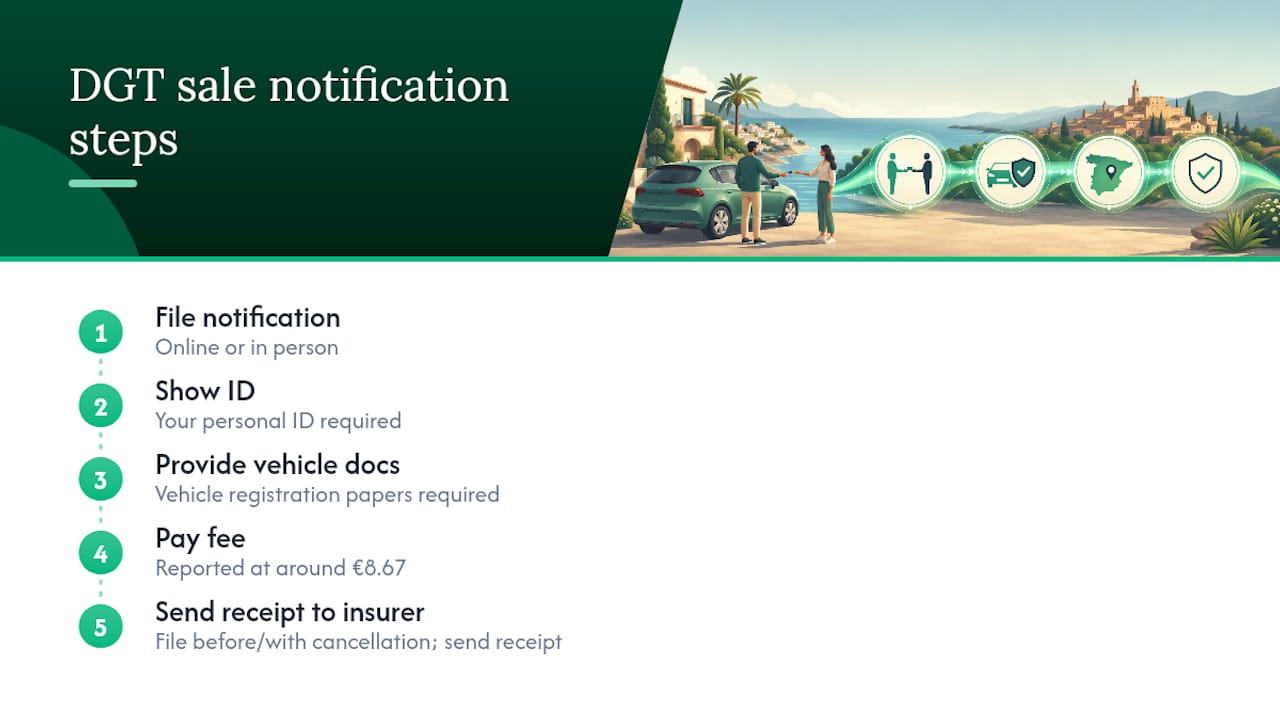
Si vous sautez cette étape, vous restez le propriétaire enregistré aux yeux de la DGT. Cela signifie que des amendes, des péages impayés, voire des avis de contrôle technique (ITV) liés à une voiture que vous ne conduisez plus peuvent atterrir sur votre bureau des mois plus tard.
Astuce : Déposez la notification à la DGT avant ou en même temps que votre lettre de résiliation d'assurance, puis envoyez le récépissé à votre assureur. Un seul document fixe la date de vente pour les deux parties à la fois.
Les erreurs les plus fréquentes que nous observons
Les vendeurs pensent souvent que la vente elle-même met fin à la police, ou font confiance à l'acheteur pour « régler la paperasse ». Ni l'une ni l'autre de ces approches ne fonctionne. Comme l'explique notre guide sur l'assurance auto pour les expatriés, le contrat reste en vigueur tant que vous ne l'avez pas formellement résilié, et annuler votre prélèvement automatique ne fait qu'attirer une lettre de recouvrement.
La solution la plus sûre reste simple : une notification écrite accompagnée de votre récépissé DGT, envoyés ensemble. Si la paperasse ou l'espagnol vous semble un obstacle, un courtier francophone peut gérer l'ensemble des échanges avec l'assureur en votre nom.
— Jake
Faites-vous aider pour résilier ou remplacer votre assurance auto
Insurancespain est l'alternative pratique pour ne pas affronter seul la paperasse des assureurs espagnols. Plutôt que de courir après un centre d'appels dans une langue qui n'est pas la vôtre, notre équipe francophone compare plus de 11 assureurs espagnols de référence, gère la correspondance de résiliation et prépare une couverture de remplacement si vous achetez une autre voiture.

Si vous conduisez toujours et souhaitez simplement changer d'assureur, nous pouvons aussi vous aider à trouver de meilleures conditions avant le renouvellement de votre police actuelle. La démarche est simple : envoyez-nous vos documents de vente, indiquez-nous ce dont vous avez besoin ensuite, et nous prenons en charge la résiliation et la comparaison à votre place. Rendez-vous sur Insurancespain pour demander un accompagnement en français et une comparaison gratuite parmi les principaux assureurs d'Espagne dès aujourd'hui.
Sources
- Dar de baja el seguro del coche: cómo hacerlo, plazos y qué no debes olvidar para no pagar de más
- Vender un vehículo de segunda mano — DGT
- Vendre sa voiture en Espagne : comment le signaler à la DGT et éviter les amendes d'un tiers
- Ce que couvre votre assurance en Espagne — et comment résilier
À lire également
À retenir
- ✓ Les polices espagnoles se renouvellent automatiquement par prórroga tácita, et depuis janvier 2016 il faut généralement donner un préavis écrit d'au moins un mois avant la date de renouvellement.
- ✓ Le récépissé de notificación de venta délivré par la DGT est la preuve la plus solide que vous puissiez présenter à un assureur, car il porte un horodatage officiel.
- ✓ Annuler le prélèvement automatique ne constitue pas une résiliation valable et peut vous laisser redevable de la prime impayée, plus des frais.
- ✓ Déposez la notification à la DGT avant ou en même temps que votre lettre de résiliation, puis envoyez le récépissé à votre assureur, afin qu'un seul document fixe la date de vente pour les deux démarches.
Questions fréquentes
Quick answers on insurance in spain
Encore des questions ?
Contactez-nous0 Comments
Soyez le premier à laisser un commentaire.


