

Expats in Spanien: Autos unter fünf Jahren – Haftpflicht oder Vollkasko?
Die Kfz-Haftpflicht ist das gesetzliche Minimum für jedes in Spanien zugelassene Fahrzeug, für die meisten Expats aber nicht die sinnvolle Wahl. Ist Ihr Auto mehr als ein paar tausend Euro wert, finanziert oder steht es nachts ungeschützt am Straßenrand, passt in der Regel die Vollkasko („todo riesgo“) besser, weil sie Ihr eigenes Fahrzeug absichert und nicht nur das der Gegenseite. Die folgenden Abschnitte schlüsseln jede Deckungsstufe auf und geben Ihnen eine Checkliste für den sauberen Vergleich.
Kurz gefasst:
- Eine Vollkasko empfiehlt sich für finanzierte Fahrzeuge, für Autos unter fünf Jahren und für Stellplätze in Risikolagen der Stadt, weil dort höhere Reparaturkosten drohen.
- Der tatsächliche Preisunterschied zwischen Haftpflicht und Vollkasko hängt von Fahrzeugwert, Alter des Fahrers, Wohnort und Selbstbeteiligung ab – Angebote nebeneinander zu stellen ist deshalb unverzichtbar.
- Das spanische Recht verlangt nur die Haftpflicht, doch die Vollkasko bietet breiteren Schutz und kann sich positiv auf Wiederverkaufswert und Fahrzeugpflege auswirken.
- Ausschlüsse der Vollkasko, etwa nicht eingetragene Fahrer oder Renneinsätze, sollten Sie vor der Unterschrift genau lesen, um abgelehnte Schäden zu vermeiden.
- Zweisprachige Maklerunterstützung erleichtert den Vergleich und sorgt dafür, dass Sie die tatsächlichen Deckungsstufen und räumlichen Grenzen der Anbieter verstehen.
Inhaltsverzeichnis
- Haftpflicht vs. Vollkasko in Spanien: die Kurzfassung
- Was das spanische Recht tatsächlich verlangt
- Terceros básico, terceros ampliado und die Bausteine, die sich lohnen
- Was die Vollkasko („todo riesgo“) tatsächlich abdeckt
- Wie die Selbstbeteiligung (franquicia) Ihren Beitrag beeinflusst
- Deckungsstufen nebeneinander vergleichen
- So entscheiden Sie zwischen Haftpflicht und Vollkasko
- Typische Fehler von Expats beim spanischen Kfz-Schutz
- Wie sich die Schadenabwicklung bei Haftpflicht und Vollkasko unterscheidet
- Beeinflusst Ihre Deckungsstufe Wiederverkaufswert oder Gesetzeskonformität?
- Wo Expats die jeweilige Deckung typischerweise abschließen
- Wann sich die Vollkasko bezahlt macht
- Was den Preisabstand zwischen Haftpflicht und Vollkasko treibt
- Wie Insurance Spain Ihnen bei der Entscheidung hilft
- Ein Kfz-Angebot, das wirklich zu Ihrer Situation passt
- Quellen
- FAQ
Haftpflicht vs. Vollkasko in Spanien: die Kurzfassung
Die Haftpflicht (terceros) zahlt für Schäden oder Verletzungen, die Sie anderen zufügen. Sie zahlt nie die Reparatur Ihres eigenen Autos. Die Vollkasko (todo riesgo) tut beides: Sie umfasst die Haftpflicht plus Schäden am eigenen Fahrzeug, ob Zusammenstoß, Vandalismus oder gesprungene Windschutzscheibe.
Ziehen Sie die Vollkasko in Betracht, wenn einer dieser Punkte auf Sie zutrifft:
- Ihr Auto ist jünger als fünf Jahre oder noch finanziert.
- Sie fahren täglich in einer Stadt wie Valencia oder Alicante oder auf Mallorca, wo das Parkrisiko höher ist.
- Sie hatten bereits mindestens einen Schaden und wollen sich gegen erneute Kosten absichern.
Die Beiträge für die Vollkasko liegen typischerweise über denen der Haftpflicht, der Abstand schrumpft jedoch bei älteren Fahrzeugen mit geringem Marktwert. Der einzige verlässliche Weg, den echten Unterschied für Ihr Auto zu kennen, ist, Angebote nebeneinander einzuholen, statt von Schlagzeilenpreisen auszugehen.
Was das spanische Recht tatsächlich verlangt
Spanien verlangt für jedes zugelassene Fahrzeug eine Pflichthaftpflicht, das seguro obligatorio. Sie deckt Verletzungen oder Schäden, die Sie anderen Personen, deren Fahrzeugen oder deren Eigentum zufügen. Über Ihr eigenes Auto sagt sie nichts.
Da Spanien zum EWR gehört, reist dieser Pflichtschutz mit Ihnen. EU-Vorgaben bestätigen, dass ein in einem EU-Land zugelassenes Fahrzeug eine Pflichthaftpflicht führen muss und dieser Schutz im gesamten EWR gilt. Das hilft, wenn Sie übers Wochenende nach Frankreich oder Portugal fahren, doch prüfen Sie zuerst Ihren Versicherungsschein: Freiwillige Bausteine wie Schutzbrief oder Mietwagen haben oft eigene räumliche Grenzen, auch wenn der Pflichtteil der Haftpflicht sie nicht hat.
Spaniens eigene Hinweise dazu sind eindeutig: Die Pflichtversicherung deckt Schäden Dritter und gilt für jedes in einem EU-Land zugelassene Fahrzeug, wobei freiwillige Bausteine wie todo riesgo obendrauf kommen. Für den genauen Gesetzeswortlaut und etwaige jüngste Änderungen bei Bußgeldern oder Pflichten führt das BOE den aktuellen Gesetzestext. Regeln werden fortgeschrieben – das ist also die Quelle, die Sie prüfen sollten, bevor Sie annehmen, die Zahlen des Vorjahres gälten noch.
Terceros básico, terceros ampliado und die Bausteine, die sich lohnen
Terceros básico ist das nackte gesetzliche Minimum. Es zahlt Ansprüche Dritter und sonst nichts. Zerkratzt jemand im Parkhaus Ihren Lack oder zerschlägt ein Hagelschauer Ihre Windschutzscheibe, zahlen Sie die Reparatur bei básico selbst.
Terceros ampliado baut auf dieser Basis auf und ergänzt den Schutz, den die meisten Fahrer tatsächlich wollen – vergleichbar mit einer Teilkasko:
- Brandschäden am eigenen Fahrzeug.
- Diebstahl des Autos oder seines Inhalts.
- Austausch von Windschutzscheibe und Glas, oft ohne oder mit geringer Selbstbeteiligung.
Über diese beiden Stufen hinaus verkaufen Versicherer Zusatzbausteine, unabhängig davon, welche Grundpolice Sie haben:
- Rechtsschutz (defensa jurídica), nützlich, wenn sich ein Streit über Schuld oder Schadenhöhe hinzieht.
- Schutzbrief (asistencia en carretera), der mehr zählt, als man denkt, wenn Sie einen älteren Import ohne lokales Händlernetz fahren.
- Fahrerschutz (seguro del conductor), denn die reine Haftpflicht zahlt nicht für Verletzungen, die Sie sich selbst zuziehen.
Ist Ihr Auto es wert, auf der Straße zu bleiben, aber nicht, voll versichert zu werden, landet ampliado plus ein paar dieser Bausteine oft nahe am Vollkaskopreis – ohne die volle Deckung eigener Schäden.
Was die Vollkasko („todo riesgo“) tatsächlich abdeckt
Todo riesgo ergänzt daños propios, also die Deckung eigener Schäden, zu allem, was Haftpflicht und ampliado bereits bieten. Das heißt: Kollisionsschäden unabhängig von der Schuldfrage, Vandalismus und Diebstahl des Fahrzeugs selbst, nicht nur seines Inhalts.
Die meisten Vollkaskopolicen bündeln Zusatzleistungen serienmäßig: einen Ersatzwagen während der Reparatur, Glasersatz, Rechtsschutz und einen Pannendienst rund um die Uhr. Das unterscheidet sich zwischen Versicherern – betrachten Sie es als üblich, nicht als garantiert.
Was die Leute stolpern lässt, sind die Ausschlüsse. Gängige Vollkaskopolicen zahlen typischerweise nicht, wenn:
- Eine nicht berechtigte oder nicht eingetragene Person am Steuer saß.
- Das Auto ohne Anzeige für Rennen, Wettbewerbe oder Vermietung genutzt wurde.
- Der Schaden eine im Vertrag vereinbarte Wertobergrenze übersteigt, was bei älteren oder umgebauten Fahrzeugen besonders relevant ist.
Lesen Sie die condiciones particulares vor der Unterschrift, nicht erst nach einer Ablehnung. Das Schlagwort „todo riesgo“ heißt wörtlich „alles Risiko“, doch keine spanische Vollkasko ist wirklich allumfassend. Jede führt eine Ausschlussliste, die fünf Minuten Ihrer Aufmerksamkeit wert ist.
Wie die Selbstbeteiligung (franquicia) Ihren Beitrag beeinflusst
Die Selbstbeteiligung, die franquicia, ist der Betrag, den Sie aus eigener Tasche tragen, bevor der Versicherer den Rest übernimmt. Spanische Versicherer bieten üblicherweise Stufen um 200 €, 300 €, 500 € und 1.000 € an; eine höhere Stufe senkt tendenziell den Beitrag, dafür tragen Sie mehr Risiko selbst.
Eine Selbstbeteiligung von 500 € bei einem kleinen Stoßstangenkratzer heißt, dass Sie die ersten 500 € zahlen; alles darüber übernimmt der Versicherer. Das funktioniert gut bei älteren Autos, wo Reparaturkosten ohnehin selten über ein paar Hundert Euro hinausgehen. Es funktioniert schlecht bei einem finanzierten oder neueren Fahrzeug, wo ein einzelner Schaden eine hohe Selbstbeteiligung mühelos überschreitet und Sie am Ende kaum besser dastehen, als hätten Sie gar keinen Schutz.
Deckungsstufen nebeneinander vergleichen
Vergleichen Sie nicht Markennamen von Versicherern, sondern das, was tatsächlich im Versicherungsschein steht. Nutzen Sie das als Checkliste:
- Pflichthaftpflicht: in jeder Police und jeder Stufe enthalten.
- Scheibenersatz: bei básico meist ausgeschlossen, bei ampliado und todo riesgo Standard.
- Diebstahl: bei básico manchmal optional, ab ampliado Standard.
- Brand: in der Regel ab ampliado enthalten.
- Eigene Schäden (daños propios): nur in der Vollkasko.
- Ersatzwagen: oft optional, häufiger als Vollkasko-Baustein.
- Schutzbrief: in allen Stufen meist optional, mitunter in der Vollkasko gebündelt.
- Rechtsschutz: in allen Stufen meist optional.
Die Marketingnamen dieser Stufen unterscheiden sich zwischen Versicherern, und was das eine Haus in seiner „erweiterten“ Stufe führt, verkauft ein anderes als Zusatzbaustein. Was Sie tatsächlich kaufen, sagt Ihnen der Versicherungsschein, nicht der Produktname.
So entscheiden Sie zwischen Haftpflicht und Vollkasko
Arbeiten Sie diese Faktoren in der für Ihre Lage wichtigen Reihenfolge durch:
- Fahrzeugwert und Finanzierung. Ein finanziertes oder geleastes Auto braucht fast immer eine Vollkasko, da Ihr Kreditgeber die Deckung eigener Schäden in der Regel zur Bedingung macht.
- Nutzungshäufigkeit. Tägliches Fahren in dichten Innenstädten erhöht Ihr Kollisionsrisiko gegenüber einem Auto, das meist in einer Garage auf dem Land steht.
- Sicherheit des Stellplatzes. Nächtliches Parken am Straßenrand in der Stadt erhöht das Diebstahl- und Vandalismusrisiko gegenüber einer Privatgarage oder einer bewachten Anlage.
- Fahrerprofil. Jüngere oder frisch lizenzierte Fahrer zahlen in allen Stufen mehr, was den Preisabstand zwischen Haftpflicht und Vollkasko schrumpfen lassen kann.
- Schadenfreiheit. Eine saubere Historie über mehrere Jahre bringt oft einen so deutlichen Rabatt, dass die Vollkasko erschwinglicher wird als erwartet.
Wenn Sie Angebote vergleichen, stellen Sie dem Versicherer oder Makler diese Fragen direkt:
- Reicht der räumliche Geltungsbereich über Spanien hinaus, und für wie lange je Reise?
- Wie hoch ist die Selbstbeteiligung, und können Sie Beispielschäden in Euro sehen?
- Sind Reparaturen auf ein Partnerwerkstattnetz beschränkt, oder dürfen Sie Ihre eigene Werkstatt wählen?
- Müssen Fahrer namentlich eingetragen sein, oder gilt die Police für jede Person mit Führerschein?
- Ist ein Ersatzwagen enthalten, und für wie viele Tage?
- Kann die Schadenabwicklung auf Deutsch laufen oder nur auf Spanisch?
Praxistipp: Bewahren Sie jede alte Police und jedes Schreiben zum Schadenverlauf Ihres früheren Versicherers auf, auch aus einem anderen Land. Spanische Versicherer verlangen fast immer einen förmlichen Nachweis, bevor sie einen Schadenfreiheitsrabatt übernehmen – eine mündliche Schilderung genügt nicht.
Typische Fehler von Expats beim spanischen Kfz-Schutz
Der häufigste Fehler ist die Annahme, die spanische Kfz-Versicherung funktioniere genauso wie im Heimatland. Manche ausländischen Policen lassen den Schutz dem Fahrer über verschiedene Autos hinweg folgen; in Spanien ist er fast immer an das Fahrzeug gebunden. Wer mit der Denkweise seines Heimatlands an ein spanisches Angebot herangeht, schätzt falsch ein, was tatsächlich geschützt ist. Die offiziellen Behördenseiten Ihres Heimatlands sind ein nützlicher Startpunkt, aber nur eine Zusammenfassung – kein Ersatz dafür, Ihre spanischen Vertragsbedingungen zu lesen.
Die Übertragung des Schadenfreiheitsrabatts sorgt für das zweithäufigste Kopfzerbrechen. Spanische Versicherer wollen einen belegten Schadenverlauf und nicht nur Ihr Wort – sammeln Sie also alte Versicherungsscheine und Verlängerungsschreiben, bevor Sie Angebote anfordern.
Importierte oder im Vereinigten Königreich zugelassene Fahrzeuge bringen eine dritte Ebene an Komplexität; praktische Hinweise zum Überführen und Zulassen solcher Fahrzeuge finden Sie unter транспорт на автомобили от чужбина. Ein Auto, das noch britische Kennzeichen trägt, aber inzwischen in Spanien stationiert ist, braucht typischerweise eine spanische Zulassung und einen spanisch konformen Schutz – nicht eine über die Grenze gedehnte britische Police. Wenn Sie mitten im Verfahren für ein importiertes Fahrzeug stecken, klären Sie die Zulassung, bevor Sie irgendeine Police, ob Haftpflicht oder Vollkasko, für gültig halten.
Wie sich die Schadenabwicklung bei Haftpflicht und Vollkasko unterscheidet
Der Weg durch den Schadenfall gabelt sich scharf, je nach Schuldfrage und Deckung. Bei reiner Haftpflicht regelt Ihr Versicherer, wenn Sie einen Unfall verursachen, die Schadens- und Verletzungsansprüche des anderen Fahrers direkt; muss aber Ihr eigenes Auto repariert werden, stehen Sie allein da – es gibt keinen Anspruch bei Ihrem eigenen Versicherer, weil nichts in Ihrer Police dafür aufkommt.
Die Vollkasko ändert das vollständig. Sie melden den Schaden an Ihrem eigenen Fahrzeug bei Ihrem eigenen Versicherer, unabhängig von der Schuldfrage, parallel zu dem Verfahren, das den Anspruch der Gegenseite bearbeitet. Das heißt typischerweise: Fotos einreichen, bei Verletzungen oder erheblichen Schäden einen Polizeibericht (ab bestimmten Schwellen Pflicht) und manchmal die Begutachtung durch einen unabhängigen Sachverständigen, bevor Reparaturen freigegeben werden.
Die Schuldfrage wiegt in der Vollkasko schwerer, weil sie Ihren Schadenfreiheitsrabatt betrifft, selbst wenn der Versicherer zahlt. Ein Schaden ohne Ihr Verschulden – etwa ein geparktes Auto wird angefahren, während Sie im Laden sind – rührt in der Regel nicht an Ihrer Schadenfreiheit, sofern Sie die Gegenseite benennen können oder deren Versicherer die Haftung anerkennt. Ein Alleinschaden, den Sie klar verschuldet haben, tut es fast immer.
Auch die Reparaturdauer unterscheidet sich. Vollkaskopolicen mit Partnerwerkstattnetz laufen tendenziell schneller, weil der Versicherer direkt mit der Werkstatt abrechnet. Reine Haftpflichtfälle mit dem Versicherer eines anderen Fahrers dauern oft länger, weil Sie auf ein Unternehmen angewiesen sind, mit dem Sie keinen Vertrag haben.
Beeinflusst Ihre Deckungsstufe Wiederverkaufswert oder Gesetzeskonformität?
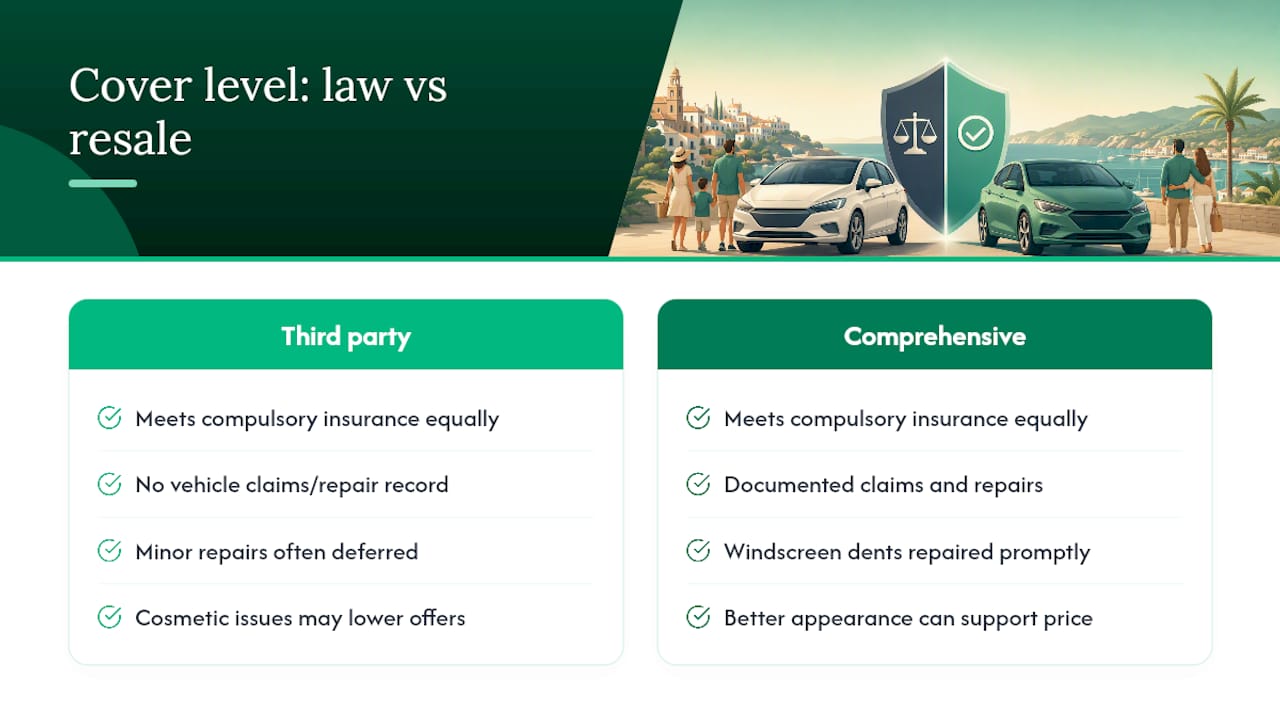
Rechtlich erfüllen Haftpflicht und Vollkasko die spanische Versicherungspflicht gleichermaßen. Die DGT (Dirección General de Tráfico), Spaniens Verkehrsbehörde, unterscheidet bei der Prüfung, ob ein Fahrzeug rechtmäßig versichert ist, nicht zwischen Deckungsstufen; sie prüft nur, ob eine gültige Pflichthaftpflicht besteht. Ganz ohne Versicherung zu fahren – gleich welche Stufe Sie sonst gewählt hätten – bringt Ihnen Bußgelder und möglicherweise die Sicherstellung des Fahrzeugs ein.
Der Wiederverkaufswert ist eine andere Frage, und dort zahlt sich die Vollkasko still und leise aus. Ein Auto, das in Spanien durchgehend vollkaskoversichert war, hat typischerweise eine dokumentierte Schaden- und Reparaturhistorie, und die zählt für Käufer oder Händler bei der Zustandsbewertung. Ein nur haftpflichtversichertes Auto hat diesen Nachweis nicht, weil es nie einen Mechanismus gab, Schäden am eigenen Fahrzeug zu erfassen oder zu bezahlen – kleine Rempler blieben schlicht unrepariert oder unvermerkt.
Es gibt auch einen praktischen Zusammenhang zwischen Vollkasko und Fahrzeugzustand beim Verkauf. Wer todo riesgo fährt, lässt Steinschläge, kleine Dellen und Lackschäden meist zügig beheben, weil die Police das oft mit geringer oder ohne Selbstbeteiligung übernimmt. Wer nur haftpflichtversichert ist, schiebt solche Reparaturen häufig auf, weil er sie selbst zahlen müsste – und kleine Schönheitsfehler, die jahrelang liegen bleiben, beeinflussen sehr wohl, was ein Käufer zu zahlen bereit ist.
Keine der Deckungsstufen ändert Ihr Recht, das Fahrzeug zu verkaufen oder zuzulassen. Was sich ändert, ist der Papierweg, den ein Käufer einsehen kann, und wie gepflegt das Auto nach mehreren Jahren auf spanischen Straßen aussieht.
Wo Expats die jeweilige Deckung typischerweise abschließen
Der spanische Kfz-Versicherungsmarkt umfasst große nationale Versicherer, regionale Anbieter und Direktversicherer im Internet, die ihre Haftpflicht- und Vollkaskoprodukte jeweils etwas anders zuschneiden. Produktnamen unterscheiden sich zwischen den Häusern, selbst wenn die zugrunde liegende Deckung ähnlich ist – auch deshalb zählt der Vergleich der Versicherungsscheine mehr als der Vergleich von Markennamen.
Größere Versicherer veröffentlichen meist klar gestufte Produktreihen – terceros, terceros ampliado und todo riesgo – mit Glas, Rechtsschutz und Schutzbrief als Zusatzbausteinen, die sich auf jede Stufe legen lassen. Kleinere oder regionale Versicherer packen mitunter mehr in ein Mittelklasseprodukt, um über den Preis zu konkurrieren, was eine „Basis“-Police des einen Hauses nahe an die „erweiterte“ des anderen rücken lässt.
Für Expats liegt der praktische Unterschied nicht darin, welches Logo auf der Police steht, sondern darin, ob der Ablauf in einer Sprache stattfindet, in der Sie sich sicher bewegen, und ob ein Schaden zügig bearbeitet wird, wenn etwas passiert. Genau hier spart der Weg über einen zweisprachigen Makler Zeit gegenüber dem Einzelkontakt zu Versicherern: Wer bereits weiß, wie jedes Haus seine Deckung aufbaut, kann Ihnen sagen, welche Police tatsächlich dem entspricht, was Sie zu kaufen glauben – statt dass Sie die Lücke erst nach einem Unfall entdecken. Ein Vergleich der spanischen Kfz-Optionen über einen einzigen Ansprechpartner erspart Ihnen die Falle, bei mehreren Unternehmen auf Spanisch Angebote anzufordern und anschließend selbst unterschiedliche Begriffe in Einklang bringen zu müssen.
Wann sich die Vollkasko bezahlt macht
Ein paar Szenarien zeigen, warum sich die Vollkasko für die richtigen Fahrer trotz höherem Beitrag rechnet. Stellen Sie sich einen Alleinunfall auf nasser Bergstraße bei Alicante vor – kein anderes Auto beteiligt, nur ein Rutscher in die Leitplanke. Die Haftpflicht zahlt hier nichts, weil es keinen Dritten zu entschädigen gibt. Die Vollkasko übernimmt die Reparatur vollständig, abzüglich Ihrer Selbstbeteiligung.
Vandalismus ist ein weiterer häufiger Auslöser. Eine zerkratzte Autotür oder ein abgeschlagener Außenspiegel an einem ungesicherten Straßenstellplatz in einer Stadt wie Valencia ist genau die Art von kleinen, aber häufigen Schäden, die reine Haftpflichtkunden Jahr für Jahr selbst zahlen – weil die Beträge einzeln selten groß genug wirken, um eine Vollkasko zu rechtfertigen, bis sie sich summieren.
Noch deutlicher machen es Diebstahlfälle. Ein gestohlener Katalysator oder der Komplettdiebstahl vor einer Mietwohnung lässt reine Haftpflichtkunden ohne jeden Anspruch zurück, außer einer Strafanzeige und einem Ersatzfahrzeug, das sie vollständig selbst finanzieren. Mit Diebstahldeckung – ab terceros ampliado Standard – kommt zumindest eine teilweise oder vollständige Entschädigung in Gang.
Das Szenario, in dem die Haftpflicht die vernünftige Wahl bleibt, ist das geringwertige, wenig genutzte Fahrzeug: ein alter Zweitwagen für ein paar Hundert Euro, sicher geparkt, selten gefahren. Hier übersteigt der über mehrere Jahre gesparte Vollkaskobeitrag vermutlich alles, was Sie je aus einem Schaden an einem so günstig zu ersetzenden Auto herausholen würden.
Was den Preisabstand zwischen Haftpflicht und Vollkasko treibt
Mehrere Faktoren treiben Beiträge unabhängig von der gewählten Stufe nach oben oder unten, und sie wirken so ineinander, dass pauschale Preisvergleiche unzuverlässig werden. Am meisten zählen Alter und Wert des Fahrzeugs: Ein neues oder hochwertiges Auto ist in der Vollkasko teurer, weil die mögliche Leistung des Versicherers größer ist, während sich der Haftpflichtpreis für dasselbe Auto stärker an Hubraum und Fahrerrisiko orientiert als am Fahrzeugwert.
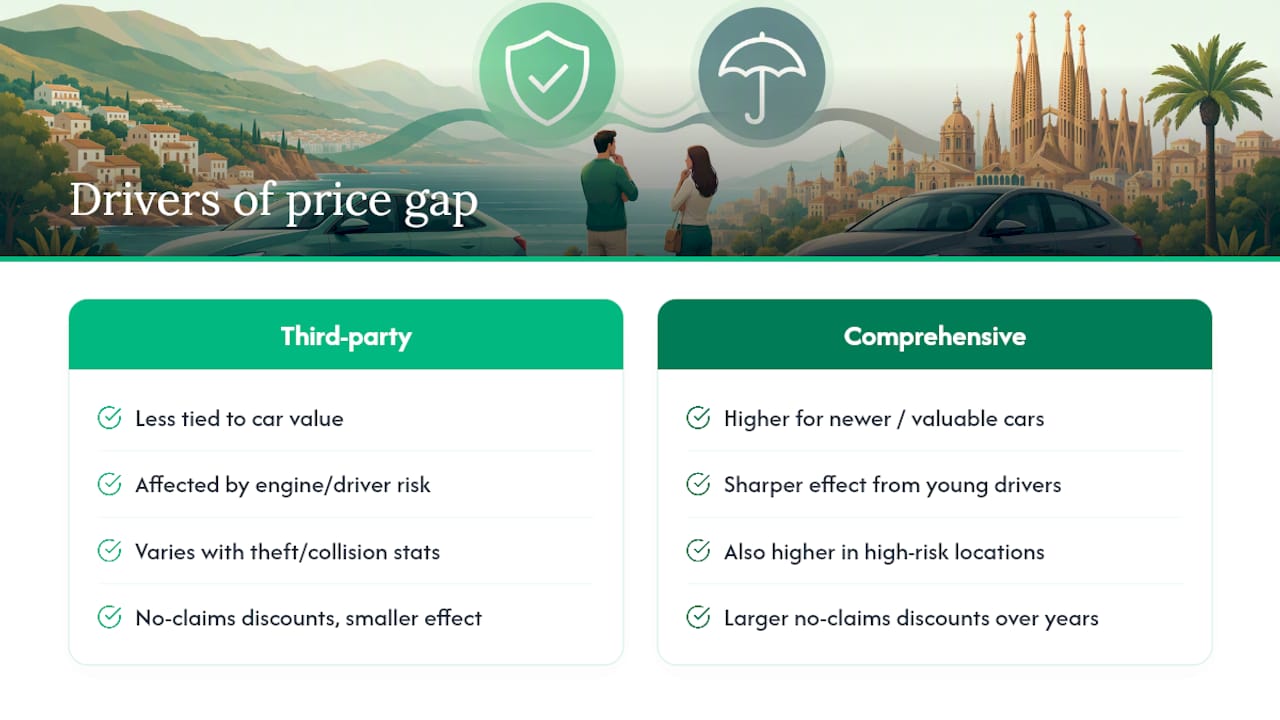
Alter und Erfahrung des Fahrers verschieben die Preise in jeder Stufe, doch der Effekt ist in der Vollkasko meist stärker, weil Versicherer sowohl das Haftungsrisiko als auch die Wahrscheinlichkeit eines selbstverschuldeten Schadens am eigenen Fahrzeug einpreisen. Eine Person Mitte zwanzig mit einem in den letzten zwei Jahren ausgestellten spanischen Führerschein wird typischerweise einen größeren Abstand zwischen Haftpflicht- und Vollkaskoangebot sehen als jemand Mitte vierzig mit zehn schadenfreien Jahren.
Auch der Wohnort spielt eine echte Rolle. Ein Auto in einer Garage in einer kleinen andalusischen Stadt zu versichern, kostet in beiden Stufen in der Regel weniger, als dasselbe Auto nachts an einer belebten Straße auf den Balearen zu versichern – das spiegelt Diebstahl- und Unfallstatistiken wider, die an Bevölkerungsdichte und Tourismusverkehr hängen.
Die Schadenfreiheit wächst über die Verlängerungsjahre, und der damit verdiente Rabatt schlägt bei Vollkaskobeiträgen tendenziell großzügiger durch, weil Versicherer bei einem Schaden am eigenen Fahrzeug mehr zu verlieren haben als bei einem reinen Haftpflichtfall. Der einzige verlässliche Weg, das Zusammenspiel für Ihr konkretes Auto zu sehen, ist, aktuelle Preisspannen zu prüfen und Angebote bei mehreren Versicherern einzuholen, statt sich auf eine einzige Zahl zu verlassen.
Wie Insurance Spain Ihnen bei der Entscheidung hilft
Ob Haftpflicht oder Vollkasko zu Ihrer Lage passt, klärt sich leichter, wenn jemand die Angebote für Sie vergleicht, statt dass Sie sie selbst über mehrere spanischsprachige Seiten anfordern. Insurance Spain vergleicht Policen von 11 oder mehr spanischen Versicherern und erklärt die Unterschiede auf Deutsch – was zählt, wenn der Wortlaut echtes rechtliches Gewicht hat.
Zur praktischen Unterstützung gehört, Vertragsunterlagen vor der Unterschrift zu prüfen, die von Versicherern verlangten Papiere für eine Rabattübertragung zusammenzutragen und zu helfen, wenn Sie einen Schaden melden müssen und ihn ohne Sprachbarriere abwickeln wollen; der Abschluss erfolgt über einen zugelassenen spanischen Versicherungsmakler. Wer von einem britischen oder anderen ausländischen Führerschein und Versicherungsverlauf kommt, findet in dieser zweisprachigen Ebene oft Lücken, die ein reines Online-Angebot übersehen würde.
— Jake
Ein Kfz-Angebot, das wirklich zu Ihrer Situation passt
Haftpflicht und Vollkasko bei mehreren spanischen Versicherern selbst zu vergleichen, heißt: Angebote auf Spanisch anfordern, unterschiedliche Produktnamen entschlüsseln und hoffen, dass Sie jeden Ausschluss entdeckt haben. Zugelassene Makler übernehmen diesen Vergleich für Sie, kostenfrei, auf Deutsch, über mehr als ein Dutzend Anbieter hinweg – ohne versteckte Gebühren zusätzlich zu dem, was der Versicherer ohnehin berechnet.
Bevor Sie ein Angebot anfordern, halten Sie Ihren Fahrzeugschein (permiso de circulación), Ihren Führerschein und etwaige Unterlagen zum Schadenverlauf eines früheren Versicherers bereit. Das genügt meist, um Haftpflicht- und Vollkaskoangebote nebeneinanderzustellen und Ihnen klar zu sagen, wo der Preisabstand für Ihr Auto tatsächlich liegt. Fordern Sie zunächst ein Kfz-Angebot über Insurance Spain an und erhalten Sie einen zweisprachigen Vergleich statt der Verkaufsansprache eines einzelnen Versicherers.
Quellen
FAQ
Ist in Spanien eine Vollkasko oder eine Haftpflicht besser?
Das hängt vom Wert Ihres Fahrzeugs und seiner Nutzung ab. Die Vollkasko passt zu neueren, finanzierten oder häufig gefahrenen Autos, während die Haftpflicht für ein altes, geringwertiges, sicher geparktes und selten genutztes Fahrzeug sinnvoll sein kann.
Was ist der Unterschied zwischen Haftpflicht und Vollkasko?
Die Haftpflicht zahlt nur für Schäden oder Verletzungen, die Sie anderen zufügen; die Vollkasko ergänzt den Schutz für Ihr eigenes Fahrzeug, einschließlich Kollision, Diebstahl, Brand und Vandalismus – vorbehaltlich der Ausschlüsse der Police.
Wie heißt die Vollkasko auf Spanisch?
Die Vollkasko heißt in Spanien todo riesgo, wörtlich „alles Risiko“, obwohl jede Police ihre eigene Ausschlussliste führt, die Sie vor der Unterschrift lesen sollten.
Ist in Spanien die Haftpflicht oder die Vollkasko günstiger?
Die Haftpflicht ist im Einstieg fast immer günstiger, weil sie ein kleineres Risiko versichert. Der Preisabstand schrumpft bei älteren, geringwertigen Autos und wächst bei neueren oder finanzierten Fahrzeugen, wo die mögliche Leistung des Versicherers in der Vollkasko deutlich höher ist.
Empfohlen
0 Comments
Schreiben Sie den ersten Kommentar.