

Zahnversicherung oder Rabattplan: Was passt zu Ihnen in Spanien?
Eine Zahnversicherung übernimmt Ansprüche oder handelt in Ihrem Namen reduzierte Gebühren aus, während ein Rabattplan Ihnen lediglich feste, niedrigere Preise bietet, die Sie bei der Behandlung selbst bezahlen. Wenn Sie mit unvorhersehbaren größeren Eingriffen, Zahnfleischerkrankungen oder dem Bedarf an Kronen und Implantaten rechnen müssen, schützt eine Versicherung Ihre Finanzen in der Regel besser. Wenn Sie hauptsächlich günstige Kontrolluntersuchungen und Zahnreinigungen wünschen, kann ein Rabattplan die ehrlichere, kostengünstigere Wahl sein. In jedem Fall sollten Sie nicht davon ausgehen, dass das öffentliche Gesundheitssystem Spaniens Sie absichert.
TL;DR:
- Die öffentliche Zahnversorgung in Spanien beschränkt sich bei Erwachsenen im Wesentlichen auf Notfälle und Basisleistungen; umfassende Behandlungen wie Implantate werden meist privat bezahlt.
- Private Zahnkliniken legen ihre Preise selbst fest, was zu erheblichen Unterschieden zwischen Stadt und Land führt; viele Versicherer bündeln zudem einfache Zahnleistungen in umfassenderen Krankenversicherungspolicen.
- Versicherungstarife beinhalten in der Regel Prämien und Zuzahlungen sowie Wartezeiten für größere Eingriffe, während Rabattpläne feste Nachlässe bieten, die direkt bei der Behandlung bezahlt werden.
- Für Patienten mit höherem Behandlungsbedarf schützt eine Zahnversicherung besser vor hohen Kosten, während Personen mit nur routinemäßigem Bedarf mit einem Rabattplan oft günstiger fahren.
- Bevor Sie eine Zahnabsicherung in Spanien abschließen, sollten Sie unbedingt die Details der Police prüfen – einschließlich Ausschlüsse, Wartezeiten und Leistungsobergrenzen.
Inhaltsverzeichnis
- Zahnversorgung in Spanien verstehen: öffentlich vs. privat und warum das wichtig ist
- Klassische Versicherung, Rabattpläne und Zahnzusatzbausteine im Vergleich
- Was Zahnabsicherung in Spanien wirklich kostet
- So wählen Sie die richtige Zahnabsicherung in Spanien
- So holen Sie das Beste aus Ihrer Zahnabsicherung heraus
- Warum deutschsprachige Maklerunterstützung bei der Zahnabsicherung wichtig ist
- Was die gängigen Ratschläge zur Zahnabsicherung übersehen
- Holen Sie sich einen persönlichen Vergleich für Ihre Zahnabsicherung
- Wo Sie die Details selbst nachprüfen können
- Quellen
Zahnversorgung in Spanien verstehen: öffentlich vs. privat und warum das wichtig ist
Das öffentliche Gesundheitssystem Spaniens, organisiert über den Sistema Nacional de Salud, behandelt die Zahnmedizin bei Erwachsenen nur als eingeschränkte Leistung. Die Kostenübernahme beschränkt sich in der Regel auf Notfallextraktionen und grundlegende Untersuchungen, während umfassendere Versorgung Kindern vorbehalten bleibt. Erwachsene, die Füllungen, Kronen, Wurzelbehandlungen oder Implantate benötigen, zahlen fast immer privat – unabhängig von ihrem Aufenthaltsstatus.
Genau diese Lücke macht private Zahnangebote in Spanien so wichtig – sie sind kein nettes Extra auf einem großzügigen öffentlichen System, wie man es vielleicht aus Deutschland, Österreich oder der Schweiz gewohnt ist. Private Kliniken füllen diese Lücke vollständig: kürzere Wartezeiten, ein breiteres Behandlungsangebot und deutschsprachige Zahnärzte in bei deutschsprachigen Auswanderern beliebten Regionen wie Mallorca, der Costa Blanca oder den Kanarischen Inseln.
Ein paar Dinge, die Sie wissen sollten, bevor Sie sich nach einer Absicherung umsehen:
- Die Regeln zum öffentlichen Leistungsanspruch und mögliche regionale Unterschiede veröffentlicht das Ministerio de Sanidad, Consumo y Bienestar Social; es lohnt sich, Ihre konkrete Situation dort zu prüfen, statt sich auf Annahmen aus Ihrem Heimatland zu verlassen.
- Private Kliniken legen ihre Gebührenordnung selbst fest, sodass die Preise für dieselbe Behandlung zwischen einer Klinik im Zentrum Madrids und einer in einer kleineren Küstenstadt erheblich variieren können.
- Manche privaten Krankenversicherer bündeln einfache Zahnzusatzleistungen in umfassendere Gesundheitspolicen – praktisch für alle, die lieber eine Police statt zwei haben möchten, wie in unserem Ratgeber zur privaten Krankenversicherung für Auswanderer in Spanien beschrieben.
Klassische Versicherung, Rabattpläne und Zahnzusatzbausteine im Vergleich
Der spanische Zahnmarkt ähnelt in seinen Mustern anderen Märkten, auch wenn sich die lokale Terminologie und das Anbieterspektrum unterscheiden. Im Wesentlichen dominieren vier Modelle, und zu verstehen, welches Ihnen gerade angeboten wird, ist wichtiger als der Markenname auf der Police.
- Netzwerktarife (DHMO-Modell). Sie wählen aus einem festen Kreis von Zahnärzten, die Prämien bleiben niedrig, und die Behandlungskosten sind im Vorfeld festgelegt. Die Flexibilität ist begrenzt, dafür ist die Planbarkeit hoch.
- Tarife mit freier Arztwahl (PPO-Modell). Sie können auch Zahnärzte außerhalb des Netzwerks aufsuchen, zahlen dafür jedoch mehr aus eigener Tasche. Diese Tarife eignen sich für Menschen, die an einem bestimmten Zahnarzt hängen oder in einer Region mit weniger Netzwerkkliniken leben.
- Kostenerstattungsversicherung. In Spanien seltener, wird aber gelegentlich von internationalen Versicherern angeboten. Sie erstattet einen Prozentsatz der jeweiligen Zahnarztrechnung, ganz ohne Netzwerkbindung.
- Rabatt- oder Sparpläne. Diese sind im eigentlichen Sinne keine Versicherung. Sie zahlen eine jährliche Mitgliedsgebühr für Zugang zu ausgehandelten, reduzierten Preisen bei teilnehmenden Kliniken und begleichen die vergünstigte Rechnung bei jedem Besuch selbst, wie Cignas Erklärung zur Funktionsweise von Zahntarifen anschaulich darlegt.
Die wichtigsten Arten von Zahntarifen setzen jeweils einen anderen Schwerpunkt zwischen Kostensicherheit und freier Zahnarztwahl. Rabattpläne punkten bei Einfachheit und Preissicherheit für die Routineversorgung; eine Versicherung zahlt sich aus, wenn die Rechnung in die Tausende gehen könnte.
Wartezeiten, auf Spanisch carencia, gelten bei Versicherungen für größere Behandlungen praktisch immer – oft mehrere Monate, bevor Kronen, Wurzelbehandlungen oder Implantate übernommen werden. Rabattpläne kennen das in der Regel gar nicht, da hier kein Anspruch versichert wird, sondern lediglich eine vergünstigte Rechnung entsteht.
Was Zahnabsicherung in Spanien wirklich kostet
Jede Zahnversicherung in Spanien verwendet ein ähnliches Vokabular für die Kostenteilung, auch wenn die genauen Beträge je nach Versicherer variieren. Die Prämie ist der monatliche oder jährliche Betrag, den Sie für die Police zahlen. Die Zuzahlung oder Mitversicherung ist Ihr Anteil an den Behandlungskosten nach dem Zuschuss des Versicherers. Eine Selbstbeteiligung ist der Betrag, den Sie selbst tragen, bevor die Police überhaupt zu zahlen beginnt, und das Jahresmaximum begrenzt, wie viel der Versicherer pro Jahr auszahlt – unabhängig davon, wie viele Behandlungen Sie benötigen. Diese Struktur bestätigt auch MetLifes Überblick darüber, was eine Zahnversicherung abdeckt.

Ein einzelnes Zahnimplantat in Spanien beginnt laut den von Bookimed zusammengestellten Klinikpreisen meist im mittleren vierstelligen Eurobereich, komplexe Fälle mit Knochenaufbau oder mehreren Implantaten liegen deutlich darüber. Eine Versicherung übernimmt dies nur selten vollständig. Die meisten Policen handeln eine reduzierte Gebühr aus oder zahlen einen festen Zuschuss zu größeren Behandlungen, sodass in jedem Fall ein erheblicher privater Restbetrag bei Ihnen verbleibt.
Vergleicht man zwei Profile, wird die Rechnung klarer:
- Ein Patient mit geringem Bedarf, der nur die jährliche Kontrolle und Zahnreinigung möchte, zahlt über ein Jahr mit der Mitgliedsgebühr eines Rabattplans und den Preisen pro Besuch oft weniger als mit einer monatlichen Versicherungsprämie.
- Ein Patient mit höherem Bedarf, der dieses Jahr eine Krone und im nächsten Jahr vielleicht ein Implantat braucht, ist mit einer Versicherung meist besser abgesichert, da das Jahresmaximum und die ausgehandelten Tarife eine Rechnung abfedern, die sonst mehrere Tausend Euro erreichen könnte.
Rabattpläne verändern wann Sie zahlen, nicht wie viel die eigentliche Behandlung kostet. Sie begleichen die vergünstigte Gebühr sofort, ohne im Hintergrund eine monatliche Prämie zu zahlen, ganz gleich ob Sie den Tarif nutzen oder nicht – praktisch für alle, die keine Absicherung bezahlen möchten, die sie kaum in Anspruch nehmen. Alle Details zu den Strukturen spanischer Zahnpolicen finden Sie in unserem Ratgeber zu Zahnversicherung in Spanien: Leistungen und Kosten.
So wählen Sie die richtige Zahnabsicherung in Spanien
Beginnen Sie mit Ihrer eigenen Behandlungsgeschichte, nicht mit der Produktbroschüre. Wer eine saubere Zahnhistorie hat und nur an Vorsorge interessiert ist, hat ganz andere Bedürfnisse als jemand, der bereits weiß, dass eine Krone oder ein Implantat ansteht.
Gehen Sie diese Fragen durch, bevor Sie etwas unterschreiben:
- Welchen realistischen Behandlungsbedarf habe ich in den nächsten zwei bis drei Jahren? Seien Sie ehrlich, nicht optimistisch – besonders wenn ein Zahnarzt bereits ein Problem festgestellt hat.
- Wie lange ist die carencia für größere Behandlungen, und gilt sie auch für bereits bestehende Probleme? Fragen Sie das direkt nach. Manche Versicherer stufen ein bekanntes Problem als Vorerkrankung ein und schließen es von vornherein aus.
- Was zählt zum Jahresmaximum? Zahnreinigungen, Röntgenaufnahmen und Vorsorgetermine bleiben manchmal ganz außerhalb der Obergrenze, was den tatsächlichen Wert der Zahl verändert.
- Verlangt die Police eine vorherige Genehmigung für größere Behandlungen? Falls ja, lassen Sie sich eine Beispielrechnung zeigen, aus der genau hervorgeht, was vorab genehmigt wird und was nicht.
- Sind Implantate und Kieferorthopädie ausgeschlossen, gedeckelt oder unterliegen sie nur einer längeren Wartezeit? Diese drei Optionen sind nicht dasselbe, und vage Antworten hier sind ein Warnsignal.
Wenn ein Makler oder Versicherer die Fragen zu carencia und Ausschlüssen nicht konkret beantworten kann, sollten Sie das als Warnsignal werten, nicht als Versehen.
Praxistipp: Lassen Sie sich die Ausschlussliste der Police schriftlich geben, bevor Sie etwas bezahlen. Ein mündliches „Ja, das ist gedeckt“ von einem Vertriebsmitarbeiter bedeutet nichts, wenn im Policendokument etwas anderes steht.
So holen Sie das Beste aus Ihrer Zahnabsicherung heraus
Das richtige Produkt zu kaufen ist nur die halbe Miete. Damit es im Alltag wirklich funktioniert, kommt es auf ein paar Gewohnheiten an.
- Nutzen Sie für größere Behandlungen die vom Versicherer ausgehandelten Netzwerktarife. Wer für eine Krone oder ein Implantat außerhalb des Netzwerks geht, verliert oft den Großteil der Ersparnis, die die Versicherung eigentlich bringen sollte.
- Fordern Sie vor Behandlungsbeginn immer eine vorab genehmigte Kostenaufstellung an, damit es bei der Rechnung keine Überraschungen gibt.
- Nehmen Sie regelmäßig an Kontrolluntersuchungen und Zahnreinigungen teil. Vorsorge ist der günstigste Posten auf jeder Preisliste, und wer sie auslässt, riskiert später teure Sanierungen.
- Wenn ein Implantat wahrscheinlich ist, prüfen Sie frühzeitig die Ausschlussbedingungen und fragen Sie direkt bei der Klinik nach einem ausgehandelten Barzahlungstarif. Manchmal ist dieser günstiger als das, was die Versicherung Sie ohnehin selbst zahlen ließe.
- Wenn Ihr Bedarf sich wirklich auf Kontrollen und Zahnreinigungen beschränkt, ist ein Rabattplan oft die ehrlichere Wahl. Zahlen Sie keine Versicherungsprämie für eine Absicherung, die Sie nie nutzen werden.
Warum deutschsprachige Maklerunterstützung bei der Zahnabsicherung wichtig ist
Die Entscheidung zwischen einer Versicherung und einem Rabattplan wird schwieriger, wenn die Policendokumente auf Spanisch verfasst sind und sich Ausschlussklauseln hinter unbekannten Begriffen verstecken. Insurance Spain vergleicht Zahn- und Gesundheitsprodukte von mehr als 11 spanischen Versicherern, darunter Namen wie Mapfre und Allianz, und erklärt Ihnen carencia-Zeiten, Ausschlüsse und Jahresmaxima auf Deutsch, bevor Sie sich für etwas entscheiden.
Die Vermittlung erfolgt über einen registrierten spanischen Versicherungsmakler und ist für Sie kostenlos; der Makler erhält seine Provision von den Versicherern, sobald eine Police zustande kommt. Redaktionsmitarbeiter Jake stützt sich in diesem Ratgeber auf diese Marktvergleichsarbeit und konzentriert sich auf die praktischen Unterschiede, die tatsächlich beeinflussen, was Sie zahlen.
Was die gängigen Ratschläge zur Zahnabsicherung übersehen
Die meisten Ratgeber zur Zahnversicherung behandeln die Frage Versicherung versus Rabattplan, als gäbe es eine universelle Antwort – als wäre die Lage in Madrid dieselbe wie in München. Das ist sie nicht. Das öffentliche System in Spanien deckt so wenig Zahnmedizin für Erwachsene ab, dass die private Entscheidung hier mehr Gewicht hat als in Ländern, in denen zumindest eine – wenn auch unvollkommene – öffentliche Zahnversorgung als Auffangnetz existiert.
Der größere Fehler, den ich immer wieder sehe: Menschen schließen reflexartig eine Versicherung ab, in der Annahme, jede Absicherung sei besser als keine. Wenn Ihre Zahnhistorie sauber ist und Sie gute Gewohnheiten haben, kann ein Rabattplan tatsächlich die klügere, günstigere Wahl sein – und es ist nichts Verwerfliches daran, sich dafür zu entscheiden. Eine Versicherung rechtfertigt ihre Prämie dann, wenn der Bedarf real ist: bestehende Zahnprobleme, eine familiäre Vorbelastung mit Zahnfleischerkrankungen oder ein Implantat, das bereits absehbar ist.
Das Nützlichste, was Sie tun können, ist, abzuschließen, bevor das Problem auftritt. Wartezeiten (carencia) bestrafen jeden, der erst dann nach einer Absicherung sucht, wenn der Zahn bereits schmerzt. Bestimmen Sie ehrlich Ihr Risikoprofil und passen Sie dann das Produkt daran an – nicht umgekehrt.
— Jake
Holen Sie sich einen persönlichen Vergleich für Ihre Zahnabsicherung
Insurance Spain ist die praktische Alternative dazu, sich allein durch spanischsprachige Policentexte und Versichererjargon zu kämpfen. Statt zu raten, welche Ausschlüsse für Sie gelten, vergleicht das deutschsprachige Team Zahn- und kombinierte Gesundheitspolicen von mehr als 11 spanischen Versicherern und erklärt Ihnen carencia-Zeiten, Jahresmaxima und Implantat-Ausschlüsse auf Deutsch – ohne versteckte Gebühren zusätzlich zu Ihrer Prämie.
Ob Sie eine eigenständige Zahnpolice gegen einen Rabattplan abwägen oder sich fragen, ob ein Zahnzusatzbaustein zu einer umfassenderen Krankenversicherung in Spanien für Ihre Situation sinnvoller ist – holen Sie sich vor Ihrer nächsten Kontrolluntersuchung einen persönlichen Vergleich und ein Angebot. Das kostet nichts, und Sie erhalten klare Antworten zu Ausschlüssen und Wartezeiten, bevor Sie etwas unterschreiben.
Wo Sie die Details selbst nachprüfen können
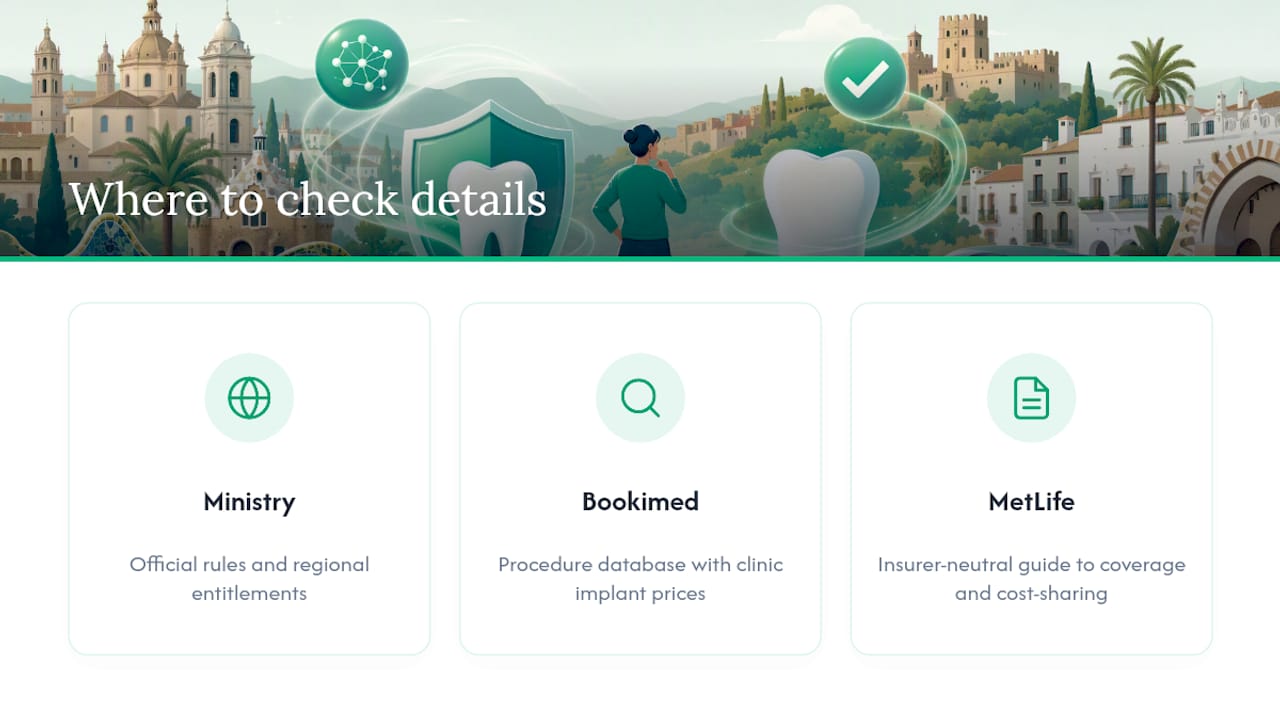
Für die öffentlichen Leistungsansprüche bei Zahnbehandlungen und mögliche regionale Unterschiede veröffentlicht das Ministerio de Sanidad, Consumo y Bienestar Social die offiziellen Regeln direkt. Für einen Eindruck realistischer Implantatpreise in spanischen Kliniken bietet die Verfahrensdatenbank von Bookimed einen nützlichen Vergleichswert zu jedem Angebot, das Sie erhalten. Für eine klare, versichererneutrale Erklärung, wie Leistungskategorien und Kostenteilung bei Zahnversicherungen funktionieren, bleibt der Ratgeber von MetLife zur Zahnversicherung eine der übersichtlicheren verfügbaren Quellen.
Dieser Artikel enthält allgemeine Informationen und ersetzt keine Beratung durch einen qualifizierten Arzt. Wenden Sie sich für Ihre persönliche Situation an eine qualifizierte medizinische Fachperson, bevor Sie auf Grundlage dieser Inhalte handeln.
Quellen
- Ministerio de Sanidad, Consumo y Bienestar Social (mscb.gob.es)
- Bookimed — Verfahren und Klinikpreise für Spanien
- Cigna — Funktionsweise von Zahntarifen
- MetLife — was eine Zahnversicherung abdeckt
- National Association of Dental Plans — Zahnleistungen verstehen
Empfehlungen
Das Wichtigste in Kürze
- ✓ Die öffentliche Zahnversorgung in Spanien beschränkt sich bei Erwachsenen in der Regel auf Notfallextraktionen und grundlegende Untersuchungen, sodass Füllungen, Kronen, Wurzelbehandlungen und Implantate fast immer privat bezahlt werden.
- ✓ Ein Rabattplan ist eine Mitgliedschaft, die Ihnen reduzierte Preise verschafft, die Sie selbst bezahlen – keine Versicherung, die Ansprüche übernimmt.
- ✓ Wartezeiten (carencia) von mehreren Monaten sind bei Versicherungen für größere Behandlungen praktisch die Regel, sodass ein Abschluss erst nach Auftreten eines Problems meist zu spät kommt.
- ✓ Lassen Sie sich die Ausschlussliste schriftlich geben und prüfen Sie, ob Implantate und Kieferorthopädie ausgeschlossen, gedeckelt oder nur mit einer längeren Wartezeit belegt sind – diese drei Optionen sind nicht dasselbe.
Häufige Fragen
Quick answers on insurance in spain
Noch Fragen?
Kontakt aufnehmen0 Comments
Schreiben Sie den ersten Kommentar.
