

Unngå bøter: Bilforsikring i Andalucía for utenlandske innbyggere, Ley 5/2026
Kjøp minst seguro obligatorio (lovpålagt ansvarsforsikring) før du kjører en spansk-registrert bil i Andalucía, og ha alltid bevis på det med deg. Det er det lovpålagte minstekravet, ikke hele svaret: de fleste utenlandske innbyggere ender opp med terceros ampliado eller todo riesgo for reell beskyttelse. Hvis du vil ha papirarbeidet forklart på norsk og tilbud sammenlignet på tvers av flere forsikringsselskaper, får en norsktalende megler deg forsikret raskere enn om du gjør det alene.
Kort oppsummert:
- De fleste utenlandske innbyggere bør vurdere å oppgradere fra ansvarsforsikring til terceros ampliado eller todo riesgo for bedre beskyttelse, spesielt for nyere eller mer verdifulle biler.
- Spanske forsikringer er knyttet til kjøretøyets registrering og krever at bevis på dekning, polisenummer og forsikringsperiode er lett tilgjengelig ved kontroller.
- Å ikke oppgi riktig hovedfører, eller å stole på utenlandske forsikringer, kan ugyldiggjøre dekningen og øke risikoen ved skader eller kontroller.
- Tilbud fra spanske forsikringsselskaper kan effektivt innhentes gjennom sammenligningsmeglere som forklarer vilkårene på norsk, noe som ofte gir bedre avtaler og bedre forståelse.
- Å sjekke unntak i polisen skriftlig og forstå dekningen for reiser til Marokko er avgjørende for å unngå kostbare overraskelser eller hull i dekningen.
Table of Contents
- Hva lovpålagt bilforsikring dekker i Andalucía
- Terceros, terceros ampliado eller todo riesgo: hva passer for din bil?
- Hvordan får du egentlig tilbud og kjøper en forsikring i Andalucía?
- Hvor utenlandske innbyggere taper penger eller dekning uten å vite det
- En meglers syn på hvorfor støtte på norsk endrer utfallet
- Få bilen forsikret i Andalucía uten gjettverk
- Kilder
Hva lovpålagt bilforsikring dekker i Andalucía
Spansk lov behandler bilforsikring som ikke-forhandlingsbart. Ethvert kjøretøy som normalt står i Spania, inkludert et du nettopp har importert eller registrert etter å ha flyttet til Málaga, Cádiz eller andre steder i regionen, må ha en gyldig forsikringsavtale i henhold til Ley 5/2025, som også pålegger forsikringsselskapene å rapportere hver polise til Consorcio de Compensación de Seguros og det nasjonale registeret for bilforsikring.
Det lovpålagte elementet, seguro obligatorio, dekker skader du påfører andre personer, deres kjøretøy eller deres eiendom. Det dekker ikke din egen bil. Spansk myndighetsveiledning bekrefter at denne ansvarsforsikringen er gyldig i hele EØS, så en polise kjøpt i Andalucía beskytter deg hvis du kjører inn i Frankrike eller Portugal uten å måtte kjøpe noe ekstra.
Betjenter som kontrollerer forsikringen din, enten ved en rutinekontroll eller etter en ulykke, sjekker Fichero Informativo de Vehículos Asegurados opp mot registreringsnummeret ditt. Derfor betyr det mindre å ha med en papirkopi enn å sørge for at forsikringsselskapet faktisk har registrert deg korrekt. Ha disse tre tingene tilgjengelig:
- Forsikringskvitteringen som viser selskapets navn og polisenummer
- Kjøretøyets registreringsdokument (permiso de circulación)
- Bekreftelse på gjeldende forsikringsperiode
Tar du med en bil fra utlandet? Du har vanligvis et kort tidsvindu, rundt 30 dager, til å registrere og forsikre den lokalt før spanske regler gjelder fullt ut. Skal du til Marokko? Standardforsikringer dekker ikke dette automatisk, så du vil trenge et grønt kort-tillegg eller grensedekning.
Terceros, terceros ampliado eller todo riesgo: hva passer for din bil?
Spania selger bilforsikring i tre gjenkjennelige nivåer, og å velge feil er den vanligste feilen utenlandske innbyggere gjør.
- Terceros (kun ansvar): det lovpålagte minimumet. Dekker personskade eller skade du påfører andre. Ingenting for din egen bil, uansett hva som skjer.
- Terceros ampliado (utvidet ansvar): legger til brann, tyveri, glasskader og som regel en juridisk bistandstjeneste. Dekker fortsatt ikke skader på din egen bil etter en kollisjon.
- Todo riesgo (full kasko): dekker også din egen bil, noen ganger med egenandel, noen ganger uten.
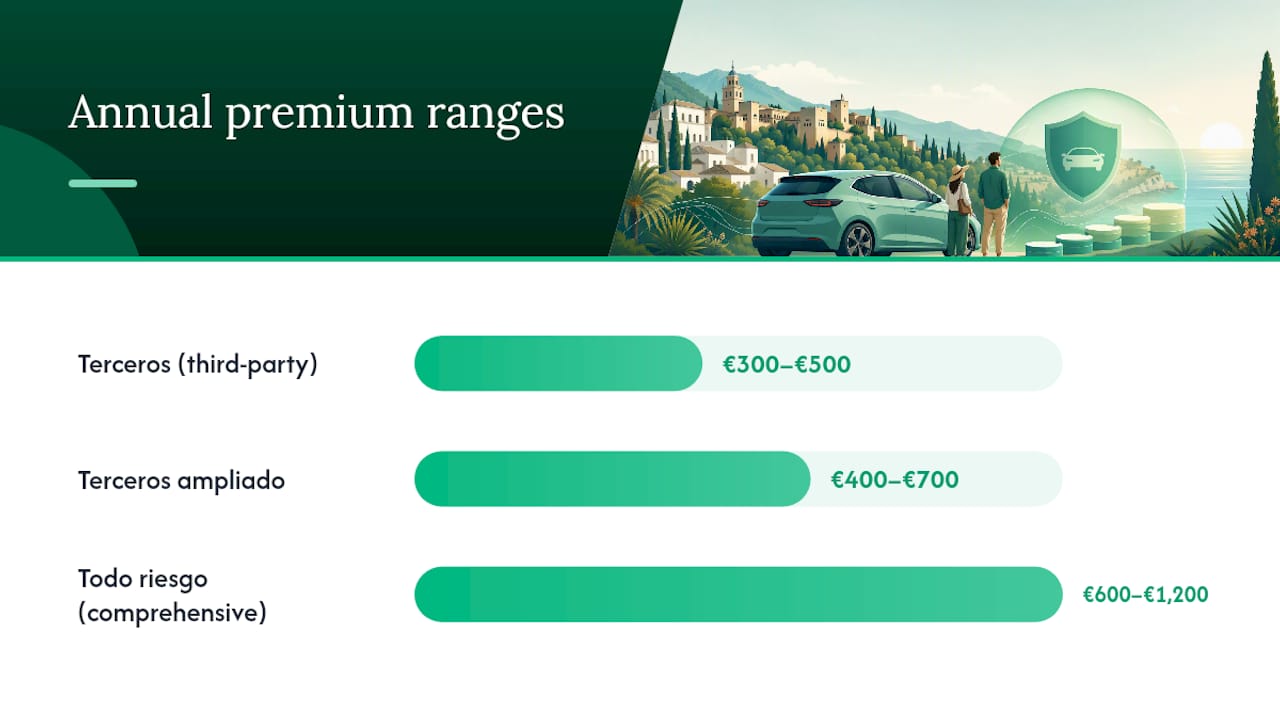
Prisintervaller for en standard familiebil i provinsen Málaga og det bredere Andalucía-markedet for 2026 ligger på rundt 300 til 500 euro i året for terceros, 400 til 700 euro for terceros ampliado, og 600 til 1200 euro for todo riesgo. Hvor du havner innenfor disse intervallene, avhenger i stor grad av førerens alder, bilens verdi, og om du kan dokumentere en ren skadehistorikk i Spania. Nyankomne uten spansk bonushistorikk får ofte tilbud i den øvre enden av intervallet inntil den historikken bygges opp.
For de fleste utenlandske innbyggere som kjører en bil som er noen år gammel og ikke verdt å reparere etter en totalskade, er terceros ampliado det fornuftige mellomalternativet. Hvis bilen din er ny, finansiert, eller genuint dyr å erstatte, er den høyere premien for todo riesgo verdt det.
Tips: Be om tilbud på både terceros ampliado og todo riesgo før du bestemmer deg. Forskjellen er noen ganger mindre enn du forventer, og full kasko fjerner mye økonomisk bekymring for prisen av noen få ekstra euro i måneden.
Hvordan får du egentlig tilbud og kjøper en forsikring i Andalucía?
Å bli forsikret handler mest om dokumenter, ikke om beslutninger. Samle disse før du begynner å be om tilbud:
- Pass eller nasjonalt ID-kort og ditt NIE- eller TIE-nummer
- Kjøretøyets registreringsdokument (permiso de circulación) og teknisk kontrollkort (ficha técnica)
- Adressebevis i Andalucía, for eksempel en padrón-attest eller en strømregning
- En skadehistorikk-attest fra ditt tidligere forsikringsselskap, hvis du har en
Det siste dokumentet betyr mer enn det pleide å gjøre. Siden slutten av 2025 må forsikringsselskaper som opererer i Spania, utstede en attest som dekker de siste fem årenes skadehistorikk, eller bekrefte fravær av skader, innen 15 virkedager etter forespørsel, og de har forbud mot å øke premien din bare fordi du ikke er spansk. Be om denne attesten fra ditt hjemlands forsikringsselskap så tidlig som mulig, helst før du flytter, siden en megler da kan presentere den for flere spanske forsikringsselskaper samtidig for å forhandle frem en bedre startpris.
Derfra har du tre veier å velge mellom:
- Sammenligningstjenester kaster et bredt nett raskt, men flere store forsikringsselskaper er ikke med i dem og vil ikke dukke opp i resultatene.
- Forsikringsselskapenes egne nettsider slår noen ganger sammenligningsprisene, men innebærer at du må gjenta det samme papirarbeidet om og om igjen.
- En norsktalende megler gjør begge sjekkene samtidig og forklarer vilkårene på norsk, noe som regel løser saken raskere enn om du gjør alle tre selv.
Når du har akseptert et tilbud, går utstedelsen som regel raskt, ofte samme dag til 48 timer etter at dokumentene er verifisert. Ha den digitale eller utskrevne forsikringskvitteringen i bilen; det er den du viser politiet eller legger frem ved din neste ITV-kontroll hvis du blir bedt om det.
Hvor utenlandske innbyggere taper penger eller dekning uten å vite det
De dyreste feilene i Andalucía er sjelden dramatiske. Det er små forglemmelser som dukker opp på det verst tenkelige tidspunktet, som regel midt i en skadesak.
- Å anta at en utenlandsk forsikring dekker en spansk-registrert bil. Det gjør den ikke, og å kjøre på en slik forsikring er i praksis å kjøre uforsikret.
- Å underdeklarere hovedføreren. Å oppgi en partner eller slektning som hovedfører for å redusere premien, ugyldiggjør forsikringen hvis den faktiske føreren er innblandet i en ulykke.
- Å glemme at Marokko ikke er automatisk dekket. Hvis du krysser grensen jevnlig, bør du ordne tillegget to til tre uker før reisen i stedet for i køen ved havnen.
- Å stole blindt på én sammenligningstjenestes «beste pris». Flere store spanske forsikringsselskaper er helt utenfor de populære sammenligningssidene.
Ingen av disse er grunn til panikk, men alle er grunner til å få forsikringen sjekket på ren og enkel norsk før du signerer.
- Slå sammen bil- og boligforsikring hos samme selskap der det er mulig, for å få rabatt.
- En frivillig egenandel på noen hundre euro kan senke premien betraktelig uten at du blir for eksponert.
- Sikker parkering utenfor gaten kvalifiserer ofte for en reduksjon, så nevn det selv om det virker ubetydelig.
- Forny en uke eller to før forfall i stedet for på selve datoen; fornyelser i siste liten får sjelden den beste prisen.
Tips: Be alltid forsikringsselskapet eller megleren om å bekrefte, skriftlig og på norsk, nøyaktig hva forsikringen din ikke dekker. En femminutters e-post nå sparer deg for en svært dårlig ettermiddag senere.
En meglers syn på hvorfor støtte på norsk endrer utfallet
Spansk bilforsikring er ikke konseptuelt vanskelig. Det som er vanskelig, er oversettelsen, og det er der de fleste utenlandske innbyggere taper penger eller ender opp underforsikret. Å sammenligne på tvers av 11 eller flere autoriserte spanske forsikringsselskaper i én omgang, i stedet for å jage tilbud fra ett nettsted om gangen, gir som regel både en mer rettferdig pris og en forsikring som faktisk passer førerens situasjon.
En typisk klientinteraksjon foregår på samme måte hver gang: dokumenter sjekkes én gang, en håndfull sammenlignbare tilbud kommer tilbake på norsk, og forsikringen utstedes så snart klienten velger en. Skadehjelp i etterkant betyr like mye som selve salget, siden det er da tungt spansk fagspråk skaper mest bekymring.
Gapet mellom det en forsikring lover og det en fører faktisk forstår, er der de fleste forsikringsproblemer for utenlandske innbyggere starter, ikke i selve prisen.
— Jake
Få bilen forsikret i Andalucía uten gjettverk
Å sammenligne forsikringsselskaper ett og ett tar en hel helg; å kjøre dem gjennom én enkelt norsktalende sjekk gjør det ikke. Insurancespain sammenligner mer enn 11 autoriserte spanske forsikringsselskaper på dine vegne, forklarer hvert forsikringsvilkår på ren og enkel norsk, og håndterer dokumentkontrollene som vanligvis forsinker nye innbyggere.
Det er ingen avgift som belastes deg direkte. Insurancespain tjener sin provisjon fra forsikringsselskapet når forsikringen din er ordnet, så sammenligningen og rådgivningen forblir gratis for deg. Behandlingstiden er vanligvis rask når dokumentene og skadehistorikken din foreligger, og støtten fortsetter etter salget hvis du noen gang trenger å melde en skade. Hvis du håndterer dette fra en situasjon med en britisk-registrert bil, finnes det egen veiledning for det scenarioet, og hvis du bare er i Andalucía deler av året, er siden om bilforsikring for ikke-bosatte verdt et blikk. Mens du ordner dokumentene, kan et eSIM for Spania holde deg tilgjengelig for samtaler med forsikringsselskapet og appverifisering, uten å måtte lete etter lokale SIM-kort.
Be om et gratis tilbud via bilforsikringssiden for utenlandske innbyggere og få en direkte sammenligning før du forplikter deg til en fornyelse eller en ny forsikring.
Kilder
- Validity of compulsory vehicle insurance - Taking out mandatory motor vehicle insurance - Vehicles - Citizens - Tu espacio europeo
- Disposición 15424 del BOE núm. 178 de 2025
- BOE-A-2025-15424
- Car Insurance in Spain: What Expats Need to Know (2026)
Anbefalt
Kort oppsummert
- ✓ Lovpålagt ansvarsforsikring kjøpt i Andalucía er gyldig i hele EØS, så den beskytter deg når du kjører inn i Frankrike eller Portugal uten å måtte kjøpe noe ekstra.
- ✓ Standardforsikringer dekker ikke Marokko automatisk, så ordne et grønt kort-tillegg eller grensedekning to til tre uker før reisen.
- ✓ En utenlandsk forsikring dekker ikke en spansk-registrert bil, og å kjøre på en slik forsikring er i praksis å kjøre uforsikret.
- ✓ Å underdeklarere hovedføreren for å redusere premien ugyldiggjør forsikringen hvis den faktiske føreren er innblandet i en ulykke.
Ofte stilte spørsmål
Quick answers on insurance in spain
Har du fortsatt spørsmål?
Kontakt oss0 Comments
Bli den første til å kommentere.


