

Unngå 50 % avkortning: tett hullene i boligdekningen i Spania
Continente (bygningsdekning) dekker selve konstruksjonen i den spanske boligen din: vegger, tak, innmontert kjøkken og elektrisk anlegg. Contenido (innbo) dekker det som fyller den: møbler, elektronikk og eiendeler. Boligeiere trenger som regel begge deler, utleiere av umøblerte boliger klarer seg ofte med continente alene, og leietakere trenger vanligvis innbo pluss ansvarsdekning. To spanske særtrekk, hullet mot sameiet og regla proporcional, feller flere utlendinger enn noen annen del av polisen.
Kort fortalt:
- For lave innbosummer skyldes ofte gjetting eller bruk av kjøpspris i stedet for en nøyaktig oversikt rom for rom og en beregnet gjenoppbyggingsverdi.
- Selskapene avkorter erstatningen forholdsmessig hvis innbo eller continente er underforsikret, noe som kan redusere utbetalingen kraftig.
- Riktige summer krever at du henter nota simple, bruker kalkulatorer for gjenoppbyggingsverdi og fører opp eiendelene dine enkeltvis med kvitteringer.
- Sameiets forsikring dekker bare fellesarealer og konstruksjon, og strekker seg ikke inn i den enkelte boligen, så du trenger egen dekning.
- Veiledning på ditt eget språk hjelper utlendinger å sette riktige forsikringssummer, forstå unntakene og unngå vanlige fallgruver som hull mot sameiet og infraseguro.
Innhold
- Innbo vs. bygning i Spania: den raske sammenligningen
- Hva dekker bygningsforsikring (continente) i Spania?
- Hva dekker innboforsikring (contenido) i Spania?
- Hvem trenger egentlig continente, og hvem trenger contenido?
- De to spanske fellene: hull mot sameiet og infraseguro
- Slik regner du ut riktige forsikringssummer, steg for steg
- Hva skjer når du melder skade: peritos rolle
- Å velge polise: hva du bør sjekke før du signerer
- Det jeg stadig ser utlendinger bomme på
- Få hjelp på ditt eget språk til å sette riktige summer
- Kilder
- Ofte stilte spørsmål
Innbo vs. bygning i Spania: den raske sammenligningen
Ethvert spansk boligtilbud ber deg oppgi to separate summer, og å blande dem er den klart vanligste måten utlendinger ender opp underforsikret på. Continente er konstruksjonen og alt som er fastmontert i den. Contenido er alt som ville falt ut hvis du snudde bygningen på hodet.
- Continente: vegger, tak, gulv, innmonterte kjøkkeninnredninger, elektrisk anlegg, rør, garderobeskap, bassengkonstruksjon, utvendig puss
- Contenido: møbler, hvitevarer, elektronikk, klær, smykker, kunst, alt som lar seg flytte
- Spanske tilbud fører disse opp som separate forsikringssummer, og både premien og en eventuell utbetaling avhenger utelukkende av tallene du oppgir, ikke av hva boligen faktisk er verdt
Det siste punktet betyr mer enn de fleste kjøpere aner. DKVs veiledning setter opp dette skillet tydelig: continente er den fysiske konstruksjonen og faste installasjoner, contenido er løsøret inni. Bommer du på en av summene, finnes polisen fortsatt, men den betaler kanskje ikke ut det du venter.
Hva dekker bygningsforsikring (continente) i Spania?
Continente dekker skallet og skjelettet i boligen: yttervegger, tak, bærende konstruksjon, gulv, elektrisk anlegg, rør, innmonterte kjøkken- og baderomsinnredninger, og fast monterte installasjoner som garderobeskap. Har du privat basseng, faller også selve bassengkonstruksjonen (vanligvis ikke renseanlegget) under continente.
Tallet som betyr noe her er gjenoppbyggingsverdi, ikke kjøpspris eller markedsverdi. En villa med tre soverom i Alicante kan for eksempel ha blitt solgt for 450 000 € på grunn av tomt og beliggenhet, men den faktiske kostnaden ved å bygge opp konstruksjonen fra bunnen igjen, med dagens arbeidskraft og materialer, kan være langt lavere. Selskapene vil ha gjenoppbyggingstallet, fordi det er det de faktisk måtte betale ut.
For å komme dit, hent nota simple fra eiendomsregisteret for de nøyaktige bruksarealene i kvadratmeter, og mat så det tallet inn i et forsikringsselskaps kalkulator for gjenoppbyggingsverdi, som også spør om byggekvalitet: enkel, standard eller høy standard. Meglere kan kjøre denne beregningen for deg hvis nettverktøyene virker uklare.
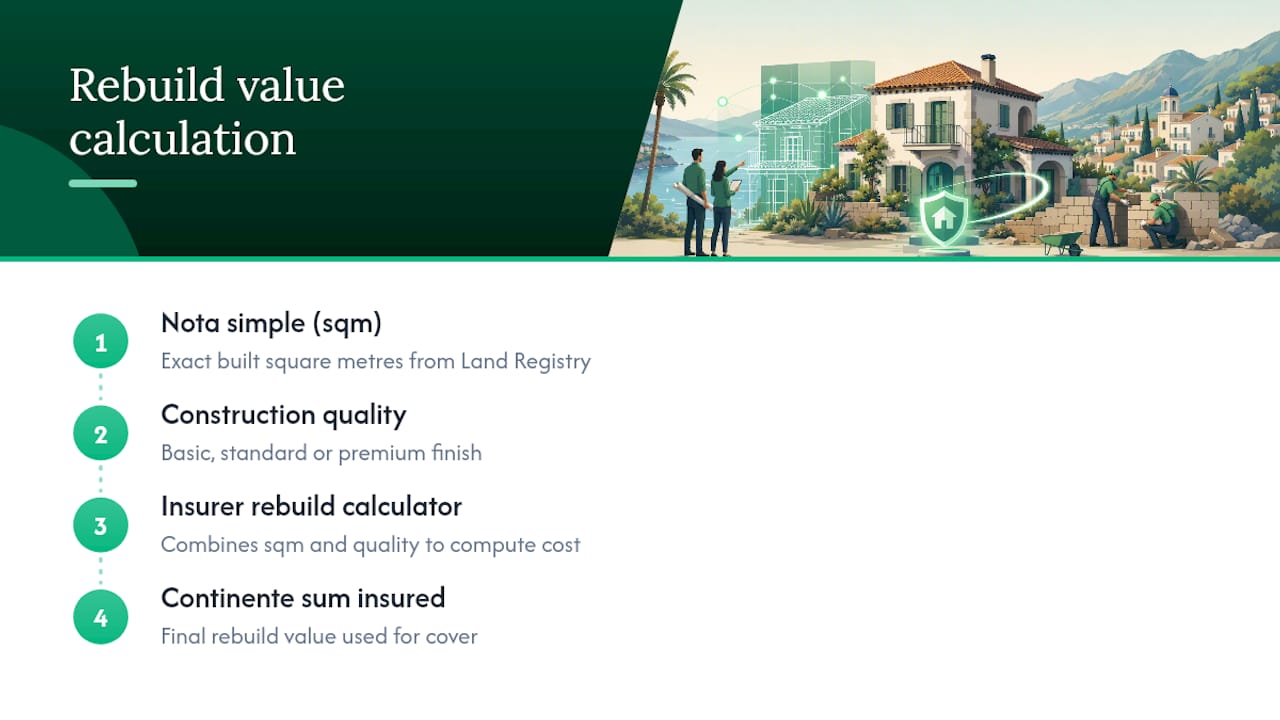
Som en grov fornuftssjekk har kystleiligheter i Spania ofte continente-verdier i nedre sjikt av hundretusener euro, mens frittliggende villaer med basseng ligger betydelig høyere, ifølge referansenivåene publisert av Buvivo. Vær skeptisk til ethvert tilbud som ligger dramatisk lavere enn disse nivåene.
Hva dekker innboforsikring (contenido) i Spania?
Contenido dekker alt du eier som ikke er festet til bygningen: sofaer, senger, TV-er, vaskemaskiner, klær, kjøkkenutstyr og personlige eiendeler. De fleste poliser har med tyveridekning, uhellsskade, og noen ganger gjenstander du tar med deg ut av boligen, for eksempel en laptop stjålet fra en kafé.
Standard contenido-dekning har som regel en samlet grense for smykker og verdisaker, ofte et sted mellom 1 500 og 3 000 € med mindre du oppgir enkeltgjenstander. Eier du en forlovelsesring til 6 000 € eller originalkunst, må du føre dem opp separat med kvitteringer eller takst, ellers blir erstatningen begrenset til fellesgrensen uansett hva gjenstanden faktisk kostet.
For en typisk leilighet med to eller tre soverom lander contenido-summene gjerne et sted mellom 20 000 og 40 000 € når du summerer møbler, elektronikk og hverdagsting; villaer med flere rom og dyrere møblering ligger høyere. Feilen som koster folk mest er å gjette på dette tallet i stedet for faktisk å summere opp hva som står i hvert rom, noe den spanske forsikringsavtaleloven i BOE straffer direkte gjennom regelen om forholdsmessig avkortning, som vi tar under.
Hvem trenger egentlig continente, og hvem trenger contenido?
Posisjonen din i boligen, om du er eier, utleier eller leietaker, avgjør hvilken halvdel av polisen du virkelig trenger, og bommer du på det, kaster du enten bort penger eller står ubeskyttet.
- Selveiere som bor der selv trenger normalt både continente og contenido, og bør sjekke hva sameiet allerede dekker før de kjøper overlappende bygningsdekning.
- Utleiere forsikrer typisk continente som et minimum; leies boligen ut møblert, trenger de som regel også en innbodekning for utleiere som dekker møbler og hvitevarer de har stilt til rådighet.
- Leietakere trenger som hovedregel innboforsikring for sine egne eiendeler pluss personlig ansvarsdekning (responsabilidad civil), og bør lese utleiers continente-vilkår for å se hvor ansvaret deler seg.
- Korttidsutleie og boliger med turistlisens har ofte pristillegg og egne polisekrav, siden selskapene ser på korttidsutleie som høyere risiko enn fast beboelse.
Zurichs forbrukerveiledning for Spania bekrefter mønsteret: boligeiere trenger vanligvis begge dekningene, mens leietakere bør prioritere innbo og ansvar. Vurderer du en feriebolig opp mot en helårsbolig, skiller reglene for forsikring av feriebolig seg nok til at det er verdt å sjekke før du kjøper en standardpolise og antar at den gjelder.
De to spanske fellene: hull mot sameiet og infraseguro
Sameiets (comunidad) forsikring er der de fleste utlendinger henter sin falske trygghet. Den dekker typisk den felles konstruksjonen, tak, fasade, trapperom og heiser, fram til inngangsdøra til leiligheten din, men der stopper den. Alt innenfor veggene dine, altså interiør, fast innredning og innbo, er ditt eget ansvar, en grense Buvivos guide til spansk boligforsikring beskriver tydelig. Behandle sameiets dekning som et supplement til din egen polise, aldri som en erstatning for den.
Den andre fella er regla proporcional, regelen om forholdsmessig avkortning i artikkel 30 i Ley de Contrato de Seguro. Underforsikrer du, altså oppgir en lavere sum enn den reelle verdien, betaler ikke selskapet bare ut mindre ved totalskade. Det avkorter hver eneste skadesak i samme forhold.
Infraseguro i tall: oppgi contenido til 20 000 € når den faktisk er verdt 40 000 €, og du har forsikret nøyaktig halvparten av den reelle verdien. Blir du utsatt for et innbrudd med et tap på 5 000 €, betaler selskapet bare halvparten, altså 2 500 €, og bruker den samme underdekningen på 50 % på hver eneste sak, uansett hvor liten.
Vanlige feil blant utlendinger som utløser dette: å bruke kjøpspris i stedet for gjenoppbyggingsverdi for continente, å gjette på et rundt contenido-tall i stedet for å summere rom for rom, og å sette ansvarssummen (responsabilidad civil) for lavt til å dekke en alvorlig ulykke. Alle tre kan rettes før du signerer, ikke etter at du har meldt skade.
Slik regner du ut riktige forsikringssummer, steg for steg
Å få continente og contenido riktig er ikke gjetting hvis du følger den rekkefølgen selskapene faktisk bruker når de vurderer risiko.
- Hent nota simple og noter bruksarealet i kvadratmeter nøyaktig slik det er registrert, ikke størrelsen som ble annonsert i salgsoppgaven.
- Kjør en kalkulator for gjenoppbyggingsverdi, eller be megleren om en gjenoppbyggingstakst, der du legger inn byggekvalitet (enkel, standard, høy) sammen med arealet for å komme fram til continente-summen.
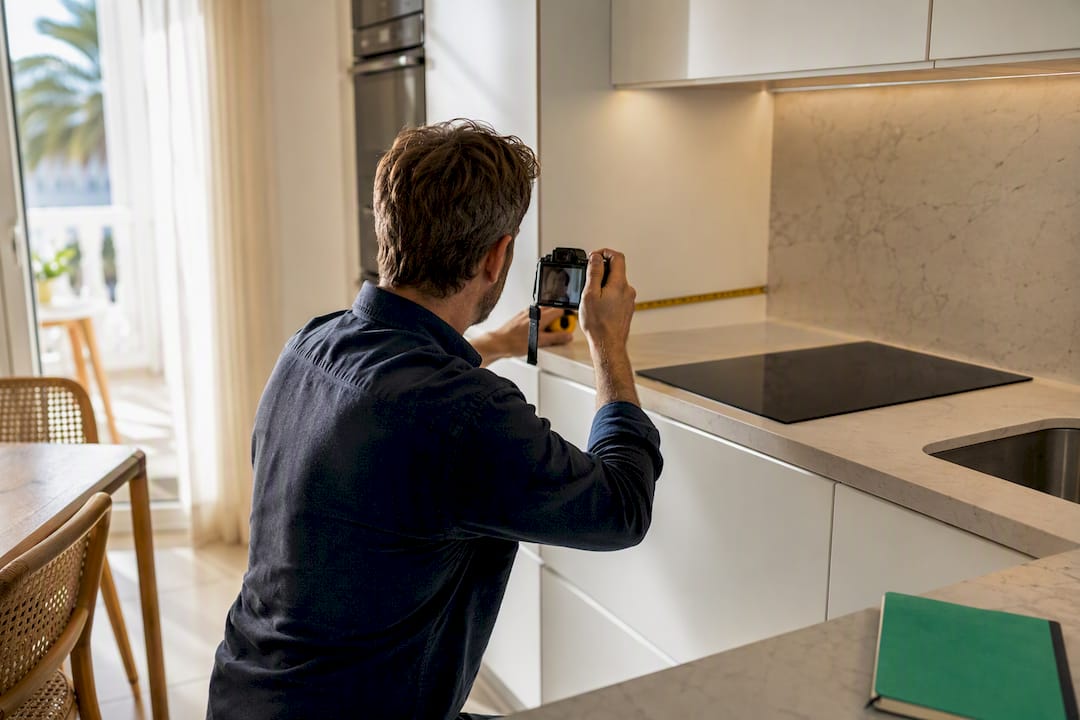
- Gå gjennom rom for rom for contenido: fotografer hvert rom, list opp de store gjenstandene med omtrentlig gjenanskaffelsespris (valor de nuevo, hva det ville koste å kjøpe nytt i dag, ikke hva du betalte), og summer opp.
- Legg til en buffer, omtrent 30 % oppå totalen din, for å dekke ting du har glemt og prisvekst fram til en eventuell framtidig skade.
Tips: Ta backup av serienumre, kvitteringer og bilder et annet sted enn i selve boligen; en skymappe fungerer fint. Tar en innbruddstyv laptopen din, tar de som regel også backup-disken som ligger ved siden av.
Oppgi verdifulle gjenstander separat i stedet for å legge dem inn i den generelle contenido-summen, og gå gjennom ansvarssummen din (responsabilidad civil) samtidig. En gjest som skader seg hos deg er en langt dyrere risiko enn folk flest tror.
Hva skjer når du melder skade: peritos rolle
Når du melder skade, sender selskapet en perito, en uavhengig takstmann, for å verifisere tapet og vurdere verdien opp mot summene du har oppgitt. De vil typisk be om oversikten din, kvitteringer, bilder, nota simple ved bygningsskader, og pristilbud på reparasjon fra en godkjent håndverker.
Det er her regla proporcional brukes i praksis, og der god dokumentasjon gjør nytte for seg. Digitale oversikter med daterte bilder og kvitteringer gjør peritos vurdering betydelig raskere, ifølge ThinkSpains veiledning for utenlandske kjøpere, og gir takstmannen mindre rom til å bestride tallene dine. Meld tap raskt, be om hjelp på ditt eget språk hvis spansken din ikke sitter, og vurder å la en megler ta fram-og-tilbaket på dine vegne; misforståelser i dette leddet pleier å bremse saker, ikke sette fart på dem.
Å velge polise: hva du bør sjekke før du signerer
Før du sammenligner tilbud side om side, gå gjennom en kort sjekkliste som fanger opp feilene vi har vært gjennom:
- Bekreft at continente-summen er oppgitt på gjenoppbyggingsbasis, ikke som kjøpspris eller markedsverdi
- Kontroller både continente- og contenido-summene mot din egen oversikt og gjenoppbyggingsberegning
- Se etter klausuler om oppgitte verdier for smykker, kunst eller elektronikk over standard fellesgrense
- Sjekk at ansvarssummen (responsabilidad civil) er høy nok til en reell ulykke, ikke bare et symbolsk tall
- Les unntakene nøye; klausuler om skogbrann, flom og turistlisens varierer betydelig mellom selskapene
- Spør selskapet eller megleren direkte: bruker dere nota simple og en kalkulator for gjenoppbyggingsverdi, og dekker sameiets forsikring allerede noen del av dette?
Et tilbud som bruker kjøpspris for continente, eller omtaler faste installasjoner i vage vendinger, er et varselsignal det er verdt å snu i døra for.
Det jeg stadig ser utlendinger bomme på
Mønsteret gjentar seg i nesten hver eneste sak om underforsikring: noen forsikrer boligen for det de betalte, ikke for det den ville koste å bygge opp igjen, og ingen flagger hullet mot sameiet før de står midt i en skadesak og lurer på hvorfor deres eget innbo ikke er dekket av bygningens felles polise. Språket er som regel den reelle barrieren, ikke slurv. Et polisedokument fullt av spansk forsikringsterminologi er lett å signere uten helt å forstå hva «continente» utelukker.
Løsningen er ikke komplisert når du først ser den satt opp: nota simple, gjenoppbyggingskalkulator, oversikt rom for rom, gjort ordentlig og i riktig rekkefølge. Følg den metoden, så slutter regla proporcional å være en trussel, fordi summene du har oppgitt faktisk stemmer med virkeligheten.
— Jake
Få hjelp på ditt eget språk til å sette riktige summer
Å få continente- og contenido-tallene riktig kan være krevende for utlendinger som kjøper dekning uten en spansktalende rådgiver. Noen meglere sammenligner tilbud på tvers av flere ledende spanske selskaper og hjelper kundene gjennom gjenoppbyggingsberegningen og innbooversikten på klart norsk.
I stedet for at du gjetter på et continente-tall eller kopierer et rundt tall for contenido, kan et tospråklig team hjelpe deg å sette begge summene riktig fra starten, sjekke hva sameiets polise allerede dekker, og peke på hvor ansvarssummen din kanskje bør heves. Det innebærer ikke nødvendigvis skjulte gebyrer eller noen plikt til å bytte. Vurderer du generell boligdekning, forklarer siden vår om husforsikring for utlendinger hvordan sammenligningen fungerer, eller du kan be om en gratis sammenligning av tilbud direkte og få svar på et språk du forstår før du binder deg til en polise.
Kilder
For den juridiske detaljen bak regelen om forholdsmessig avkortning, les artikkel 30 i Ley de Contrato de Seguro direkte. Direktoratet for forsikring og pensjonsfond publiserer bredere regelverksveiledning for spanske forsikringskunder, og vår egen guide til sameieforsikring for leilighetseiere går dypere inn i grensen mot fellesdekningen. Er du i ferd med å kjøpe og ikke allerede eier, er denne partnerguiden om forsikringsbehov ved boligkjøp en nyttig sjekkliste på tvers av landegrenser.
- Home insurance in Spain: the foreign property buyer’s 2026 guide to seguro de hogar, what’s actually covered, and the four mistakes that void your policy · Buvivo
- Home insurance in Spain: what foreigners really need to know — ThinkSpain
- Ley sobre el Contrato de Seguro (BOE)
- The difference between contents and buildings in home insurance | DKV
- How to choose the right home insurance in Spain in 2026 — Zurich
Ofte stilte spørsmål
Trenger du både bygnings- og innboforsikring i Spania?
De fleste selveiere som bor der selv trenger begge deler, siden continente dekker konstruksjonen og contenido dekker alt inni, og ingen av dem erstatter den andre. Utleiere som leier ut umøblert trenger kanskje bare continente, mens leietakere som regel trenger innbo og ansvarsdekning i stedet.
Er byggematerialer billigere i Spania enn i Storbritannia?
Byggekostnadene varierer med region og boligtype, så det finnes ingen enkel fast sammenligning, men det er nettopp derfor selskapene ber deg regne ut gjenoppbyggingsverdien lokalt i stedet for å bruke kjøpsprisen. En kalkulator som tar hensyn til byggekvalitet gir et langt mer nøyaktig continente-tall enn å gjette ut fra britiske referansetall.
Hva dekkes vanligvis ikke av innboforsikringen?
Standard contenido-poliser setter typisk et tak for smykker, kunst og verdifull elektronikk på en fellesgrense, ofte noen få tusen euro, med mindre du oppgir dem separat med takst eller kvittering. Gjenstander som er festet til bygningen, som et innmontert kjøkken, faller i stedet under continente og ikke under innbo.
Trenger jeg både bolig- og innboforsikring hvis jeg bor i en comunidad?
Ja. Sameiets forsikring dekker felles konstruksjon som tak, fasade og trapperom, men den stopper ved inngangsdøra di. Interiøret ditt, den faste innredningen og eiendelene dine trenger fortsatt din egen continente- og contenido-dekning, siden sameiets poliser ikke strekker seg inn i den enkelte leiligheten.
Anbefalt lesning
0 Comments
Bli den første til å kommentere.